Searchboar glossary
SEO and AI search, clearly explained.
Precise definitions and everyday examples. Understand how people find you in search and the concepts behind the numbers.
Browse A–Z400 definitions available
AI search
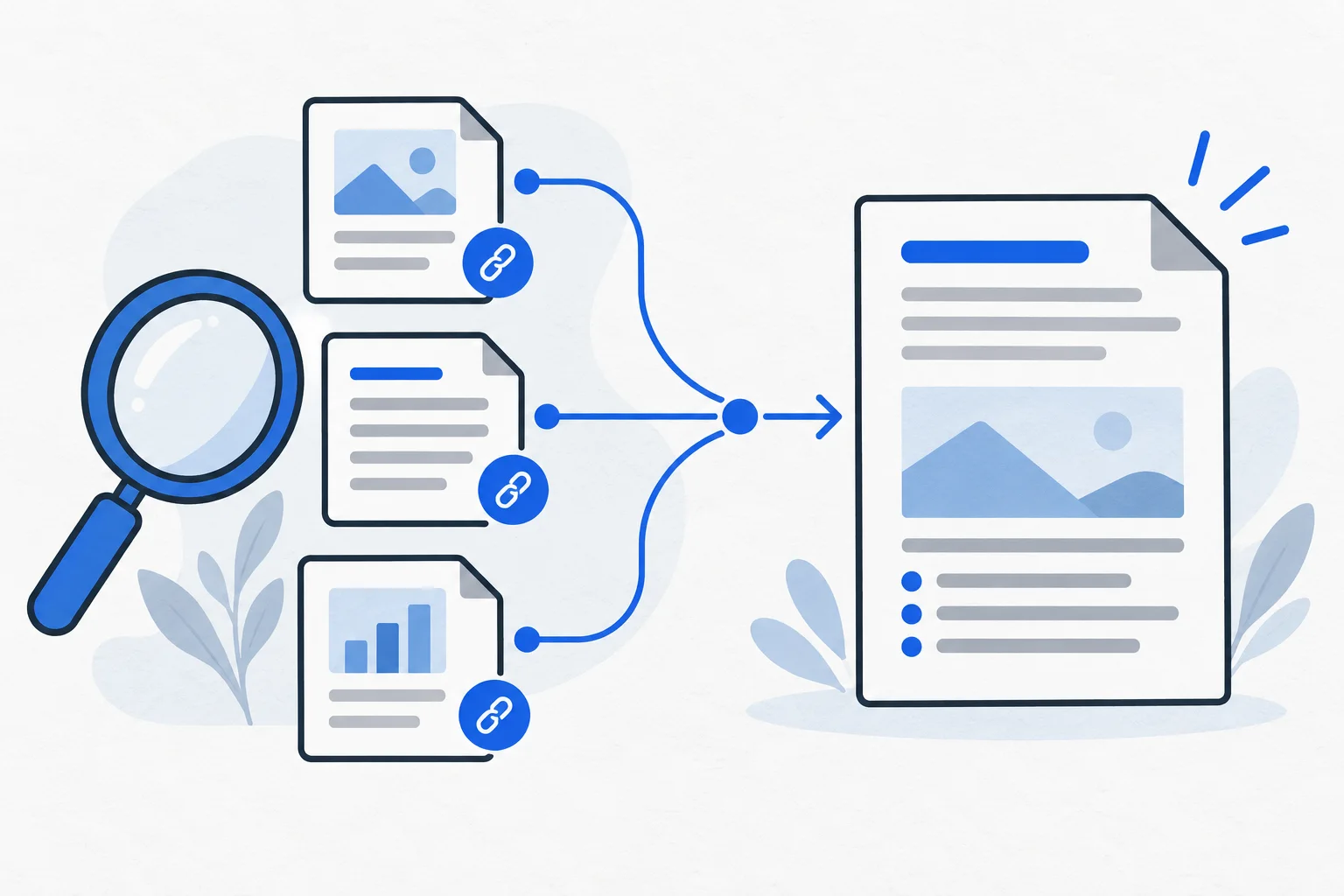
How AI search interprets questions, finds sources and produces answers, and why an assistant response does not necessarily involve web search.
Read definitionA good place to start
The essentials, in one place
AI visibility
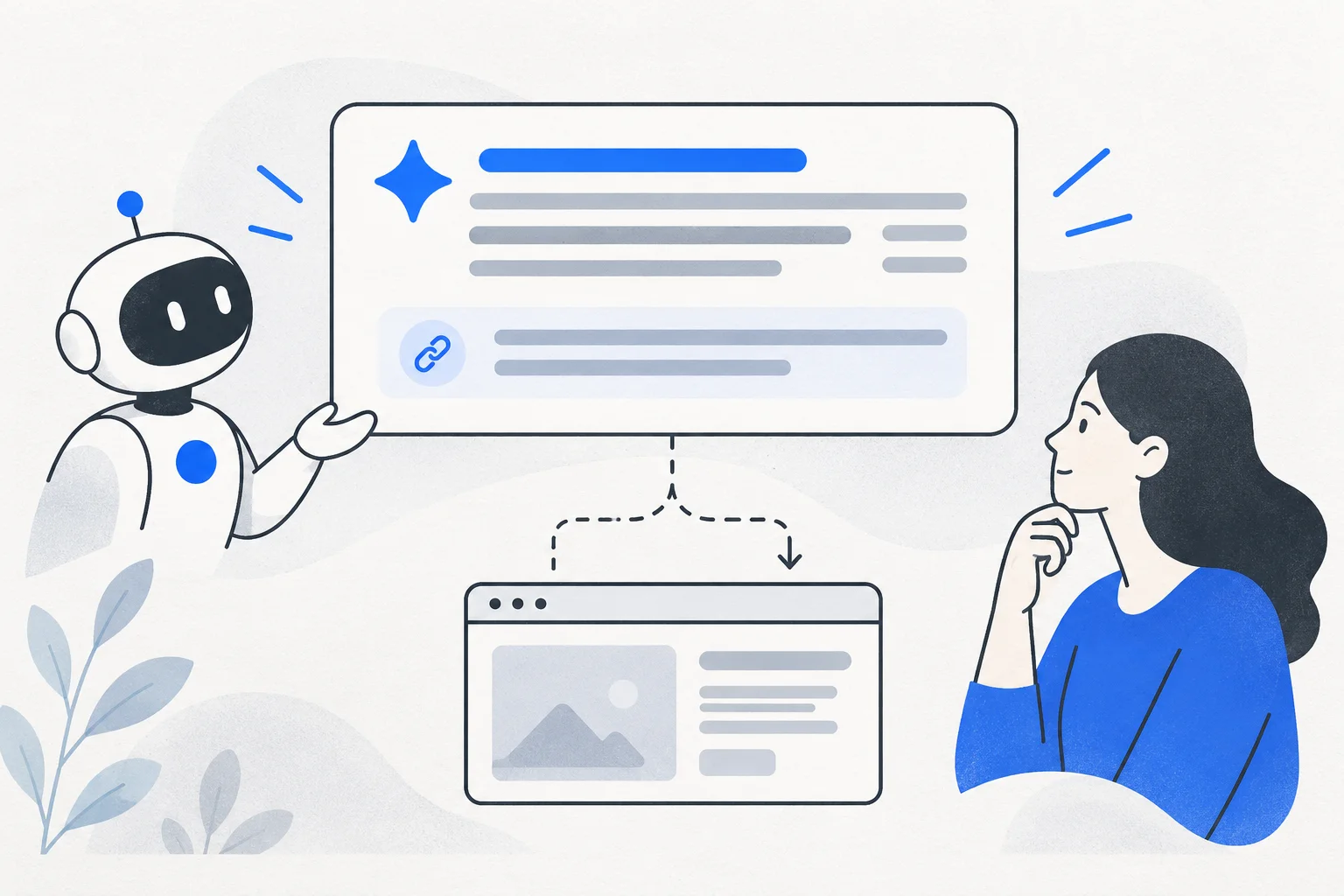
What AI visibility measures, how to distinguish mentions and recommendations, and how to interpret a defined sample without claiming market-wide results.
Read definition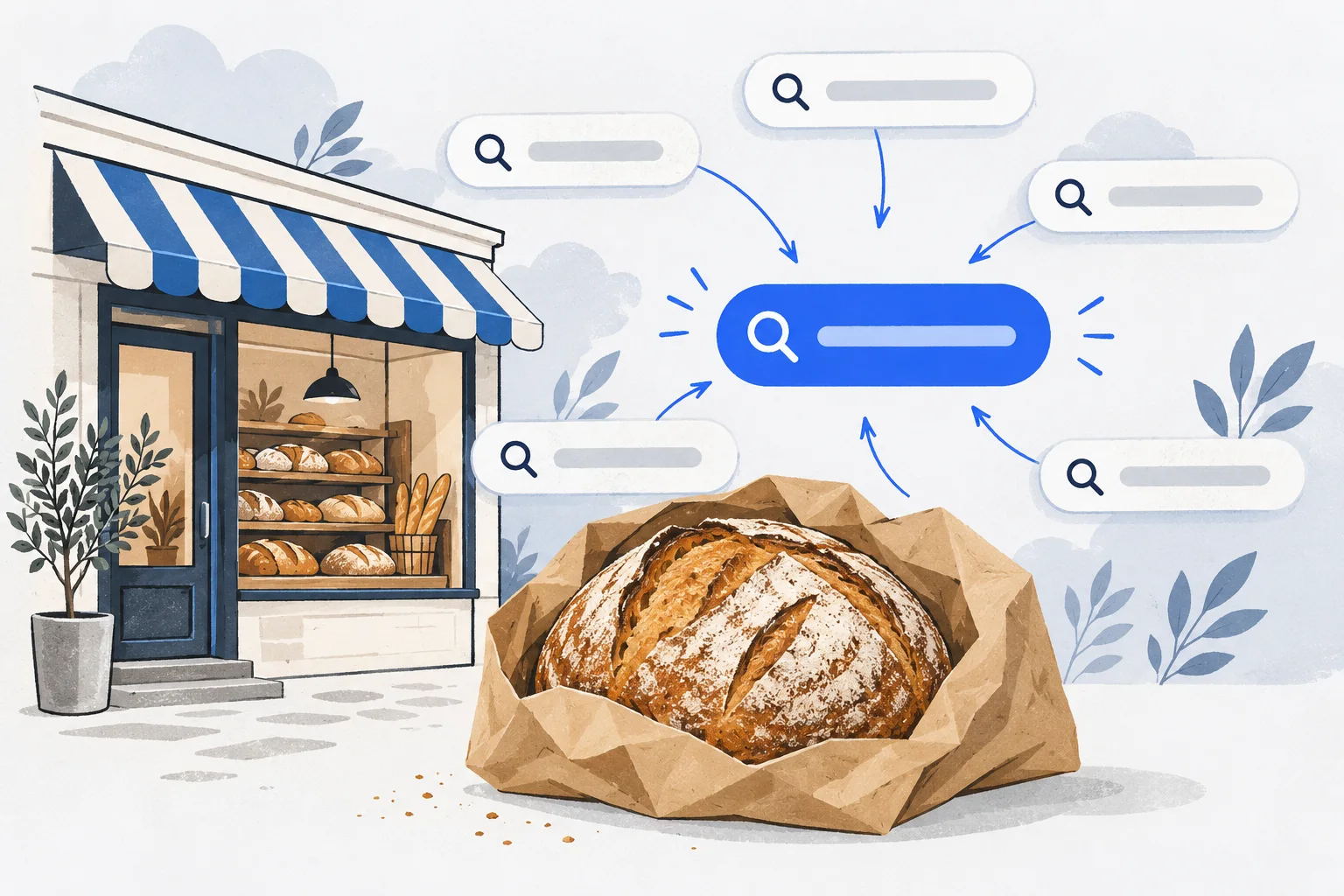
Keyword
What is a keyword in SEO, and how does a Google Ads keyword differ? Clear examples of queries, topic choice and search intent.
Read definition
Search intent
Learn how to identify the goal behind a query, distinguish common intent types, and choose content that helps the reader complete a real task.
Read definition
Search query
Learn how an actual search query differs from a planned keyword, where query data comes from, and how to turn observed questions into useful content.
Read definitionSearchboar glossary
All terms
A
What an about us page should clarify, how it differs from a brand story, and how a small business can show relevant facts without invented authority.
Read definitionDistinguish GA4 active users from total, new and returning users, and understand why analytics identifiers do not provide a perfect headcount of people.
Read definitionWhat AEO means, how it relates to SEO and GEO, and how to write useful direct answers with clear conditions and verifiable information.
Read definitionUnderstand affiliate links, commissions and tracking, and distinguish an affiliate relationship from a source reference or ordinary UTM parameter.
Read definitionWhy the same question can produce different AI answers, and how to distinguish wording changes from meaningful differences in visibility.
Read definitionHow to recognize an actual recommendation, interpret conditions and exclusions, and avoid confusing positive language with evidence of suitability.
Read definitionHow to verify an AI answer’s citations, distinguish source links from recommendations and visits, and interpret citation counts.
Read definitionWhat AI hallucinations look like, why sources and retrieval do not eliminate them, and how to check important claims before publication.
Read definitionHow AI Overviews differ from featured snippets and AI Mode, what a source appearance establishes, and how to assess changes accurately.
Read definitionHow to distinguish visits from AI assistants from mentions and citations, interpret analytics channels, and understand missing source data.
Read definitionHow AI search interprets questions, finds sources and produces answers, and why an assistant response does not necessarily involve web search.
Read definitionHow AI share of voice depends on the competitor set, source data and calculation, and why a changing percentage does not necessarily mean more appearances.
Read definitionWhat AI tokens are, why one token does not equal one word, and how token counts relate to context limits and usage costs.
Read definitionWhat AI visibility measures, how to distinguish mentions and recommendations, and how to interpret a defined sample without claiming market-wide results.
Read definitionHow AI web clients differ by purpose, what robots.txt controls, and why a successful request does not prove an appearance in an answer.
Read definitionHow to write useful alternative text, when an empty alt is appropriate, and how accessibility and image SEO fit together.
Read definitionWhat an alternatives page should compare, how it differs from a two-product comparison, and how to present competitors or substitute approaches fairly.
Read definitionHow does a visitor action become data you can analyze? A definition, examples and important distinctions.
Read definitionLearn how descriptive anchor text helps readers understand a link, and why natural wording and the right destination matter more than repetition.
Read definitionHow to check whether an AI answer is supported by its sources, with a practical example and the limits of groundedness scores.
Read definitionHow attribution models allocate marketing credit, why models can disagree, and why credited revenue is different from causal impact.
Read definitionWhat an author name and background can establish, how writing differs from review and why invented credentials do not create trust.
Read definitionHow search autocomplete works, why suggestions vary, and how to use them for topic research without inventing search volumes.
Read definitionWhy average position is an aggregate of search observations, how filters affect it, and why a higher number can accompany broader visibility.
Read definitionThe awareness stage begins with recognizing a problem or need. See what introductory content can explain before someone compares suppliers.
Read definition
B
What backlinks mean, how they differ from mentions and internal links, and how to assess relevance, paid links and reporting limitations.
Read definitionHow before and after content can document a change, what makes the comparison fair, and why two pictures do not prove causation.
Read definitionBenefit-led copy explains useful outcomes with supporting features and evidence. See how to make an offer clear without replacing details with promises.
Read definitionWhat Bing’s site-owner tools can reveal about indexing, search performance and AI citations, and why submitting a URL does not guarantee inclusion.
Read definitionBot verification is the process of checking whether an automated request actually comes from the provider it claims to represent. It uses evidence such as documented IP ranges or validated DNS records rather than relying only on the user-agent name.
Read definitionUnderstand non-engaged sessions, the difference from Universal Analytics and why one-page visits are not automatically bounces.
Read definitionBrand awareness measures familiarity with a brand. Distinguish recognition, recall and exposure, and understand the limits of views and impressions.
Read definitionBrand consistency connects identity, language and service promises. Learn why matching visuals are not enough when customer information conflicts.
Read definitionEvaluate brand mentions through identity, context, recommendations and source links. How to calculate an interpretable mention rate.
Read definitionA brand promise sets expectations about value and experience. Learn how it differs from a value proposition and why delivery must match the message.
Read definitionBrand recall concerns remembering a brand in a defined situation. Learn to separate unaided recall, first mentions and recognition from a list.
Read definitionA brand story connects meaningful events with a business’s purpose and choices. Learn to explain real history without inventing a founder legend.
Read definitionBrand trust concerns confidence in dependable conduct. See how it differs from awareness and satisfaction, and what credible content can support.
Read definitionBrand voice is a business’s recognizable communication personality. Define usable writing principles and distinguish voice from situational tone.
Read definitionHow does a search containing a company name differ from a general customer question? Definition, example and important distinctions.
Read definitionHow can readers understand their place within a website? A practical explanation, example and important distinctions.
Read definitionUnderstand broken links, error responses and incorrect destinations, and how to repair the customer paths that matter most.
Read definitionHow to choose primary and additional Google Business Profile categories, distinguish them from keywords, and keep them aligned with actual services.
Read definitionHow Google Business Profile posts differ from website articles, what a useful action button should do, and what publication does not prove.
Read definitionHow to distinguish a suspended profile from ranking changes, inspect the official reason, and follow the appropriate appeal process.
Read definitionWhat verification establishes, why Google chooses the available methods, and how to handle an existing profile before creating another.
Read definitionA buyer persona explains a typical buyer’s situation, goals and constraints. Learn what belongs in it and what needs evidence.
Read definitionA buying guide should explain needs, selection criteria and total cost, helping readers make a decision rather than presenting an unexplained product list.
Read definitionUnderstand the events that start a buying process, and distinguish a buying trigger from an ongoing need or an invented deadline.
Read definition
C
How browser and shared caches differ, what no-cache and no-store mean, and how to verify that readers receive the correct content.
Read definitionCache invalidation is the process of making a stored response unusable or requiring it to be refreshed when it is no longer appropriate. It helps align delivered content with a change, but each cache layer and variant needs to be considered.
Read definitionCache-Control is an HTTP header containing instructions for storing and reusing responses in browsers and shared caches. Its directives describe freshness, validation and storage permissions; they do not decide whether a page belongs in a search index.
Read definitionHow to connect a CTA to the reader’s need, match button wording to its destination, and distinguish clicks from completed outcomes.
Read definitionUnderstand canonical URL selection, self-referencing tags and duplicate versions, and learn how canonical differs from redirects and noindex.
Read definitionWhat distinguishes a case study from a testimonial or fictional example, which evidence it needs, and how to avoid overstating causation.
Read definitionLearn how category pages organize products or content, how they differ from filters and internal search, and what makes them useful on mobile.
Read definitionHow a content delivery network differs from caching, where it can improve delivery, and why freshness and private data need separate rules.
Read definitionHow channel groups differ from sources and campaigns, why scope matters, and where GA4 classifies traffic from AI assistants and Google AI search.
Read definitionHow ChatGPT Search uses web information and citations, why queries can differ from the original prompt, and how search access differs from model training.
Read definitionWhat makes a useful checklist, how it differs from a full procedure or template, and how to write checks that a small-business customer can actually complete.
Read definitionUnderstand CrUX real-user data, URL versus origin coverage, reporting windows and why missing data is not evidence of good or poor performance.
Read definitionHow chunking affects retrieval, why exceptions can be separated from their rules and what context should remain with each passage.
Read definitionA practical definition of citation rate, including domain and page measurements, denominators, failed observations and the difference from visits.
Read definitionClick depth is the number of link-following steps needed to reach a page from a chosen starting page, often the homepage. It describes a navigation path, not simply the number of slashes in a URL.
Read definitionClient-side rendering, or CSR, uses JavaScript in the browser to create or update page content. In a fully client-rendered page, the initial HTML may contain only a shell while scripts and data requests produce the main document later.
Read definitionWhat Cumulative Layout Shift measures, how it differs from loading speed, and how reserved space can prevent disruptive jumps.
Read definitionCommercial investigation explained: recognize comparison needs and create evidence-based pages that help readers choose without invented testing.
Read definitionBuild a useful comparison page with consistent criteria, verifiable evidence, disclosed relationships and conclusions tied to actual use cases.
Read definitionUnderstand consent mode, the distinction between basic and advanced implementations and why a consent banner alone does not prove tag behavior.
Read definitionThe consideration stage involves comparing ways to solve a need. Learn to explain alternatives, tradeoffs and fit without forcing a purchase.
Read definitionWhat a contact page should provide, how to make contact options useful on mobile, and why response promises must match the business’s actual capacity.
Read definitionChoose a useful question within a broad subject, distinguish it from the format or keyword, and keep the explanation focused on that promise.
Read definitionHow to assess existing pages by purpose, accuracy and usefulness, and turn observations into a practical maintenance plan.
Read definitionWhat a useful content brief includes, how to distinguish verified facts from research questions and how it differs from an outline or prompt.
Read definitionWhat content collaboration involves, how to divide editorial responsibilities, and why joint authorship needs clear review and maintenance.
Read definitionCorrect published errors, review their consequences and carry changes through related examples, summaries and language versions.
Read definitionDiagnose content decay by distinguishing outdated information from seasonality, tracking problems and changes in demand before rewriting a useful page.
Read definitionPlan where an article is available and how people reach it, distinguishing the publishing location, sharing route and responsibility for updates.
Read definitionCompare guides, checklists, tables and demonstrations by what the reader needs to do, while keeping format separate from channel and topic.
Read definitionHow to identify meaningful content gaps, decide between a new page and an update, and avoid copying every competitor keyword.
Read definitionDefine practical content responsibilities for writing, review, updates and corrections so a knowledge centre remains accountable after publication.
Read definitionCreate a content hub that organizes guides and articles around reader tasks, with useful navigation and a maintainable structure.
Read definitionBuild a content inventory with useful page records, ownership and review dates, and distinguish the factual list from decisions made in a content audit.
Read definitionLocalize content with natural language, appropriate examples and genuine local conditions while keeping definitions, evidence and product claims consistent.
Read definitionUnderstand how useful articles can support customer decisions, how content marketing differs from advertising, and what a small business should measure.
Read definitionHow an outline differs from a brief and a table of contents, and how to organize questions, examples and evidence before drafting an article.
Read definitionWhat content personalization changes, when a simple relevant variation helps, and why accuracy and a usable default must remain consistent.
Read definitionWhat content promotion means, how it differs from distribution, and how a small business can promote a useful guide without misleading readers.
Read definitionHow to assess old pages before deletion, preserve useful answers and choose appropriate redirects or indexing controls.
Read definitionWhen to update an article, what counts as a substantive change and why replacing a date does not make content current.
Read definitionUnderstand content repurposing, preserve evidence and limitations across formats, and avoid creating extra pages that add no meaningful reader value.
Read definitionPlan a useful sequence of articles, make each instalment intelligible on its own and maintain the connections as the library changes.
Read definitionHow to choose useful content, set priorities and plan maintenance rather than simply fill a publishing calendar.
Read definitionHow authorized republication differs from a source link, and what publishers should agree about attribution, updates and search indexing.
Read definitionHow much information can a model consider while preparing a response? A definition, examples and important distinctions.
Read definitionHow follow-up questions use context, why conversation does not guarantee fresh web retrieval, and how to preserve conditions and verify evidence.
Read definitionWhich visitor action counts as a business outcome? A definition, illustrative examples and important distinctions.
Read definitionWhat share of visits or users completed the goal? A definition, examples and important measurement distinctions.
Read definitionConversion rate optimization explained through goals, hypotheses, measurement and A/B tests. Why a nicer button proves little by itself.
Read definitionSee how persuasive business writing connects a relevant benefit, credible explanation and next action without exaggerating claims or inventing urgency.
Read definitionHow a core update differs from a manual action or technical fault, how to compare periods, and why traffic changes need evidence before attribution.
Read definitionHow LCP, INP and CLS describe different user experiences, what the thresholds mean, and why field data differs from a laboratory test.
Read definitionHow average CPC is calculated, why bids and estimates differ from actual cost, and how to use advertising data in content research.
Read definitionWhen crawl budget matters, why more requests do not guarantee indexing, and how to investigate unnecessary URLs without blocking useful content.
Read definitionWhat Search Console Crawl Stats includes, why request counts differ from pages and indexing, and how to connect errors with server evidence.
Read definitionA crawl trap is a website structure that leads crawlers into very large or effectively endless sets of low-value URL variations. Calendars, filters and recursively generated links can create such paths even when the underlying useful content is limited.
Read definitionHow crawling differs from discovering and indexing a URL, what can prevent access, and how to investigate a missing page in the right order.
Read definitionUnderstand cross-domain measurement, linker parameters and real journey testing, including why excluding a referral does not by itself connect identities.
Read definitionHow to calculate CTR, combine groups correctly, and distinguish a change in click rate from a change in customers or content quality.
Read definitionWhat customer acquisition includes, how it differs from lead generation and website traffic, and how to evaluate the path to a first purchase.
Read definitionA customer benefit explains why a feature is useful in a particular situation. Connect the outcome with real capabilities and clear limits.
Read definitionWhat customer feedback includes, how to interpret it without overgeneralizing, and how to turn useful comments into a decision.
Read definitionA customer interview explores real experiences through conversation. Learn to ask about events without leading people toward your preferred answer.
Read definitionMap the customer journey from discovery to use and support. Understand why it includes more than searches or a fixed sequence of pages.
Read definitionDiscover how customer needs differ from requested features, and use practical examples to identify the outcome behind a request.
Read definitionAn objection is an expressed concern about an offer. Learn to answer it accurately without treating every hesitation as something to overcome.
Read definitionA customer pain point is a specific difficulty. Learn to describe its context and impact without inventing urgency or customer evidence.
Read definitionTurn recurring customer questions into useful answers. Distinguish the wording people use from the information they actually need.
Read definitionLearn what customer research can reveal, how methods answer different questions, and why a small sample does not speak for everyone.
Read definitionWhat customer retention means, how to define the period and starting group, and why retention differs from another purchase or customer loyalty.
Read definitionWhat a customer review tells readers, how it differs from feedback and testimonials, and how businesses can use reviews responsibly.
Read definitionA customer touchpoint is a specific encounter with a business. Learn how it differs from a channel and how conflicting information affects the experience.
Read definition
D
Understand sampled analytics reports, small-group uncertainty and the difference between sampling, privacy thresholds and missing collection.
Read definitionDecision criteria make options comparable. Learn to separate essential requirements from preferences and apply them in a useful comparison.
Read definitionThe decision stage focuses on choosing a suitable offer. See which details help customers confirm fit without false urgency or guaranteed outcomes.
Read definitionHow digital public relations differs from link building, what makes original information useful, and how to separate publication from business impact.
Read definitionUnderstand analytics dimensions, grouping and scope, including why a first-user source and a session source answer different questions.
Read definitionWhy Moz DA, Ahrefs DR and Semrush Authority Score differ, what their numbers can suggest, and why they are not Google ratings.
Read definitionUnderstand doorway pages, the distinction from useful local pages, and how to evaluate whether an entire page family provides independent value.
Read definitionHow to investigate duplicate Google Business Profiles, separate ownership problems from listing identity, and avoid merging distinct businesses.
Read definitionWhy duplicate content can arise without copying, how canonical URLs differ from redirects and noindex, and what to check after changes.
Read definition
E
What E-E-A-T means in Google’s quality guidance, why evidence depends on the topic, and why author badges do not create a ranking score.
Read definitionWhat earned media means, how it differs from paid coverage, and how to evaluate independent mentions without assuming they are endorsements.
Read definitionWhat an ebook is, how it differs from an article or white paper, and how to make a business guide useful on a phone as well as a computer.
Read definitionHow an editorial calendar organizes content work, differs from strategy and makes publication dependencies visible.
Read definitionWhat to check before publishing human-written or AI-assisted content, including sources, illustrations, product claims and reviewer attribution.
Read definitionHow to create explanations that develop understanding, with appropriate examples, clear boundaries and a practical way to check whether readers learned something.
Read definitionUnderstand email nurture, useful follow-up sequences and the difference between nurturing interest and repeatedly asking for a sale.
Read definitionUnderstand numerical embeddings, semantic similarity and why nearby representations do not prove factual agreement or product identity.
Read definitionUnderstand GA4 engaged sessions, alternative qualifying conditions and why this measurement rule is not a direct measure of reader satisfaction.
Read definitionHow GA4 defines an engaged session, calculates engagement rate and distinguishes measured activity from satisfaction or conversion.
Read definitionUnderstand entities in search, the difference between a name and its referent, and how context and consistent descriptions reduce ambiguity.
Read definitionWhich content can remain useful over time, and what still needs checking? A definition, example and important distinctions.
Read definitionWhat expectation setting means, how to make scope and timing clear, and why accurate updates matter when circumstances change.
Read definitionWhat an expert interview contributes to an article, how to ask useful questions, and how to separate experience from independently checked facts.
Read definition
F
How filter combinations expand a website’s URL space, which filtered pages deserve search visibility and why robots, noindex and canonical differ.
Read definitionCheck facts, numbers, sources and conclusions before publication, and distinguish supported claims from opinions or uncertain interpretations.
Read definitionHow to choose useful FAQ questions, write direct answers and link to detail, while distinguishing FAQ content from retired Google rich-result support.
Read definitionWhat is a highlighted answer in Google, and how does it differ from an AI Overview? Definition, examples and important distinctions.
Read definitionUnderstand field performance data, visitor distributions and coverage, and why real-world reports can differ from a controlled laboratory test.
Read definitionUnderstand FCP, its difference from LCP and how to interpret the first visible content without mistaking it for a complete or interactive page.
Read definitionLearn what Google free product listings offer, how they differ from Shopping ads, and why eligibility does not guarantee impressions or sales.
Read definition
G
What GEO means, how it relates to SEO and AI visibility, and why retrieval, training and measured outcomes must be kept distinct.
Read definitionHow AI Mode differs from AI Overviews, uses follow-up questions and related searches, and why visible source links still need verification.
Read definitionWhat GA4 measures, why implementation and scope affect reports, and how website activity differs from Search Console observations.
Read definitionWho can use Google Business Profile, how it complements a website, and why eligibility, ownership and public information need ongoing attention.
Read definitionHow Discover differs from query-based search, what eligibility and image guidance mean, and how to interpret temporary traffic spikes.
Read definitionHow Keyword Planner supports research, why advertising competition differs from SEO difficulty, and how targeting changes the meaning of its data.
Read definitionHow Merchant Center relates to product pages, data feeds and advertising, and why data accuracy matters beyond successful submission.
Read definitionWhat Search Console measures, how live URL tests differ from indexed data, and what its generative-AI reports do and do not cover.
Read definitionGooglebot is the common name for Google Search crawlers that retrieve web resources for processing. A Googlebot visit establishes that a request was made; it does not by itself prove indexing, a ranking position or inclusion in an AI answer.
Read definitionHow grounding differs from RAG and visible citations, why source selection matters, and why a source-backed answer still needs checking.
Read definition
H
How semantic headings communicate relationships, differ from title tags and visual styles, and help readers navigate a page.
Read definitionWrite a headline that identifies the subject and useful angle, then check that the article delivers what the wording leads readers to expect.
Read definitionWhat makes an explanation useful, why word count and keyword repetition are insufficient, and how sources and review support the answer.
Read definitionCreate useful how-to content with prerequisites, executable steps, expected results and troubleshooting rather than vague instructions.
Read definitionUnderstand how hreflang connects equivalent language and regional pages, how it differs from canonical and lang, and which errors break the relationship.
Read definitionHTTP 304 Not Modified tells a client making a conditional request that its stored representation can be reused. The server sends validation information instead of sending the resource body again.
Read definitionHTTP 404 is a response status indicating that the server cannot find the requested resource. It describes the response to a particular URL, not the health or availability of the entire website.
Read definitionHTTP 410 Gone indicates that a resource is no longer available at the requested address and that this condition is likely permanent. It is a deliberate statement about removal, stronger in meaning than simply not finding a page.
Read definitionHTTP 429 Too Many Requests means that a client has exceeded a request rate accepted by a server or intermediary. It asks the requester to slow down; it does not mean the requested page has been permanently removed.
Read definitionHTTP 503 Service Unavailable indicates that a server is temporarily unable to handle a request, for example during overload or maintenance. It distinguishes temporary unavailability from a resource that is missing or permanently gone.
Read definitionLearn what common HTTP responses mean, why the code must match the content, and how to distinguish a correct 404 from a service failure.
Read definitionUnderstand what HTTPS protects, what a certificate does not prove, and why redirects, resources and page responses still need attention.
Read definitionWhy combine keyword matching with semantic retrieval, and how merging results affects the final answer.
Read definition
I
Define the organizations your offer fits best. See how an ideal customer profile differs from a buyer persona and a market segment.
Read definitionUnderstand file size, pixel dimensions and visual quality, and learn how compression and responsive images can reduce unnecessary downloads.
Read definitionLearn how useful image content, crawlable embedding, alt text and efficient delivery work together, without treating any one setting as a ranking guarantee.
Read definitionUnderstand inbound marketing as a customer-led discovery approach, with a practical example and clear distinctions from organic traffic and lead collection.
Read definitionUnderstand the difference between crawling, indexability and actual indexing, and learn how to interpret an excluded URL without assuming every exclusion is an error.
Read definitionLearn how IndexNow notifies participating search engines about changed URLs, what a successful submission proves, and how it differs from Google’s Indexing API.
Read definitionInfinite scroll is an interface pattern that loads more content as a visitor moves down a page. For search discoverability, the additional content needs an accessible loading and linking strategy; a crawler should not have to imitate a person scrolling indefinitely.
Read definitionUnderstand informational intent, choose the right answer format and connect an explanation to a useful next step without burying the answer.
Read definitionUnderstand how INP measures interaction responsiveness, what the 200 ms threshold means, and why visible feedback differs from completing a background task.
Read definitionWhere internal links belong, how to write clear link text, and why a sitemap or arbitrary link count cannot replace meaningful navigation.
Read definitionInternational SEO explained through language and country versions, URLs, hreflang and content equivalence without forced redirects.
Read definitionWrite an opening that answers the first question, establishes useful scope and leads into the explanation without unnecessary build-up.
Read definition
J
Learn how initial HTML, rendering and indexing differ, and how SSR, SSG and CSR affect reliable access to public content.
Read definition
K
Choose meaningful GA4 key events, distinguish clicks from completed actions and understand the relationship with Google Ads conversions.
Read definitionWhat is a keyword in SEO, and how does a Google Ads keyword differ? Clear examples of queries, topic choice and search intent.
Read definitionWhen can two pages on your own site interfere with each other for the same search need? Definition, example and important distinctions.
Read definitionWhich search phrases should one page answer? A precise explanation, business example and important distinctions.
Read definitionWhat does an SEO tool’s difficulty score estimate, and what does it leave out? A definition, example and important distinctions.
Read definitionLocalize keywords using market-specific terminology and intent, and understand why direct translation or hreflang alone cannot choose the right phrase.
Read definitionBuild a keyword map that connects search needs to appropriate URLs and distinguishes a new page from improving content you already have.
Read definitionWhat do broad, phrase and exact match mean in Google Ads? A definition, business example and important distinctions.
Read definitionPrioritize keyword opportunities using business relevance, evidence, effort and reader value, while accounting for uncertain search data.
Read definitionKeyword research examines the needs behind searches. Sources, a business example and the limits of volume, competition and trend data.
Read definitionWhen does keyword use become unnatural repetition? A clear explanation, example and important distinctions.
Read definitionWhy training cutoffs differ from live information access, and how to check a current answer without treating one date as a knowledge guarantee.
Read definitionUnderstand knowledge graphs, entities and relationships, and distinguish the underlying model from a knowledge panel or website structured data.
Read definitionWhat a knowledge panel represents, how it differs from a Business Profile and what claiming or correcting one actually allows.
Read definition
L
Use controlled laboratory testing to diagnose performance and compare changes without treating a single score as proof of every visitor’s experience.
Read definitionThe difference between an analytics landing page and a campaign page, what to examine alongside visits, and how to support readers arriving directly.
Read definitionWhat generates an AI response’s text, and why is it different from a search engine? A definition, examples and important distinctions.
Read definitionLearn which images can load later, why the main visible image should not wait, and how lazy loading differs from image compression.
Read definitionWhen does the largest visible content element appear? A practical explanation, example and important distinctions.
Read definitionWhat a lead means in marketing and sales, how it differs from a visitor or customer, and why interest still needs to be understood.
Read definitionWhat lead generation means, how content can support it, and why the number of contacts is different from the number of suitable customers.
Read definitionWhat makes a lead magnet relevant, how it differs from an ordinary free article, and why downloads do not automatically mean qualified leads.
Read definitionUse Lighthouse reports and diagnostics effectively, while understanding why a high score cannot prove complete accessibility, useful content or search success.
Read definitionHow can a business earn meaningful references from other websites? A definition, example and important distinctions.
Read definitionPlace internal links and calls to action where they help readers, with clear destinations and visible next steps on desktop and mobile.
Read definitionLink spam explained: ranking-driven purchases, excessive exchanges and qualification of paid links, with an illustrative example.
Read definitionWhat is llms.txt proposed for, and what does it not control? A clear explanation, example and review checklist.
Read definitionLearn how a local citation identifies a business, how it differs from a backlink, and why accurate information matters more than directory counts.
Read definitionLearn what Google’s local pack displays, how it differs from organic results, and why its businesses can change with location and context.
Read definitionUnderstand how local SEO connects a real business, its website and Google Business Profile with searches that depend on location.
Read definitionWhat belongs on a location page, how it differs from a service page and why changing city names does not create local value.
Read definitionA long-tail keyword belongs to the less frequently searched part of demand, rather than simply being long. Examples, intent and page selection.
Read definition
M
Understand Google manual actions, affected pages, documented fixes and reconsideration requests, separately from algorithmic ranking changes.
Read definitionLearn what makes a useful market segment and how shared needs can guide more relevant offers and content.
Read definitionHow to calculate brand mention rate in a defined answer sample, handle ambiguous names and compare results without confusing mentions with recommendations.
Read definitionWhat is a meta description, why can Google choose another snippet, and how do you write a precise, useful summary?
Read definitionUnderstand analytics metrics, units, denominators and aggregation so counts, rates and averages are compared on a meaningful basis.
Read definitionWhat a micro conversion is, how it depends on the main business goal, and why small actions should not be confused with sales.
Read definitionWhy does the mobile version provide the content Google processes? Practical explanation, example and important distinctions.
Read definitionHow to evaluate an AI model for your own task using test questions, factual accuracy, source support and individual error review.
Read definitionHow can images, audio and text work together in search? Definition, examples and important distinctions.
Read definition
N
How to keep business names, addresses and phone numbers accurate across important listings without treating harmless formatting differences as SEO failures.
Read definitionLearn how navigational intent differs from branded research, and why a clear destination matters more than adding unnecessary explanatory copy.
Read definitionHow do you exclude unwanted searches from advertising? A definition, business example and important distinctions.
Read definitionUnderstand GA4 new users, first-visit events and identification limits, and avoid treating new measured users as new paying customers.
Read definitionWhat a newsletter is, how it differs from a welcome email, and how a small business can make each issue worth opening.
Read definitionWhat does nofollow say about a link, and when are sponsored or ugc appropriate? Practical explanation, examples and distinctions.
Read definitionNoindex and nofollow explained with HTML and HTTP examples, robots.txt conflicts and a homepage accidentally excluded from search.
Read definition
O
What objection handling means, how to distinguish a solvable concern from a genuine mismatch, and how useful content can help.
Read definitionWhich activities outside your website contribute to its search presence? A definition, example and important distinctions.
Read definitionOn-page SEO explained through content, titles, images and internal links, with a practical service-business example.
Read definitionWhat is an online glossary, how does it differ from a blog or FAQ, and when does a term deserve its own page?
Read definitionUnderstand Open Graph metadata, share preview titles and images, and why correct sharing tags do not guarantee a particular search appearance.
Read definitionHow many clicks did your website receive from unpaid search? Practical explanation, example and measurement distinctions.
Read definitionWhat organic marketing includes, why it still costs resources, and how to separate it from the narrower analytics term organic search traffic.
Read definitionHow does an organic result differ from advertising? Clearly distinguish appearances, clicks, costs and business outcomes.
Read definitionUnderstand revenue attributed to organic search, the role of attribution and transaction accuracy, and why revenue is different from profit.
Read definitionHow much traffic arrives from unpaid search results? A practical explanation, example and important measurement distinctions.
Read definitionPublish original research with a defined question, transparent methods and appropriate limitations instead of invented statistics or unsupported generalizations.
Read definitionWhat makes a page orphaned, how it differs from a missing or noindexed page, and how to reconnect it to relevant website content.
Read definitionWhat outbound marketing means, how it differs from inbound discovery, and how relevant content can support a clear first approach.
Read definitionUnderstand owned media, its limits on third-party platforms, and why editorial control still comes with maintenance and audience-building costs.
Read definition
P
Search Console’s Page indexing report explained: discovered or crawled but not indexed, and when action is appropriate.
Read definitionPage speed describes how quickly a page delivers useful content and responds during a visit. It is a broad performance concept rather than one universal score, and it varies with the page, device, connection and user interaction.
Read definitionWhat is PageRank, and why is it different from domain authority? Link relationships, internal navigation and ranking limitations.
Read definitionUnderstand PageSpeed Insights field and lab sections, origin fallback and diagnostics so a performance report leads to an appropriate improvement.
Read definitionWhat does analytics count when a page appears? A definition, illustrative examples and important distinctions.
Read definitionHow should later pages of a long list remain accessible? A practical explanation, example and important distinctions.
Read definitionUnderstand paid media, placement and production costs, and why paying for exposure does not guarantee qualified visitors or customers.
Read definitionLearn how Google’s related-question feature works, how it differs from an FAQ, and how to use it for research without inventing demand or volume.
Read definitionSet measurable performance budgets for assets and experience metrics, define the test conditions and handle exceptions through deliberate trade-offs.
Read definitionHow 301 and 308 redirects communicate a lasting move, differ from canonical and noindex, and preserve useful routes to replacement content.
Read definitionUnderstand pillar pages, their relationship to detailed guides and when a central overview helps readers instead of creating unnecessary duplication.
Read definitionExplain what the reader needs to know in familiar, precise language, while preserving conditions and checking the meaning rather than just sentence length.
Read definitionPositioning explains where an offer belongs in customers’ minds relative to alternatives. Learn its difference from slogans and search rankings.
Read definitionUnderstand when preload helps important images or fonts, how matching requests matters and why indiscriminate preloading can waste bandwidth.
Read definitionWhat a pricing page should clarify, how to compare packages consistently, and when a quote-based service needs more explanation than a starting price.
Read definitionHow a primary keyword guides editorial focus, how secondary phrases fit one answer, and why a focus-keyword field does not instruct Google to rank a page.
Read definitionWhat makes a source primary, why official does not mean independent, and how to verify that a reference supports the actual claim.
Read definitionDefine the problem, distinguish its possible causes and explain appropriate next steps without pretending that one article can diagnose every situation.
Read definitionWhat a product demo should demonstrate, how it differs from a feature list, and how to make its limitations clear.
Read definitionWhat a product description should explain, how to connect features with relevant benefits, and why precise limits matter as much as persuasive language.
Read definitionProduct features describe what an offer contains or does. Learn to state them precisely and distinguish them from customer benefits.
Read definitionWhat a product feed contains and why stable identifiers, current prices, availability and matching landing pages matter.
Read definitionWhat buyers need from product information, variants, images and availability, and how product pages connect with categories and guides.
Read definitionWhat a product use case means in marketing, how to describe one, and why a plausible scenario is different from a proven customer result.
Read definitionHow variants relate to a product family, and how identifiers, stock, URLs and ProductGroup markup should describe the same selection.
Read definitionWhen are many data-driven pages useful, and when do they become low-value mass content? A definition, example and distinctions.
Read definitionWhat is a prompt, and what information belongs in an AI request? Definition, examples and important distinctions.
Read definitionUnderstand prompt injection, the boundary between external content and authorized instructions, and why tool permissions affect the risk.
Read definitionWhich questions belong in an interpretable AI-visibility study? A clear explanation, example and review criteria.
Read definitionHow can changes in AI answers to the same questions be tracked over time? A clear explanation, example and review criteria.
Read definitionIdentify what prevents a purchase, from missing information to an unsuitable service, and see which barriers content can actually address.
Read definitionUnderstand purchase decisions, the people involved and the information needed to choose, postpone or decline an offer.
Read definition
Q
What a qualified lead means, which criteria a business can use, and why qualification is a judgment rather than a guaranteed sale.
Read definitionLearn how AI search can break complex requests into background searches, and why this does not reveal every internal query or guarantee source selection.
Read definition
R
How can AI use a database or documents before answering? A definition, illustrative example and important distinctions.
Read definitionUnderstand what rank tracking measures, which settings affect positions, and how to interpret changes without confusing them with business results.
Read definitionUnderstand what reading scores can reveal, what they cannot establish and how to check the wording with the people an article is intended to help.
Read definitionHow redirect chains form, why loops fail, and how to check the complete URL path and the relevance of its final destination.
Read definitionWhat referral marketing is, how it differs from spontaneous word of mouth, and what a clear invitation and fair program should explain.
Read definitionLearn how referring domains differ from backlinks, why tools report different totals, and how to assess the sources behind the count.
Read definitionUse regex filters for groups of queries or URLs, understand partial matching and validate patterns against both matching and non-matching examples.
Read definitionUnderstand how related searches suggest new queries, how they differ from autocomplete and People Also Ask, and how to assess the ideas they provide.
Read definitionUnderstand render-blocking resources, the difference from parser blocking and how to improve loading without breaking layout or functionality.
Read definitionRendering is the process of turning page resources into the document and visual interface that a user or crawler can process. HTML, CSS, images and sometimes JavaScript contribute to the result; downloading the initial HTML is not always the end of the process.
Read definitionWhat a repeat purchase is, how to count repeat buyers clearly, and why another transaction is not automatically proof of loyalty.
Read definitionHow reranking improves an initial shortlist, what its scores mean and why it cannot recover a document absent from its candidates.
Read definitionHow a resource library organizes guides, templates and explanations around customer tasks rather than a growing pile of downloads.
Read definitionHow can phones and desktop browsers receive appropriate image sizes? Practical explanation, example and important distinctions.
Read definitionHow AI systems select information before answering, with a practical example and distinctions between retrieval, generation and factual support.
Read definitionUnderstand returning users in GA4, overlap with new-user counts and why repeat visits do not automatically prove loyalty or satisfaction.
Read definitionHow to request honest reviews, respond appropriately and distinguish a complaint from a policy violation or a useful improvement opportunity.
Read definitionHow a review response acknowledges an experience, protects private details and creates a sensible next step without arguing over ratings.
Read definitionHow structured data supports rich-result eligibility, why valid markup does not guarantee appearance, and why supported formats need checking.
Read definitionA robots meta tag is an HTML element that gives supported crawlers page-level instructions about indexing and search presentation. It can carry directives such as noindex or snippet controls, but it does not authenticate visitors or block access to the page.
Read definitionWhat is robots.txt for, and what does it not protect? User-agent, Disallow and Sitemap examples, with the crucial noindex distinction.
Read definition
S
Understand sales enablement content, the difference between internal guidance and customer-facing explanations, and how to keep both accurate and useful.
Read definitionWhat a sales funnel represents, how to choose useful stages, and why real customer journeys do not always move neatly in one direction.
Read definitionHow Google distinguishes useful large collections from ranking manipulation, and why human or AI authorship alone does not determine quality.
Read definitionOrganise an article so readers can recognise its structure, locate a particular answer and then read the necessary explanation in context.
Read definitionWhy can a magazine compete with your business in Google? Understand search competitors, relevant overlap and useful content comparisons.
Read definitionUse Search Console filters for pages, question groups and devices while keeping scope, reporting periods and missing query data clear.
Read definitionUnderstand Domain and URL-prefix properties, which URLs their reports include and what ownership verification actually grants.
Read definitionEstimate search demand while separating keyword volume, relative trends and purchasing intent, with clear limits on what the data can establish.
Read definitionLearn what a search impression counts, how it differs from clicks and visits, and why a higher total needs context before becoming a business conclusion.
Read definitionLearn how to identify the goal behind a query, distinguish common intent types, and choose content that helps the reader complete a real task.
Read definitionUnderstand the search journey from question to decision, and connect definitions, comparisons and offer pages with useful next steps.
Read definitionUnderstand how geographic context affects search results, why it differs from a place named in the query, and how to compare local observations.
Read definitionLearn useful Google search operators, the limits of site: queries, and how to use targeted searches for research without treating them as a complete index audit.
Read definitionUnderstand how personal information can influence search, why location is a separate factor, and what disabling personalization does and does not establish.
Read definitionLearn how an actual search query differs from a planned keyword, where query data comes from, and how to turn observed questions into useful content.
Read definitionIdentify recurring search query patterns and use them for research and filtering without multiplying repetitive pages for every possible combination.
Read definitionUnderstand how ranking differs from crawling and indexing, why positions depend on the query, and why a single score cannot explain the result.
Read definitionUnderstand temporary Search Console removals, permanent exclusion methods and why hiding a Google result does not remove the underlying content from the internet.
Read definitionUnderstand search title links versus title tags, why Google can select different wording and how to keep page titles consistent with the actual content.
Read definitionUnderstand changes in search interest, recurring seasonal demand and the difference between Google Trends scores and search volume.
Read definitionUnderstand monthly search volume, seasonal averages and why searches are not the same as visitors, purchases or Google Trends scores.
Read definitionLearn how seed keywords turn products, customer problems and use cases into a focused research starting point rather than an unfiltered publishing list.
Read definitionUnderstand semantic HTML, native headings, links and buttons, and why meaningful structure matters alongside visual presentation.
Read definitionHow a search engine can find relevant content written in different words, and why semantic matching is not the same as an AI answer.
Read definitionUnderstand SEO, how it differs from advertising, and how technical access, useful content and meaningful measurement work together.
Read definitionWhat an SEO audit examines, how evidence becomes a prioritized task and why an automated score is not a complete assessment.
Read definitionCalculate SEO ROI with consistent cost, contribution and attribution assumptions, using a worked example that separates revenue from actual return.
Read definitionLearn how organic links, advertisements and AI answers fit into a SERP, why results vary and how to interpret observations.
Read definitionHow to inspect search results, distinguish page types and turn observations into a useful content brief without copying competitors.
Read definitionUnderstand request logs, verified Googlebot identity, CDN visibility and why a successful request does not prove indexing.
Read definitionServer-side rendering, or SSR, creates a page’s HTML on the server before sending it to the browser. The response can already contain meaningful content, while optional client-side code adds interactive behavior afterward.
Read definitionWhat a service description should clarify about scope, delivery and responsibilities, with a practical example that separates outputs from promised results.
Read definitionWhat a service page should explain before an enquiry, and how it works with guides, location pages and relevant calls to action.
Read definitionHow can a business that visits customers appear on Google? A clear definition, business example and important distinctions.
Read definitionHow does analytics group activity within a visit? Practical explanation, example and important distinctions.
Read definitionLearn how site names differ from page titles, why consistent naming matters and what WebSite structured data can communicate to Google.
Read definitionHow third-party content relates to a host’s ranking signals, why guest authorship alone is not a violation and how current regional treatment differs.
Read definitionHow Google selects organic sitelinks, what website owners can improve and why noindex is broader than hiding an unwanted extra link.
Read definitionUnderstand nosnippet, max-snippet and data-nosnippet, how their scope differs from noindex, and why none of them protects confidential information.
Read definitionUnderstand social proof, the difference between evidence types, and how to show relevant customer experience without manufactured popularity.
Read definitionWhy Google can treat a URL returning 200 as missing, how this differs from a real 404 and what to check before fixing it.
Read definitionUse precise source attribution so readers can verify claims, understand limitations and distinguish your explanation from the evidence it relies on.
Read definitionWhen an older source remains useful, when an answer needs current evidence, and why a recent page date does not prove fresh information.
Read definitionHow do special hours differ from the normal weekly schedule? Examples of holiday opening, short closures and consistency across your website.
Read definitionLearn when to use sponsored link attributes, how they differ from editorial references and why machine-readable marking is not the whole disclosure.
Read definitionStatic site generation, or SSG, creates HTML documents before visitors request them. The finished files can be delivered directly, so reading a page does not inherently require running the application or querying a database for every visit.
Read definitionUse a clear situation, meaningful choices and an outcome to explain an idea, while keeping illustrative stories separate from real customer evidence.
Read definitionUnderstand Schema.org, JSON-LD and truthful markup, with a practical example and the limits of rich-result eligibility.
Read definitionA subdirectory is a path section beneath a website’s hostname, such as /glossary in example.com/glossary/keyword. On modern websites it may be a logical route prefix rather than a physical folder on a server.
Read definitionA subdomain is a named subdivision of a domain, such as blog.example.com under example.com. It creates a distinct hostname, which can have its own hosting and configuration; it is different from a path such as example.com/blog.
Read definition
T
Understand target audiences, how they differ from personas and segments, and how to choose whom an article should help.
Read definitionUnderstand access, indexing controls, URL handling and rendering, and how to verify a technical fix without claiming unmeasured search results.
Read definitionWhat a content template contains, how it differs from a checklist, and how a small business can make one useful without inventing facts.
Read definitionLearn when 302 and 307 redirects are appropriate, how they differ, and why a temporary destination needs a clear end date and useful content.
Read definitionWhat a testimonial is, how it differs from an independent review, and how to use a real customer’s words without overstating them.
Read definitionWhy long articles can still be thin, how to identify the unanswered reader need, and when to improve, consolidate or remove a page.
Read definitionDistinguish a reasoned expert perspective from promotion or unsupported opinion, with an example a small business can develop from real experience.
Read definitionUnderstand the difference between title, H1 and search title links, why Google may rewrite a title and why there is no mandatory character count.
Read definitionTone of voice adapts a message to its situation. Learn how a brand can sound reassuring, celebratory or matter-of-fact without losing consistency.
Read definitionHow pillar pages and related articles work together, why every page needs its own purpose and how to avoid artificial article quotas.
Read definitionWhat SEO practitioners mean by topical authority, why it is not a universal score and how it differs from Google’s news topic authority system.
Read definitionUnderstand TBT calculations, long main-thread tasks and the distinction between a lab responsiveness diagnostic and real interaction latency measured by INP.
Read definitionUnderstand session-scoped traffic acquisition, repeat visits and the difference from user acquisition when comparing organic search and other channels.
Read definitionHow source, medium and channel differ, why first-user and session sources can disagree, and what source reports cannot reveal about customer journeys.
Read definitionHow training data differs from live retrieved sources, prompt context and evaluation data, with a business example about updated information.
Read definitionUnderstand transactional intent and the page information, genuine actions and measurement needed to serve someone ready to act.
Read definitionWhat transparent pricing means for fixed and custom services, including scope, optional extras and useful estimates without misleading precision.
Read definitionWhat a trust signal is, which details help customers assess a business, and why decorative badges are not evidence.
Read definitionUnderstand Time to First Byte, its relationship to LCP and why a fast initial response does not prove the page loads quickly.
Read definition
U
Understand UGC links in comments and forums, what rel="ugc" communicates and why it does not replace moderation or verification.
Read definitionA unique selling proposition identifies a useful difference from alternatives. Learn to support the distinction without unsupported claims of exclusivity.
Read definitionA URL fragment is the part after the # character that identifies a location or state within a resource. In ordinary web navigation, the browser uses it locally; it is not sent to the server as part of the HTTP request target.
Read definitionUnderstand indexed data, live tests, canonical information and indexing requests without confusing a successful test with a search appearance.
Read definitionURL normalization is the deliberate conversion of equivalent address forms into a consistent representation. It can reduce accidental duplication, but equivalence must follow the website’s real behavior rather than assumptions about case, slashes or parameters.
Read definitionA URL parameter is a named value in a URL’s query string, commonly written after a question mark. Parameters can select content, apply filters or record campaign information, so their meaning must be understood before they are removed, cached or canonicalized.
Read definitionHow to choose a clear, stable slug and understand its relationship to titles, canonical URLs and redirects when an address changes.
Read definitionUnderstand first-user acquisition dimensions, their difference from session traffic and the limits of interpreting a first measured visit as first brand contact.
Read definitionWhat counts as user-generated content, how it differs from brand-created promotion, and what to clarify before reusing it.
Read definitionHow source, medium and campaign tags help interpret traffic, where internal-link tagging misleads and what UTMs cannot measure.
Read definition
V
A value proposition explains why an offer matters to a chosen customer. Connect the need, benefit and evidence with a practical business example.
Read definitionHow vector search finds related content, and why filters, precise identifiers and factual checks still matter.
Read definitionUnderstand watch pages, accessible video and thumbnail files, matching metadata and the difference between page indexing and video indexing.
Read definitionVoice of the customer brings together what customers say about their needs and experiences. Learn to preserve context and separate evidence from interpretation.
Read definition
W
How headings, keyboard interaction, image alternatives and forms support access, and why automated scores cannot verify the whole experience.
Read definitionPlan useful website text across introductions, explanations and next actions, with an example showing how the pieces support one visitor task.
Read definitionWhat a webinar is, when it helps a small business explain a topic, and how to turn audience questions into useful follow-up content.
Read definitionHow navigation, topic pages and internal links form a website’s structure, and why URL folders or a fixed click count do not tell the whole story.
Read definitionHow domain and URL changes differ from hosting moves, and what to coordinate before and after a migration.
Read definitionWhat a welcome email should explain after a subscription or first interaction, with a practical example and common mistakes.
Read definitionHow a white paper supports a business decision, what evidence it needs, and how it differs from an ebook or promotional brochure.
Read definitionWhat word of mouth means, why it can be positive or negative, and how it differs from a structured referral program or a selected testimonial.
Read definition
X
X-Robots-Tag is an HTTP response header for supported indexing and search-preview directives. It can apply rules to HTML pages and to files such as PDFs, where an HTML robots meta tag is not available.
Read definitionWhich URLs belong in a sitemap, what lastmod should represent and why successful processing does not guarantee indexing.
Read definition
Z
Understand what zero-click studies measure, why zero clicks differ from no open-web visits, and why your own CTR cannot reveal the total.
Read definitionUnderstand zero-volume keywords, evidence beyond keyword tools and when a low-data question deserves a page or a section in an existing guide.
Read definition
No matching terms
Try a shorter phrase or choose a different topic.