What is a doorway page?
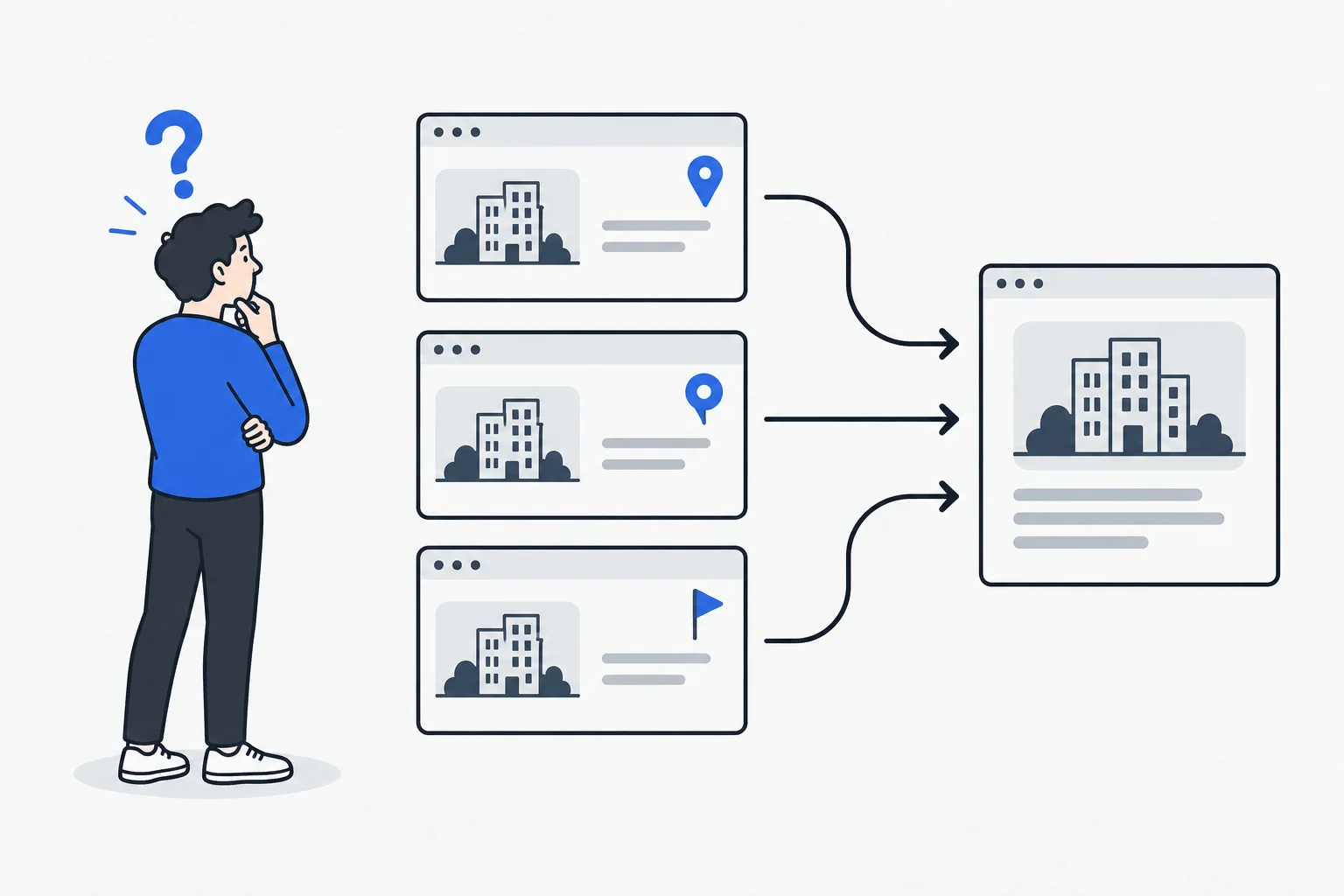
A doorway page is an intermediate page, or part of a page family, created to capture similar searches while providing little independent value and funneling visitors to the actual useful destination.
Also known as: doorway page · doorway abuse
At a glance
- Changing a city name or keyword alone does not create a new reason for a page.
- A useful page about a real local service is not automatically a doorway.
- Sharing one inquiry form is not the problem; the value of each preceding page matters.
On this page
Why is it called a doorway?
The problematic page acts mainly as a passage between a search result and the real destination. Someone clicks because the result promises information about a particular place or question, but the page offers little beyond sending them elsewhere.
Google’s doorway-abuse policy concerns that relationship between the search promise and the usable content. The number of pages alone is not the deciding factor. A large site can contain many valuable, distinct pages, while a small site can still use unnecessary intermediaries.
How is a useful local page different?
Local SEO can explain real premises, service areas and access conditions. A location’s own hours, directions, available services and contact arrangements can provide independent decision value. That page remains useful when opened directly.
A hundred pages that change only the city name are different. Suggesting a local presence where none exists adds an accuracy problem. A place name cannot substitute for actual service information.
How can you test a page’s independent value?
Set search traffic aside briefly. If a customer received this URL by email, would there be a reason to read it? Would they learn something not supplied by the other versions? Would it help them decide whether the service is available and suitable?
Compare the search intent with the answer. Thin content is not simply short content. A concise, accurate location page can be more useful than many long generic paragraphs. Extra words do not create a missing purpose.
An example: genuine service-area differences
Imagine a moving company serving three areas under different conditions. One has storage facilities, another requires smaller vehicles for narrow streets, and a third has service only on certain days. Separate explanations can help customers understand those differences.
Now imagine thirty pages containing the same text while implying a local team in every town. The answer is not necessarily thirty longer versions. An accurate service-area overview and a few justified detailed pages may serve readers better.
How does this relate to programmatic SEO?
Programmatic SEO builds pages from repeatable data and templates. The production method alone does not decide their value. Meaningful differences in the underlying information, paired with useful navigation, can support many worthwhile pages.
Duplicate content is another distinct issue. Two technical versions of the same page are not automatically a manipulative doorway scheme. However, canonicalization cannot create value where the pages lack a useful reason to exist.
What should you change in a questionable page family?
Inventory the pages and identify which have a real, supportable purpose. Improve those around meaningful differences. Decide whether to consolidate or remove unnecessary versions while considering visitors and existing links.
A shared inquiry form does not automatically make every service page a doorway. Different legitimate needs can lead to the same company. The question is whether each page fulfills its own promise or merely creates another entry point to the same limited information.