Search results and measurement
Organic traffic: visits from unpaid search results
Organic traffic here means measured visits arriving from unpaid search results. Analytics classifies them using its own rules, for example under Organic Search. It differs from search impressions, and organic acquisition does not mean content production is free.
Also known as: organic search traffic
At a glance
- A search appearance and a website visit are separate events.
- State which unit is being measured within organic traffic.
- Current GA4 channels separate AI Assistant traffic while Google’s AI search features belong to Organic Search.
On this page
What does organic mean here?
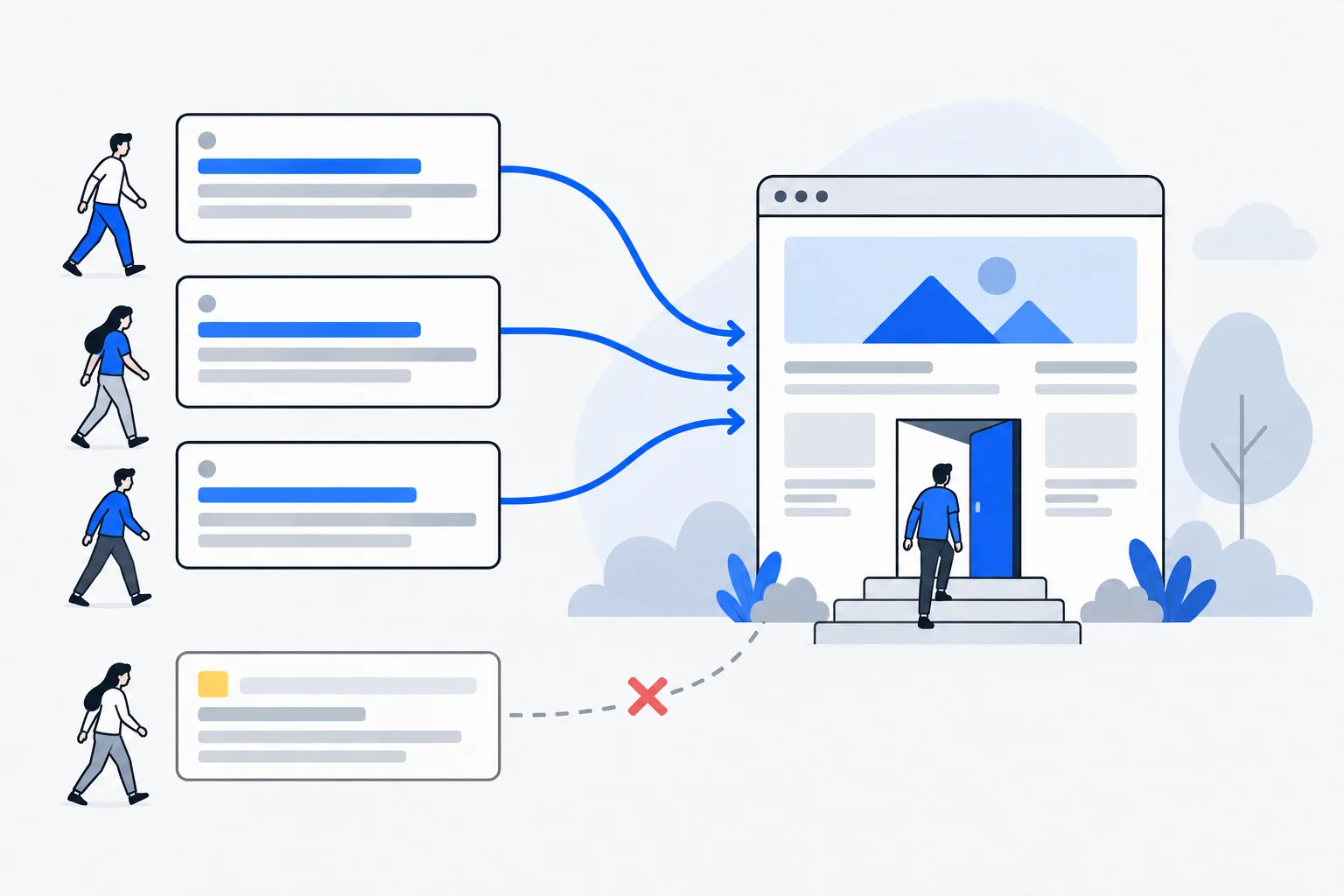
An organic result is not an advertising placement. When someone follows it to your website, an identifiable arrival can be classified as organic search traffic.
“Organic” can also describe unpaid social reach, so specify organic search in reports. Google's default channels distinguish Organic Search from Organic Social. 1
The word does not mean cost-free. Expertise, editing, website operation and maintenance require resources even when clicks incur no advertising fee.
Are we counting clicks, sessions or people?
Search Console counts Google search clicks under its rules. Website analytics groups sessions, users and events. These are different units.
GA4's traffic acquisition report includes session-scoped origin. 2 “Five hundred organic visits” needs an explicit unit to avoid confusing reports.
Clicks and sessions may differ because of collection coverage or grouping. Google documents Search Console's click rules separately. 3
Where does AI-originated traffic belong?
Current GA4 channel documentation includes unpaid links from AI Overviews and AI Mode within Organic Search. Recognized sources such as ChatGPT and Gemini have a separate AI Assistant channel. 1
It is therefore inaccurate to label every AI visit necessarily Referral. Check actual source information, current rules and tracking settings.
AI visibility is still different from traffic. Mentions or citations can occur without clicks; website analytics does not automatically observe all of them.
Example: a heating-services business
Imagine a heat-pump guide receiving 300 organic-search sessions in one month, with confirmed quote requests in ten. Next month brings 450 sessions but still ten requests.
The increase does not explain itself. More early-stage researchers, visitors from another country or a tracking fault could be involved. Examine page, source, audience and completed goal together.
These fictional figures are not conversion benchmarks. They illustrate why traffic should be considered alongside business objectives.
What makes a useful comparison?
Use consistent period lengths, channel definitions and units. Seasonality, weekdays, campaigns and tracking changes can have separate effects.
Breakdowns by landing page reveal where sessions begin. This can distinguish a growing knowledge-base topic from a declining important service page hidden in one site total.
How does content creation fit in?
Search intent helps match the page to the arriving question. Relevance depends on fit with both content and offer, not just volume.
Growth does not mean producing the maximum number of pages. Create useful, accessible, distinct content, then measure. A traffic change alone cannot establish that one article or technical repair caused it.
Google Discover can also bring visitors through recommendations rather than a conventional query result list. Interpret Discover and search separately even when both originate on Google surfaces.