CDN: distributing content closer to visitors
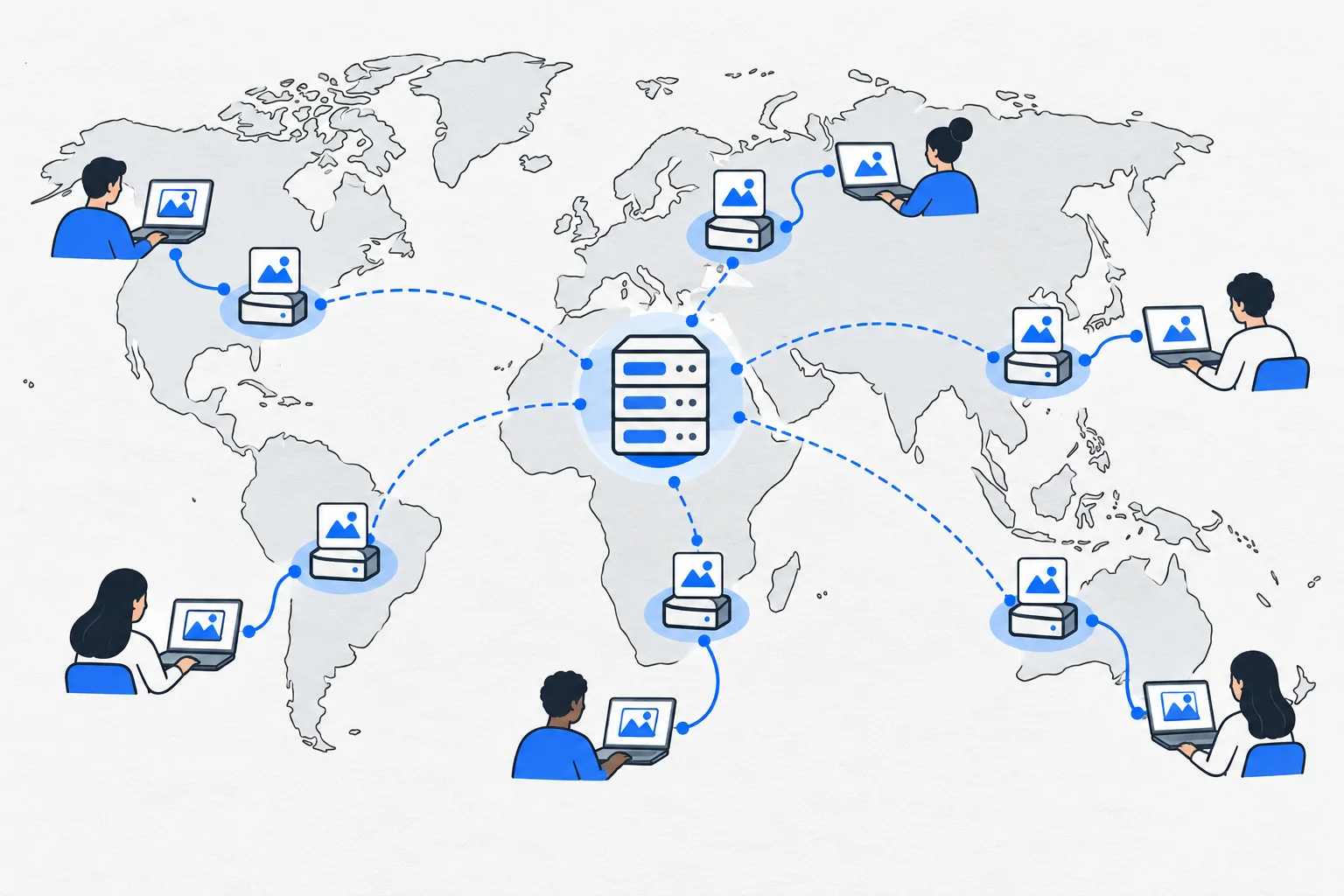
A CDN, or Content Delivery Network, is a network of servers in multiple locations that can deliver content from a favorable network location. It often serves copies of images, stylesheets or public pages. A CDN is not the same as a cache, although caching can be one of its important tools.
Also known as: Content Delivery Network
At a glance
- A CDN is a distributed delivery network, not an automatic speed guarantee.
- Shared copies require appropriate rules for the content being served.
- The actual benefit depends on visitor location, response type and measured behavior.
On this page
Why can multiple delivery locations help?
When one location serves every visitor, distant users may have a longer network path. A CDN can deliver content from a more favorable point. MDN's definition emphasizes distributed servers and content copies.
This can be particularly useful for files many people download unchanged. A public illustration often needs different delivery rules from a personal account page.
How is a CDN different from a cache?
A cache reuses a previously prepared response or file. A CDN is the delivery network. Browsers can cache without a CDN, and a CDN can forward some requests to the original server without storing a shared copy.
That original server is commonly called the origin. When a suitable cached copy exists, the origin may not need to generate the response again. Otherwise, the network can fetch a response from it.
HTTP caching guidance distinguishes private caches from shared caches. The same distinction is fundamental to correct CDN behavior.
What determines the speed improvement?
Visitor geography, network conditions, file size, cache hit rate and origin performance all matter. Establishing another external connection can itself take time, so a third-party file is not automatically faster.
TTFB helps examine the wait before the response begins, while the complete page experience requires further measurement. Putting images on a CDN will not necessarily fix main content waiting on a slow database query.
Choose an approach from the website's actual bottleneck and evidence rather than a provider's label.
Example: public lessons and private student accounts
Imagine a Hungarian training company with illustrated public articles and readers living abroad. Everyone receives the same images. Distributed delivery could reduce origin load and waiting time for some readers.
Its student accounts contain personal progress and billing details. Those responses cannot be served through the same unrestricted shared-cache rule. Acceleration must preserve the separation of personal content.
The example distinguishes two response types belonging to the same business but requiring different access and freshness rules.
What happens when content changes?
Changed images and pages require an appropriate strategy for stored copies. Depending on the system, that can involve expiry, invalidation or a new filename for a changed asset.
Serving an outdated price faster is not a successful result. Inspect HTTP status codes, headers and actual content to confirm what the system delivers.
What does using a CDN not prove?
It does not guarantee good SEO, reliable information or identical performance worldwide. It also adds an operational dependency: outages, incorrect rules or access-control mistakes can affect the website.
Verify a concrete result, such as public files arriving faster or placing less load on the origin, while content remains current and access remains correct. That is stronger evidence than simply reporting that a CDN was enabled.