AI token: meaning, examples and practical use
An AI token is a unit used to process text, such as a word, word fragment, punctuation mark or another character group. A tokenizer divides text into these units, so the count depends on the model and processing method. Tokens are not the same as words or characters.
Also known as: token · language model token
At a glance
- One word can contain several tokens.
- Check counts with the tokenizer used by the actual system.
- A token limit is a technical constraint, not a recommended SEO article length.
On this page
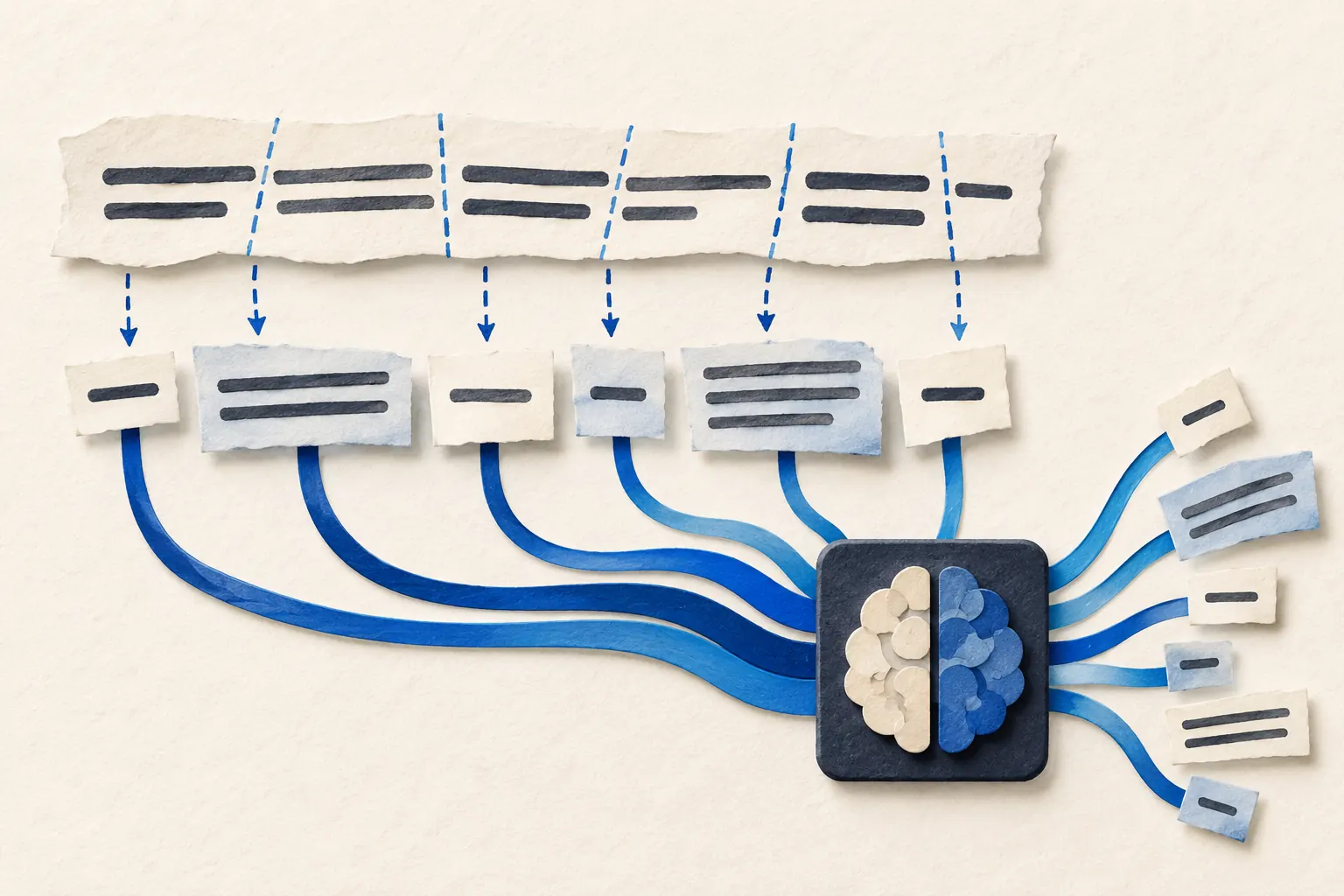
How does text become tokens?
The system splits text according to its own rules and assigns numerical identifiers to the resulting units. A common word might form one unit; another word may be split into several. Google’s token documentation likewise distinguishes tokens from whole words. How tokens work
Here, token means a text-processing unit, not a login credential or cryptocurrency asset. Images, audio and video may follow separate accounting rules; a text estimate cannot automatically be applied to them.
Why language matters
Word length, grammatical forms and the tokenizer’s vocabulary all matter. A familiar English word and a long Hungarian inflected word may split differently. The exact boundaries must be checked with the chosen system.
For example, an 800-word Hungarian guide does not necessarily consume the same number of tokens as its 800-word English counterpart. Avoid planning around a rule that one token always equals one word or a fixed number of characters in every language.
Where do token limits appear?
The context window is often expressed in tokens. Depending on the system, the available space may need to accommodate the question, instructions, conversation history, source passages and the generated response.
Supplying a full handbook alongside a long conversation may leave less room for other information. Chunking can help select relevant passages, but cutting off important conditions can undermine accuracy. The largest possible input is not necessarily the most useful one.
A limit also does not promise that every detail near that limit will be used equally well. Check actual responses against the information the task requires.
What does this mean for cost and content?
Some services charge partly according to input and output token usage. Prices, caching treatment and other processing charges vary, so use the actual service’s usage records and terms.
Token count is not an SEO quality measure. A definition should not be padded to fill an allowance: the necessary explanation, example and exception should determine its length. The model’s processing unit and a reader’s useful article length are separate decisions.