Duplicate Business Profile: distinguish copies from real locations
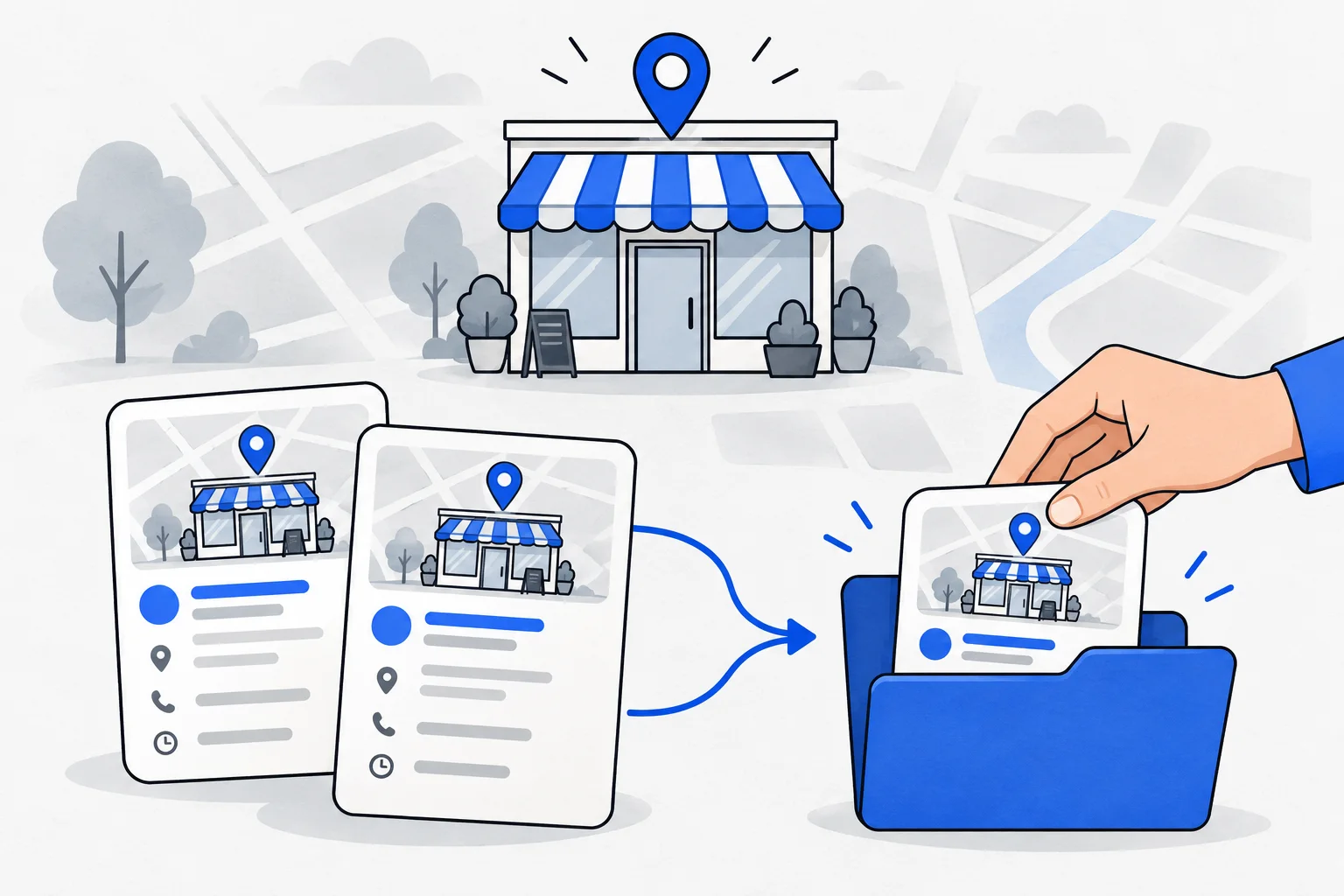
A duplicate Business Profile is an unnecessary additional Google Business Profile for the same eligible business unit. It may show conflicting reviews, addresses or contact details. Real separate locations or independently eligible businesses are not duplicates merely because names or addresses are similar.
Also known as: duplicate Business Profile · duplicate Google listing
At a glance
- Establish how many real, independently eligible business units exist.
- Resolve lost management access rather than creating a new copy.
- Before merging or correcting profiles, identify which data and history belong to each.
On this page
Why is an unnecessary copy a problem?
Customers may find two listings for the same business and be unsure which address or phone number is current. Reviews can become divided, while managers are uncertain which listing to update.
Google's duplicate-profile guidance generally permits one profile for the same business and separately addresses ownership access. Investigate identity and access as different questions before acting.
Does a shared address mean a duplicate?
Several independent businesses can occupy one building. A brand can operate several real locations. Certain practitioners or departments have additional eligibility rules under Google's guidelines.
Matching names or addresses can justify investigation, but not automatic deletion. Establish what operating unit each profile represents. Incorrectly merging distinct businesses can be as harmful as retaining an actual duplicate.
Three common situations
| Situation | First question |
|---|---|
| A previous owner controls the listing | How should ownership or access be resolved? |
| Two listings represent one shop | Which is current, and how should the copy be handled? |
| Similar names appear at multiple addresses | Are these separate real locations? |
Transferring primary ownership has its own process. A listing's existence and the current employee's ability to manage it are different facts.
Example: a salon loses account access
Imagine a salon with an established profile. A new employee cannot find the management account, so creates another listing with a slightly different name. Customers begin reviewing both, and opening hours diverge.
The second listing does not represent a new location. Resolve management rights to the existing profile, then handle the duplicate through the official process. More profiles do not automatically create more useful local visibility.
If the salon genuinely opens another shop, that is a different case. A distinct location page and accurate business information help explain the difference. The example is fictional rather than a diagnosis of an existing listing.
How can recurrence be prevented?
Maintain a record of the official profile URL, responsible ownership account and managers. Handle personnel changes through access management instead of restarting the public listing.
Check NAP consistency between the website and profile. Where a suspension exists, follow its review process. Creating a duplicate does not resolve the restriction.
Before any merge or removal, inspect the relevant information and history and use the supported process for that actual situation.