Search results and measurement
AI referral traffic: visits from AI services
AI referral traffic means website visits attributable to a click from an AI service. It requires an actual visit and recognizable source information. A brand mention or a link inside an AI answer does not, by itself, count as a website visit.
Also known as: AI referral traffic · AI assistant traffic
At a glance
- Visibility in an answer and a visit to your website are different events.
- GA4 distinguishes AI Assistant traffic from Google AI Overviews and AI Mode traffic, which belong to Organic Search.
- Identifiable AI traffic does not capture every purchase that an AI answer influenced.
On this page
When does an AI appearance become traffic?
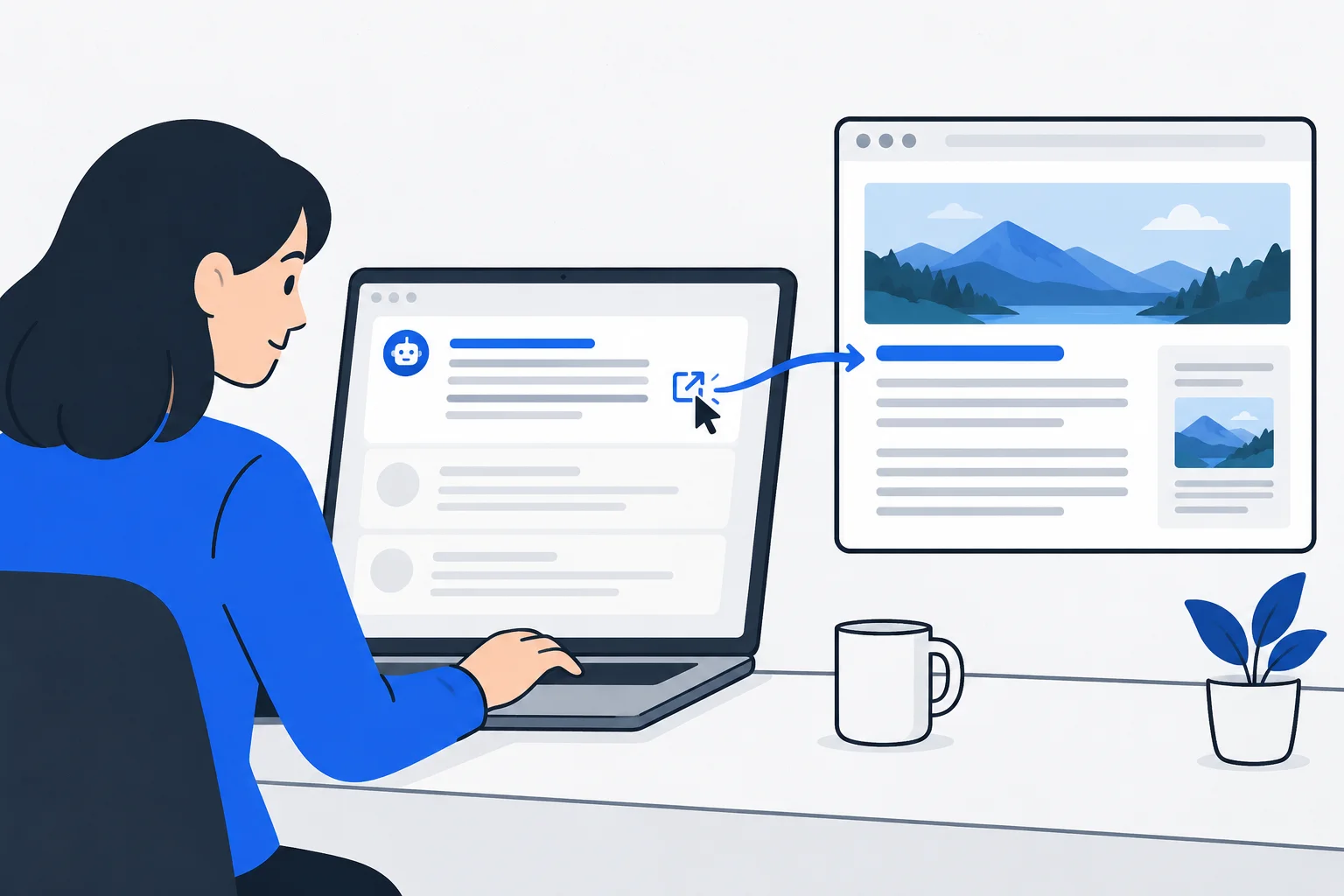
Three events must be distinguished. An answer may mention a business, include a link and eventually send someone to its website. The first two can occur without the third. An AI citation creates an opportunity to visit; it does not establish that a visit happened.
Analytics normally observes activity on the website. It cannot count every person who read an answer elsewhere and never opened the cited page. Treating citation counts as visitor counts therefore produces a misleading report.
Where does this traffic appear in GA4?
In Google Analytics' default channel definitions, AI Assistant covers recognized traffic from services such as ChatGPT, Gemini and Copilot. Google AI Overviews and AI Mode traffic are excluded from that category and classified as Organic Search.
Consequently, not every AI-originated visit belongs to the Referral channel. Channel groups apply classification rules, while source dimensions offer a more detailed view of where a session came from. The terminology in a dashboard should match its actual classification method.
First-user source and session source answer different questions. The former concerns how a user was originally acquired; the latter concerns the particular session. An existing customer can return through an AI answer without having first discovered the business there.
Why can source information be missing?
An app opening a browser, redirects, copied links and a URL opened later can interrupt the source information available to analytics. Consent choices, missing tags and traffic filters can also affect the records.
Some visits influenced by AI may therefore be unidentifiable. That does not justify relabeling unexplained Direct traffic as AI traffic. “Unknown” is a valid measurement limitation, not a category to fill with an optimistic assumption.
Example: an accounting firm's inquiries
Suppose a fictional accounting firm records 40 sessions in AI Assistant and three quote-request events for the same reporting scope. Those are neither 40 brand mentions nor proof that all 40 visitors first discovered the firm through AI.
The next useful questions concern the landing pages, the questions those pages answer and whether the visitors need the firm's services. A small number of sessions or inquiries can fluctuate substantially, so one short period is a weak basis for a trend claim.
The example illustrates interpretation only; it is not measured customer performance.
How should you investigate the sessions?
Use the Traffic acquisition report with session-scoped dimensions. Examine source, landing page and relevant events over the same period. Keep time zone and filters consistent when comparing reports.
A page view, contact-form submission and completed payment are different outcomes. Verify what an event actually records before describing it as a lead or sale. A contact-button click may not establish that a message was sent.
What can the data help you decide?
Recognizable AI traffic can reveal useful landing pages and gaps in their explanations or next steps. It can also expose measurement problems that need investigation.
Keep brand mentions, citations, visits and business outcomes in separate columns. Their relationship is informative, but incomplete source information and different reporting systems prevent them from forming a perfectly observed funnel.