Topic cluster: connecting an overview with useful detailed answers
A topic cluster is an edited system of pages answering distinct questions within a broader subject. An overview or pillar page often introduces the subject, while detailed pages connect to it and each other through meaningful internal links. Its purpose is clear navigation and content roles, not meeting a fixed article quota.
Also known as: Pillar page · Content hub
At a glance
- Each page should answer a distinct reader question.
- A pillar page provides orientation; it need not be the longest article.
- Internal links should express a useful reason to continue reading.
On this page
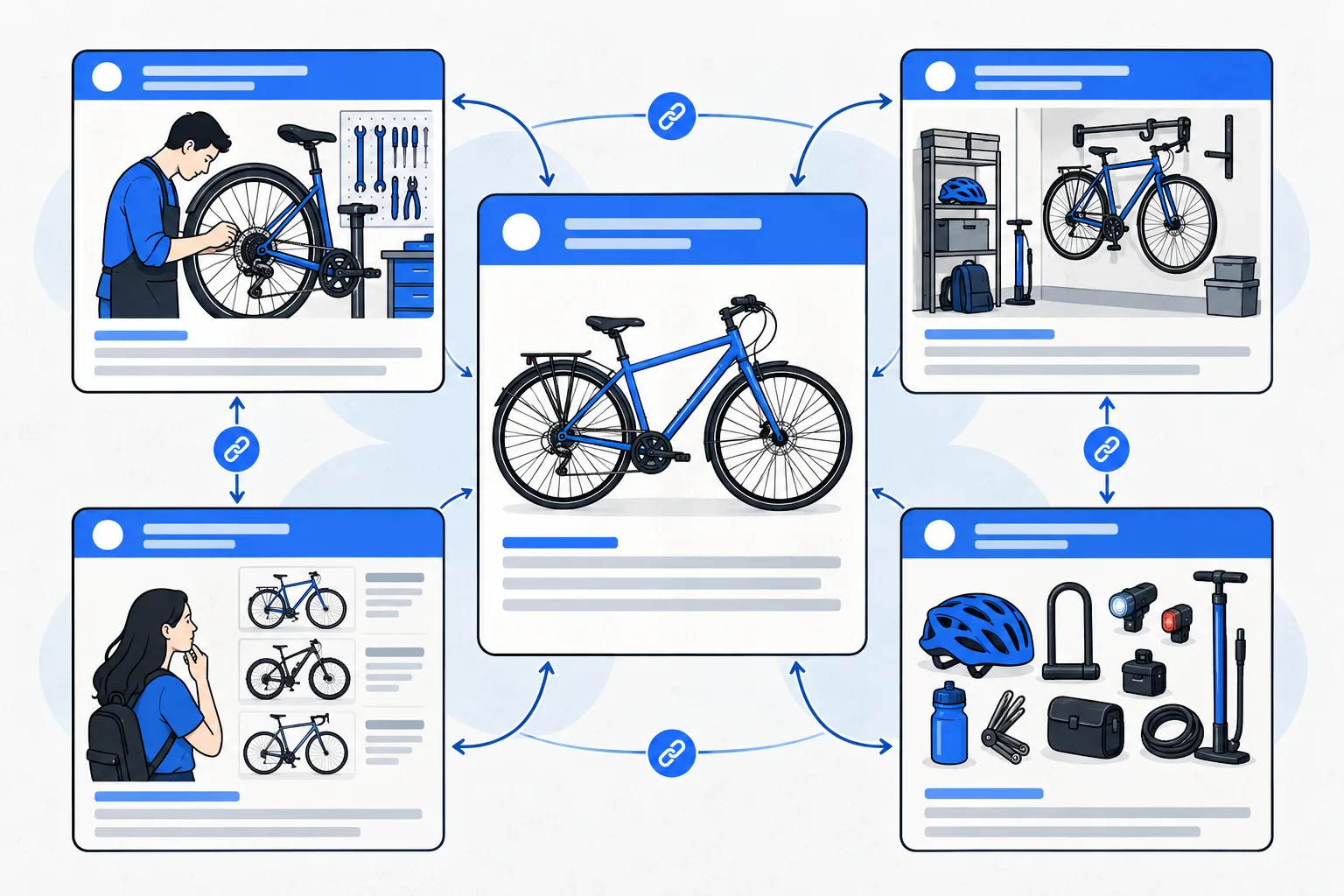
How a cluster works
An overview introduces the subject and its main questions. Detailed pages develop particular answers. Readers choose a route suited to their needs rather than reading one enormous document containing every detail.
HubSpot’s topic-planning documentation uses a pillar-and-subtopic model. It is an established editorial approach, not an exclusive Google requirement or a demand to adopt a provider’s terminology. Topic planning
Give the overview a useful job
A pillar page explains the whole subject and helps readers choose their next question. It can define basic terms and indicate which detailed article suits which situation. Its value is orientation, not copying every page into one place.
Respect search intent. Someone seeking a definition should get the basic answer promptly, while someone making a decision may need a comparison. Do not delay the explanation with unrelated promotional text.
Separate detailed pages by their questions
Write one distinct question and purpose for each page. If two would say essentially the same thing, combine them or clarify their focus. A keyword cluster helps determine which query variations fit one answer.
A topic cluster operates across multiple pieces. Their relationship comes from the reader’s thinking, not merely shared words. Clear roles can reduce overlap that merits keyword cannibalization investigation, but structure alone does not prove search performance.
Example: a language school
Imagine a school in Békéscsaba explaining business English. Its overview introduces workplace situations and learning formats. Separate articles explain placement assessments, group versus individual lessons and interview preparation.
The assessment article retains its specific purpose rather than becoming another school introduction. The interview article does not promise a job. Hypothetical situations are labeled, and actual course conditions come from the real offering.
Place internal links where the reader may need another explanation. An assessment discussion can sensibly lead to choosing a learning format. Every paragraph does not need links to every article.
Avoid artificial clusters
A rule such as “ten articles per pillar” ignores the subject’s size. Some questions need two supporting pages; others involve many distinct decisions. A quota can create pages without independent answers.
Excessive cross-linking cannot replace a real connection. Link text and context should explain what the reader will find next. Google’s link guidance Build around actual user needs. User-needs guidance
Maintain the relationships
Record page roles and maintenance ownership in the content strategy. Before adding an article, identify its place among existing answers. When revising one, check the overview’s description and related links too.
A useful early outcome is clearer navigation for readers and clearer maintenance for editors. Search visibility and business results still require separate evidence.