Case study: document the situation, work and observed result
A case study is a detailed account of a particular situation, the work performed and the observed outcome. In business content, it helps readers understand for whom a solution was useful and under which conditions. Results require evidence and context; an invented story is not a real customer case.
Also known as: case study · customer case study
At a glance
- The starting conditions and actual work matter as much as the outcome.
- A before-and-after difference does not prove the service caused every change.
- Agree how names, quotations, images and measurement data may be used.
On this page
What makes content a case study?
A large percentage in the headline is not enough. Readers need to follow the initial situation, chosen approach, execution and assessment of the result. HubSpot's explanation centers a detailed account of a particular business situation.
Conditions matter. A three-person workshop may face different constraints from a national chain. Explaining the context helps readers judge which lessons may apply to them.
How does it differ from a testimonial?
A customer review expresses someone's experience and can be brief or personal. A case study undertakes a more detailed evidential task, especially when claiming measurable business improvement.
| Format | Main purpose |
|---|---|
| Customer quotation | Describe the customer's experience |
| Client list | Identify organizations the business worked with |
| Case study | Explain what happened, how and with what result |
| Illustrative example | Demonstrate an idea in an invented situation |
Fictional glossary examples should not be relabeled as actual references. Likewise, an illustration cannot stand in for documentary photographs when a page claims to show completed work.
What evidence is needed?
Specify what was measured, over which period and from which source. If inquiries increased, consider whether advertising spend, opening hours or the offer also changed. Without that context, readers may infer too much.
A case-study writing guide can help organize the material, but actual project records provide the evidence. Verify calculations, final quotations and agreed publication permissions during preparation.
Example structure: restoring a chair
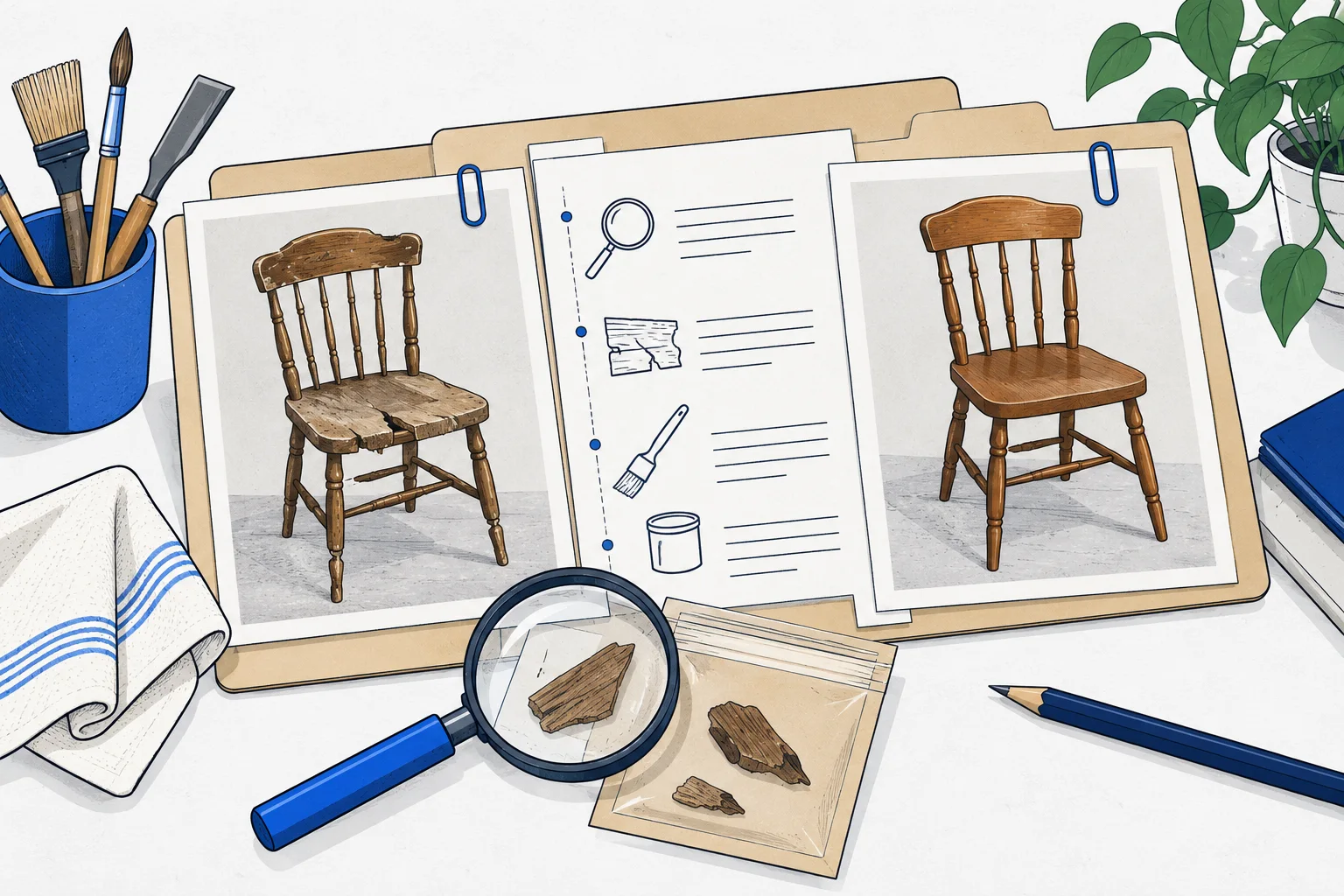
Imagine a furniture restorer planning a documented chair-restoration case. It could record the initial condition, customer's objective, parts repaired or replaced, sequence of work and final condition.
This is an illustration of structure, not a completed Searchboar customer case. Details such as why an original component was retained, which material trade-off was made and how the chair should be maintained may explain expertise better than “a successful project.”
The purpose is to make the professional decision understandable rather than decorate a sales page with unsupported results.
How should it connect to the website?
Relevant service pages and explanatory articles can link to the case. The link should specify whether readers will see a work process, application example or documented measurement.
Before publication, editorial review should inspect numbers, sources and conclusions. One case does not guarantee identical outcomes for future customers. Credibility improves when the account clearly explains the limits of the experience.
A testimonial can add a customer’s own perspective, while before-and-after content can show a documented change. Keep the conditions, time period and limits visible; one selected case does not establish a typical result.