Search results and measurement
Session: how analytics groups a visit’s events
In web analytics, a session groups activity considered part of one visit over time. It can contain several pageviews and events. GA4 normally expires it after 30 minutes of inactivity; it is different from an authentication session or a person’s entire customer journey.
Also known as: analytics session · visit
At a glance
- One person can generate several sessions, and one session can contain several events.
- Analytics rules determine session boundaries.
- Sessions should not automatically be interpreted as unique visitors or customers.
On this page
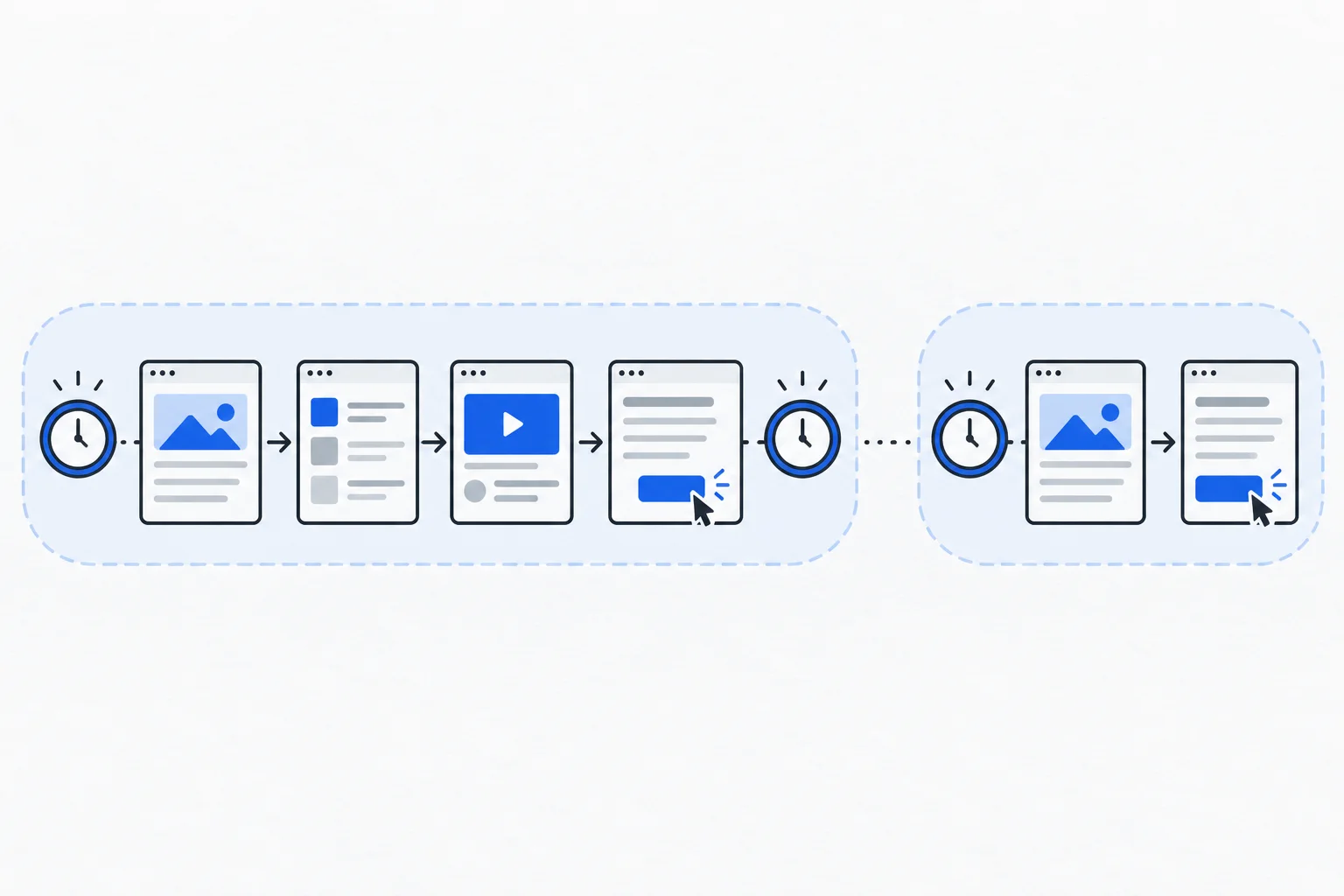
What does a session group?
A visitor opens an article, continues to a service page and sends an inquiry. These distinct actions may belong to one connected visit. Sessions make that temporal relationship analyzable.
An analytics event records an individual occurrence; a session groups occurrences. Ten events do not necessarily mean ten visits, and ten visits do not necessarily represent ten people.
When does a GA4 session begin and end?
A pageview can start a session when none is active. The default expiry is after 30 minutes of inactivity, which can be configured. Google documents no fixed maximum duration for a continuously active session. 1
“Every thirty minutes starts another visit” is therefore inaccurate. Inactivity matters, rather than elapsed time since the first click. Check settings in the actual property.
Authentication is separate: someone can begin a new analytics session while remaining signed into the application.
How do users and pageviews differ?
One person can visit repeatedly, creating several sessions. Identity may also be incomplete across devices. Session counts do not directly count individual human beings.
A pageview records a page appearing. A session can include several; reloading may add another. Google's guidance addresses correct event collection and avoiding duplicate tracking. 2
The landing page is the first page viewed in a session. The same document may or may not play that role on different visits.
Example: someone choosing furniture
Imagine a morning visitor reading a dining-table sizing guide and inspecting two products. They return in the afternoon, reread one product and request a quote. With a suitable inactivity gap, this can form several sessions.
Looking only at the afternoon entry page can hide the morning guide's contribution. Calling every pageview a visitor instead exaggerates audience size.
A measurement unit organizes only part of the story. The customer's thinking and analytics session boundaries need not begin and end together.
How does traffic origin fit in?
GA4's acquisition reporting uses session-scoped sources and channels. These differ from the user's first-ever acquisition source and from credit assigned to a key outcome. 3
Organic traffic can be studied through sessions. Search Console impressions describe events within search. Their relationship does not make them equivalent counts.
Label the unit explicitly in comparisons: session, user, event or click. This simple distinction prevents many misleading conclusions.
How can sessions support decisions?
They help compare visits beginning on different pages or channels and the goals completed within them. They can provide a denominator when the goal and formula are explicit.
More relevant sessions may be a favorable SEO observation without automatically meaning more customers. Content, next actions and measurement quality all matter. Use sessions for what they actually group: a defined time-based unit of observed website activity.