llms.txt: meaning and practical example
llms.txt is a proposed Markdown-based format through which a website can provide a concise content guide and important links to AI assistants or other automated readers. It is not an access permission, indexing instruction or special setting that improves Google rankings.
Also known as: LLM content index · AI content guide
At a glance
- llms.txt can guide systems that use it; robots.txt has a different purpose.
- Google documents that Search ignores llms.txt: it neither improves nor harms search visibility or rankings.
- Its value lies in accurate, maintained links and actual use, rather than mere existence.
On this page
What problem is it intended to address?
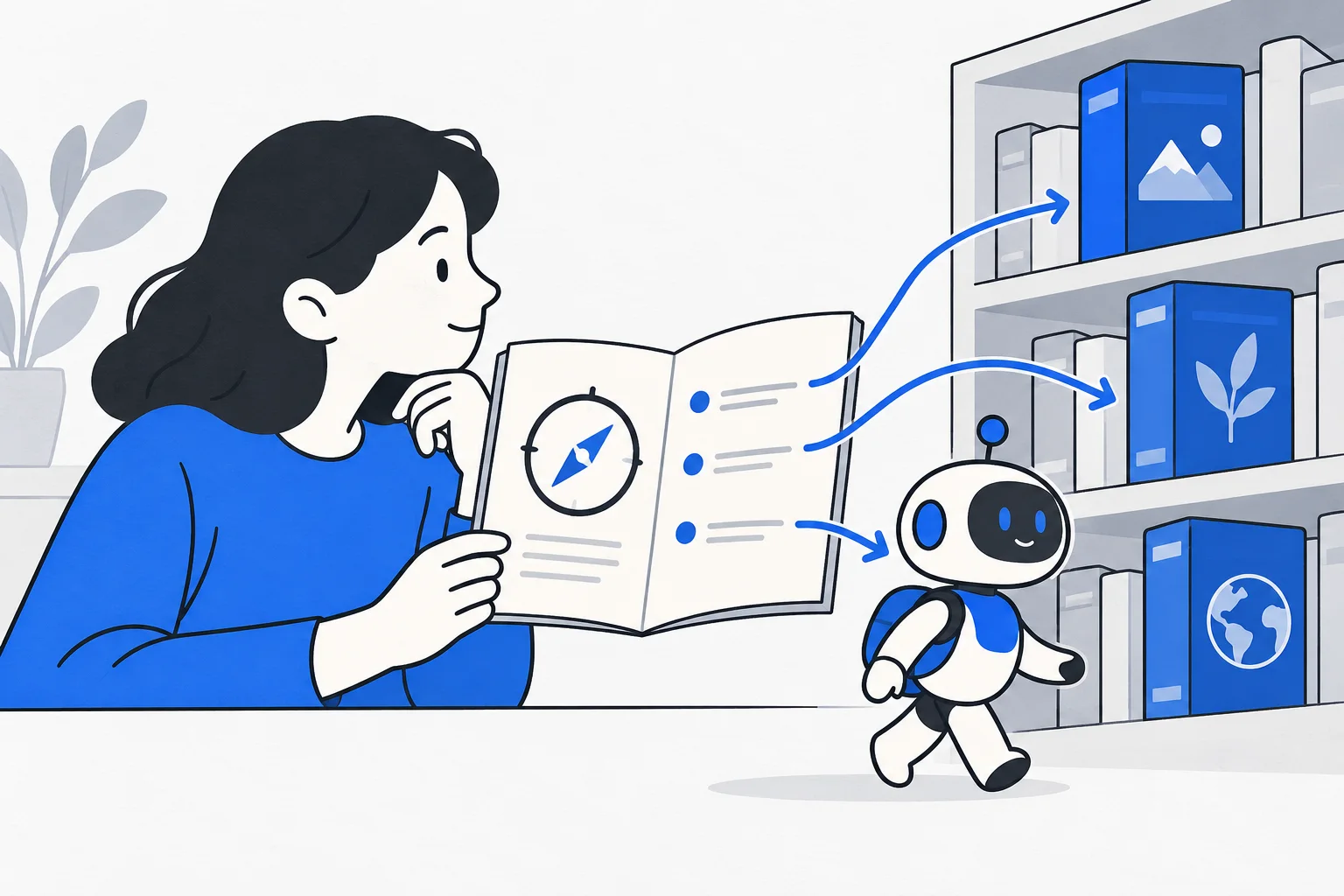
On a large website, people and AI assistants may struggle to locate the authoritative, current explanation. llms.txt can provide a concise map describing the site's subject and grouping important links.
The proposal was originally published in 2024; version two was updated in August 2026. It remains a proposed format. A provider publishing such a file for its own documentation does not establish that every AI search engine uses it on every website.
What can the file contain?
It uses Markdown for the site name, short introduction, necessary guidance and thematic link lists. Version two describes both root-level files and files under subpaths. Detailed information remains in the linked pages.
For a fictional software company, the guide might point to setup instructions, examples and the official pricing page. An agent can locate the current reference without inferring it from navigation. Clean Markdown versions can help systems that consume them, while creating a separate maintenance responsibility.
How does it differ from robots.txt and a sitemap?
| Resource | Primary purpose |
|---|---|
| llms.txt | Selected content guidance for automated readers that use it |
| robots.txt | Rules governing crawler access |
| XML sitemap | URLs suggested to search engines, with related metadata |
Writing “do not train on this” in llms.txt does not create a universally recognized crawler permission. Robots.txt, provider-specific controls and actual access protection are separate matters. A short curated file also does not replace an XML sitemap.
What does Google say?
Google's AI optimization documentation states that Search does not use llms.txt as a special signal. Maintaining it has neither a positive nor negative effect on Google search visibility or rankings, including generative search features.
Other systems may use it for their own purposes. Ask which consumer benefits and in what documented task. A download of the file does not itself establish an AI citation, recommendation or human website visit.
How do you keep the effort proportionate?
Imagine an accounting firm maintaining ten guides. Its llms.txt should link to the same current pages available to clients. It should not contain conflicting prices, outdated deadlines or links to unwritten articles.
Assign responsibility for updating the list when pages move or disappear. Broken links and contradictory versions can mislead automated consumers too.
Helpful content, accessibility and clear structure come first. A maintained llms.txt can supplement them, but cannot create value that its destination pages lack.