nofollow: when should links use nofollow, sponsored or ugc?
Nofollow qualifies a link relationship, for example through an anchor’s rel attribute. It tells Google not to treat the link as an ordinary unrestricted reference. It neither makes the destination inaccessible nor replaces a noindex instruction on that page.
Also known as: rel nofollow · sponsored link attribute · ugc link attribute
At a glance
- Nofollow concerns a link relationship; noindex concerns page indexing.
- Sponsored can describe paid links, while ugc describes links in user-generated content.
- Other links or a sitemap can still reveal the destination.
On this page
What does nofollow change?
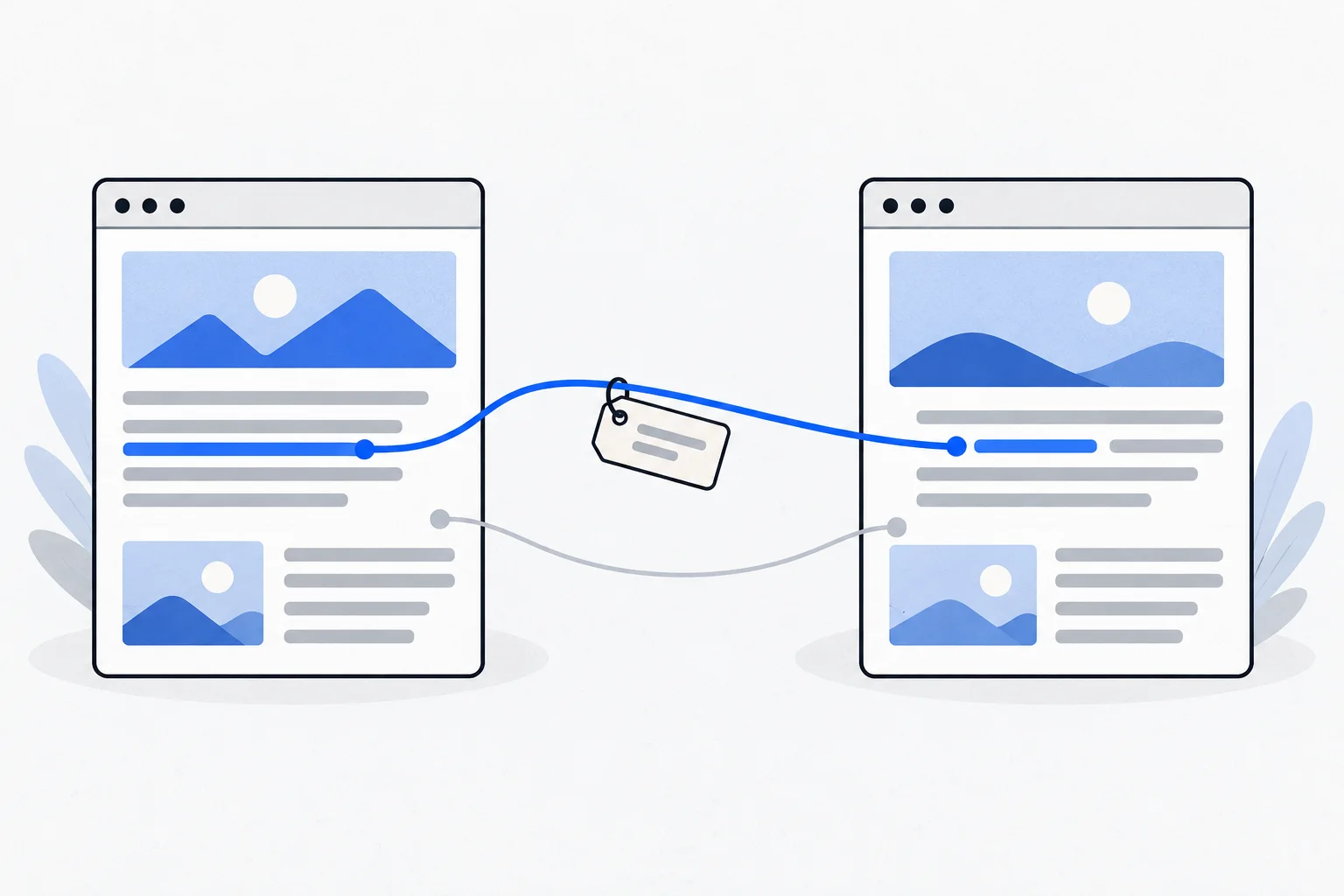
An ordinary link lets readers visit another page and connects documents for search engines. Nofollow qualifies that connection. People can still click, and the destination can function normally.
The value can appear in HTML's rel attribute. Ordinary links do not need a separate “follow” value: Google requires no additional qualification where none is warranted. 1
A backlink remains a link when qualified. It is not automatically worthless, since real readers can still follow it.
How do sponsored and ugc differ?
Google supports several relationship values. sponsored is recommended for paid placements and advertising. ugc identifies links in user-generated material such as comments. nofollow covers situations where those other values do not fit. 1
<a href="https://example.com/partner" rel="sponsored">Partner offer</a>
<a href="https://example.com/source" rel="ugc nofollow">Commenter's link</a>
These examples illustrate syntax, not a rule for every link. Choose values from the actual relationship rather than a tool's scoring preference. Multiple values can be combined.
Why is it different from noindex?
Noindex requests exclusion of a page from the search index. Nofollow concerns how a link relationship is handled. The destination can still appear in search.
Another website, internal link or sitemap may reveal that URL. Nofollow is therefore not reliable secrecy or access prevention. Robots.txt concerns crawling and is not access control either. 2
Nofollow can also appear in page-level robots instructions. That differs from one anchor's rel attribute, so name the precise location during debugging.
Example: a professional magazine
Imagine an editor linking to official documentation, a paid partner article linking to an offer, and readers sharing examples in comments.
The editorial reference does not require nofollow merely because it is external. The paid relationship receives suitable sponsored qualification, while comment links may use ugc. Attributes follow the relationships' actual nature.
All three may help readers while expressing different responsibilities and commercial arrangements. Qualification describes those distinctions rather than penalizing all external references.
How does anchor text relate?
Anchor text tells readers the destination; rel attributes qualify the relationship for machines. Correct qualification cannot repair misleading wording.
Google discusses both crawlable HTML and understandable labels. 3 A document's name often communicates more than “here.” The same reader-centered logic applies to internal links.
What should it not be used for?
Do not use nofollow to hide confidential customer pages, remove indexed documents or artificially direct every internal relationship. Those involve different problems.
Link handling is complex, and an attribute guarantees no particular ranking consequence. Describe the real relationship accurately while providing a clear destination and working path for readers.