Cache invalidation: Meaning, examples and limitations
Cache invalidation is the process of making a stored response unusable or requiring it to be refreshed when it is no longer appropriate. It helps align delivered content with a change, but each cache layer and variant needs to be considered.
At a glance
- Changing the origin does not necessarily remove stored copies.
- Purging a CDN is different from clearing every browser cache.
- Invalidation scope must include the relevant URL variants.
On this page
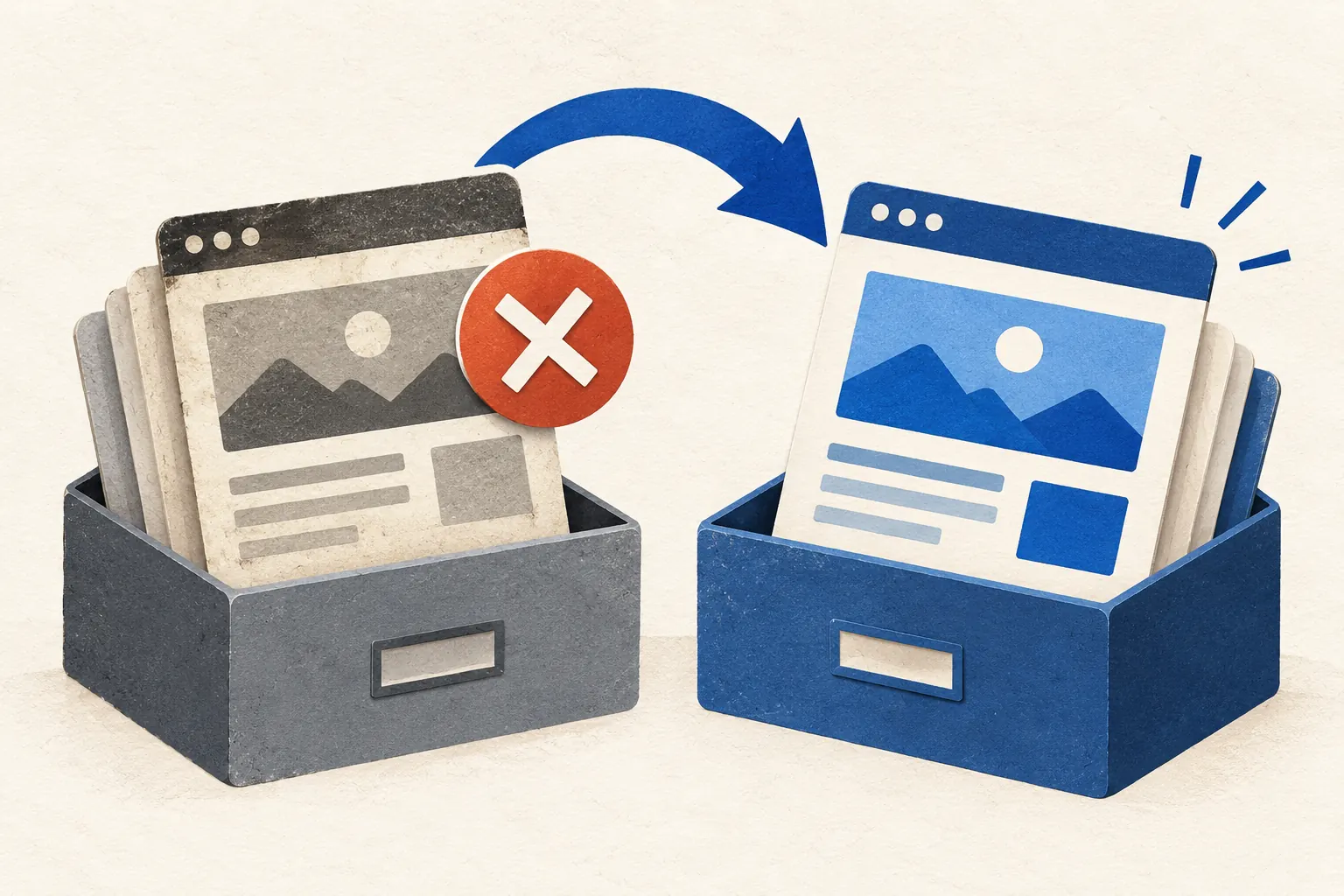
Why can an old version remain visible?
A cache may reuse a stored response while its policy considers that response fresh. Updating the underlying file or database does not automatically notify every intermediary and browser. The HTTP caching reference explains reuse and validation behavior.
Invalidation can remove a stored entry or make it require a fresh check. Another strategy is changing the asset's URL when its content changes. These are related delivery techniques, not interchangeable operations.
Example: correcting a public definition
Imagine a factual correction published at the same article URL. The origin now serves the new paragraph, but an edge cache still has the older HTML. A targeted purge can address that layer. A reader's browser may have a separately cached response governed by different rules.
Check the version at each relevant boundary instead of declaring the change complete after one successful origin request. Cache-Control affects how long copies can be reused and when validation occurs.
What determines the purge scope?
The cache key may distinguish hostname, path, query parameters or other request characteristics. Purging one spelling does not necessarily remove every stored variant. Conversely, clearing the entire cache can create a burst of origin work while entries refill.
Choose a scope that matches the actual change and the provider's supported mechanism. Preserve separation between public content and private responses; invalidation is not a fix for an unsafe shared-cache policy.
Is a purge a search update?
No. Refreshing delivery lets visitors and crawlers retrieve the corrected response. It does not force a search engine to recrawl immediately or replace previously processed index data. URL inspection and search reporting remain separate evidence. Verify public content first, then monitor subsequent search processing without inventing a deadline.