Newsletter: recurring emails people choose to receive
A newsletter is a recurring email publication sent to subscribers, usually combining useful updates, explanations or selected links around an agreed subject.
Also known as: email newsletter
At a glance
- A newsletter is a continuing publication, not every email a business sends.
- Subscribers need a clear reason to expect the next issue.
- Judge usefulness and relevant actions alongside email statistics.
On this page
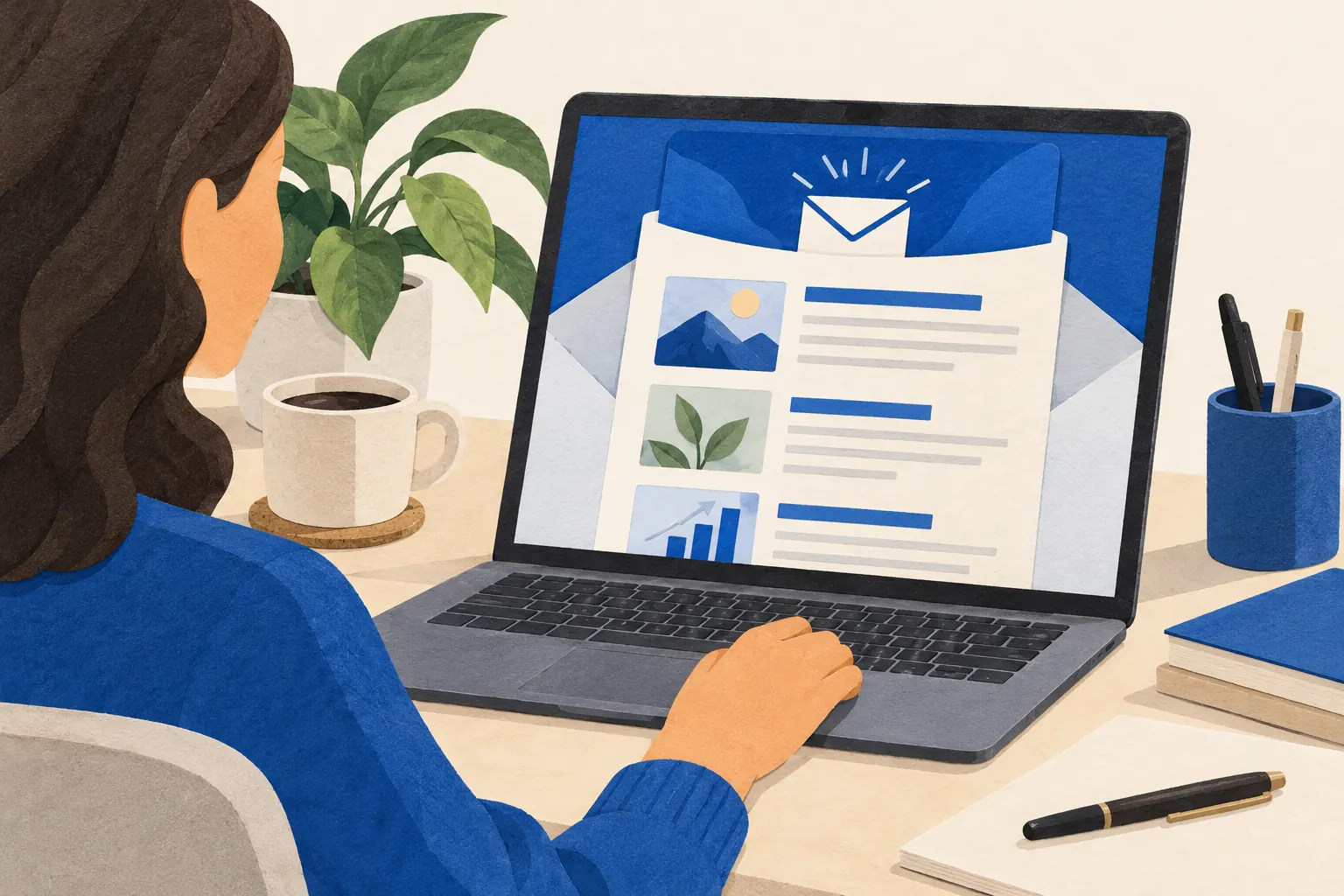
What makes an email a newsletter?
A newsletter has an editorial purpose: a defined reader, a subject and a reason to return. It might arrive weekly, monthly or when there is a meaningful update. Frequency alone does not define it. An invoice is not a newsletter, and an individual reply to a quotation request is a different kind of communication.
Mailchimp’s newsletter examples illustrate the format’s mix of useful content and business updates. A good issue can contain one substantial idea. Filling several boxes because the previous design had them is unnecessary.
What could a small business send?
Imagine a garden centre publishing a monthly email for people with small balconies. A spring issue explains when seedlings can go outside, links to a planting guide and announces a relevant workshop. It does not need to promote the entire shop.
The planting article is educational content; the newsletter distributes it to an existing audience. A clear subject line should describe the actual reason to open the message. The promised advice should be easy to find after opening.
How is it different from a sequence?
A welcome email responds to a new subscription or other first interaction. Email nurture develops an interested person’s understanding through relevant follow-up messages. A newsletter generally has an issue or publication date shared across its intended audience, although businesses can create different editions.
These formats can coexist. A new subscriber should still understand which messages they will receive and how to stop receiving them. Do not disguise a sales sequence as an independent editorial subscription.
What should you review?
Ask whether readers reach the promised article, reply with useful questions or take the action that fits the issue. A workshop issue and a practical advice issue need not have the same goal. Opening and clicking are signals, not proof of a purchase or lasting trust.
Keep a record of the topics covered, avoid repeating the same offer, and check that older links remain useful. A sustainable publishing rhythm beats a promise the business cannot keep.