Search competitor: meaning and practical examples
A search competitor is a website or page that appears for the same relevant searches and competes for the same search attention. It may be a direct business rival, but it can also be a magazine, marketplace, manufacturer or professional organization. The competitor set depends on the questions, market and search surface being examined.
Also known as: SEO competitor · organic search competitor
At a glance
- Search competitors and business competitors are not necessarily the same.
- The relevance of shared searches matters more than the raw number of shared keywords.
- Competitor analysis should improve your own answer, not become content copying.
On this page
Why is search competition different?
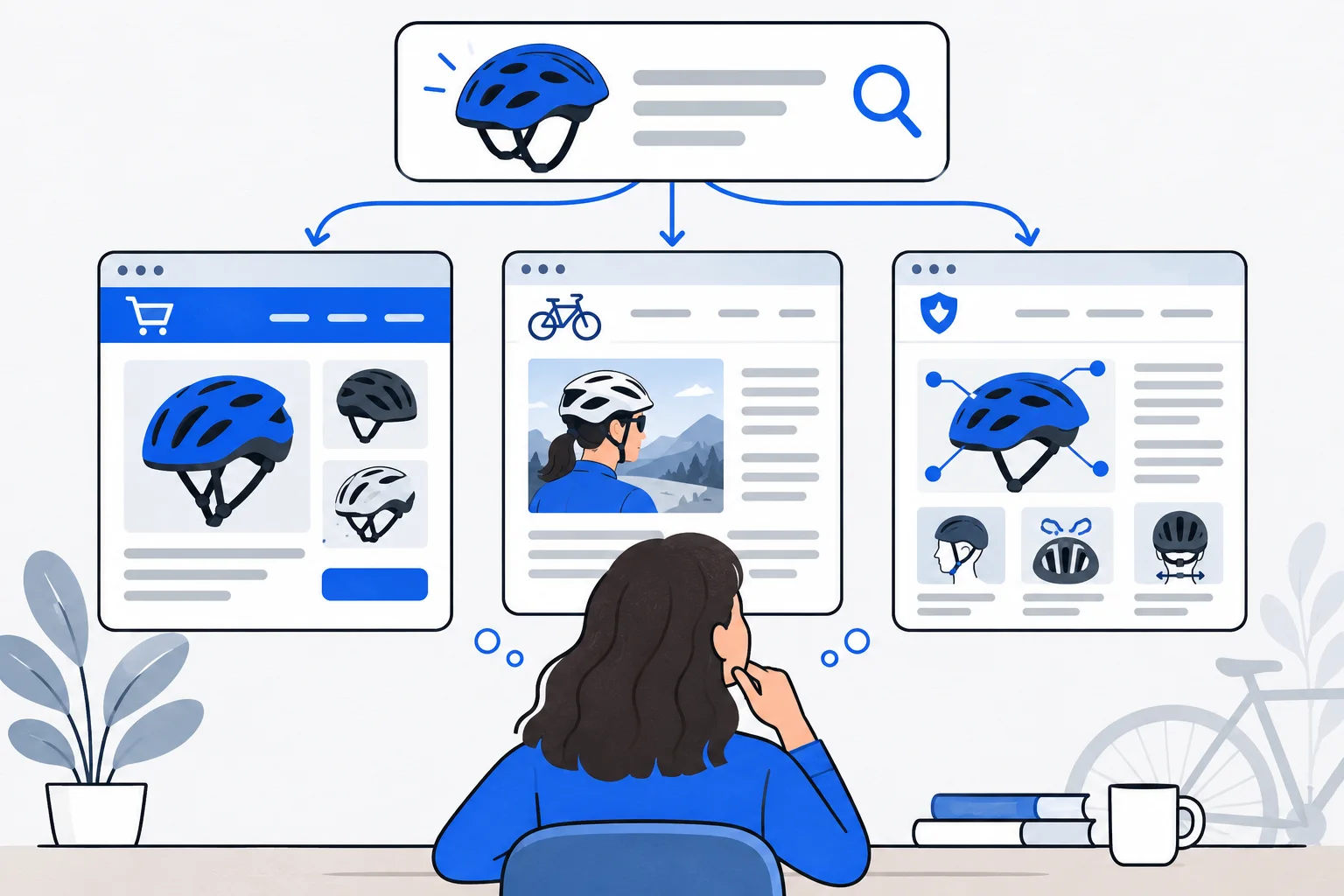
A coffee roaster may compete commercially with another roaster, but for “how do I choose coffee beans?” it may also encounter a magazine or equipment manufacturer. These pages do not necessarily sell the same thing, yet they can reach the same person researching a choice.
The search results page therefore brings different information roles into competition. A retailer may offer a selection, a specialist publisher an explanation, and a marketplace a comparison. Understanding your own content's job requires looking beyond a list of domain names.
How do you identify relevant search competitors?
Choose questions connected to what the business actually offers, then examine which pages appear repeatedly for them. Keyword research can suggest related directions, but the list needs filtering for business relevance. A large publisher may share many words with your website while rarely meeting you in the customer situations that matter.
Semrush's competitor-research guidance distinguishes different competitor sets. A domain with a similar backlink profile is not necessarily a direct competitor in organic results. Always state the basis of the comparison.
Example: three kinds of competitor for a local service
A fictional tiling contractor in Debrecen encounters other contractors, building-material retailers and general renovation guides in relevant searches. This is an illustrative situation, not a report of today's results for a particular query.
A contractor's service page may explain availability and the scope of the work. A material-selection question may instead call for a guide based on practical experience. The owner does not copy the retailer's entire catalogue, because reproducing that catalogue is not the contractor's business task.
The roles can overlap. A retailer may compete for attention on one topic while providing a useful primary source for product specifications on another. Interpret the relationship in the context of the question being answered.
What should you examine on competing pages?
During SERP analysis, examine the content format, main answer, evidence and intended audience. Identify which questions the page resolves well and which important uncertainties remain. Attractive design or a high word count alone does not explain why a page appears.
Do not define a content gap as every phrase for which a competitor is visible. Their page may serve another market, an unoffered service or a completely different reader. Leaving a topic out can be a sensible focus decision rather than a defect.
How does the analysis become your own assignment?
Write down a question your business can answer credibly. Identify the sources, original examples and next action that the answer requires. Use search intent to decide whether the appropriate page is a guide, comparison or service explanation.
Competitor sets change, so revisit them before important decisions. A small business does not need to follow every publication on every competing website. The useful outcome is a clearer understanding of the answers offered for its relevant questions, and a concrete way to contribute its own knowledge.