LCP: when does the main visible content appear?
LCP, or Largest Contentful Paint, measures when the largest eligible visual or text content element appears within the viewport. It describes one aspect of perceived main-content loading. It is neither the time to download every file nor a measure of later responsiveness to clicks.
Also known as: Largest Contentful Paint
At a glance
- LCP measures the appearance of a large visible content element.
- The good threshold is 2.5 seconds in the appropriate real-user assessment.
- Identify the LCP element and the cause of its delay before optimizing.
On this page
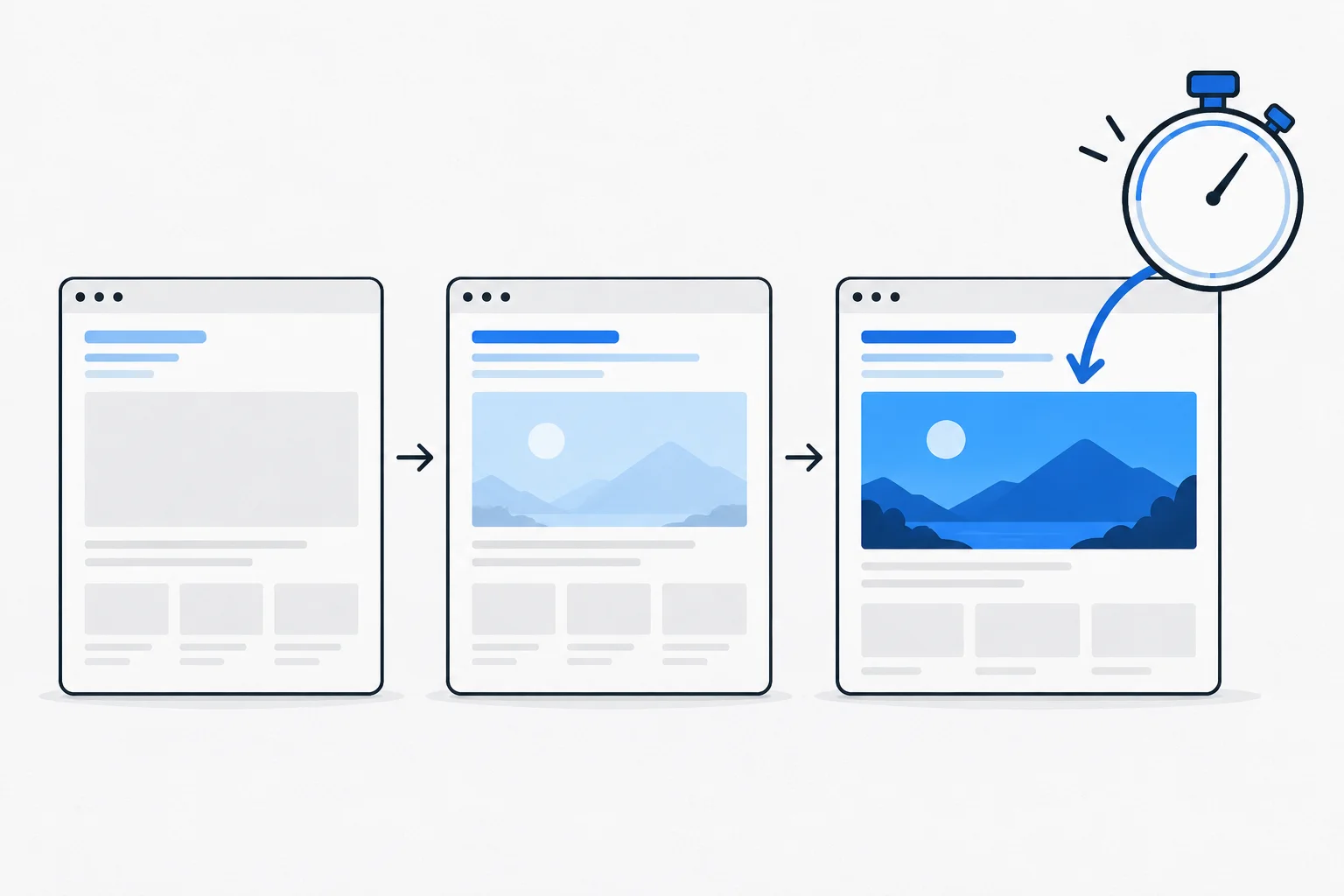
What happens at the LCP moment?
A page may start blank, show a header and then display its article title and main image. LCP observes a large eligible element occupying substantial viewport space. It approximates when visitors feel the main content has arrived. 1
The element varies by page. It might be a hero photograph or a text block in a glossary. A poor LCP is therefore not automatically an image-compression problem.
What counts as a good value?
web.dev defines 2.5 seconds or less as good. Assess the 75th percentile of real page loads, separating mobile and desktop populations. 1
One personal test at 1.2 seconds does not establish the experience of most visitors. Equally, one slow laboratory run does not describe every real visit. Measurement scope and period matter.
LCP is one Core Web Vital. It cannot summarize the entire state of SEO. 2
What can cause the wait?
The server may be slow to begin responding. The main image may be discovered late, contain too much data or wait for application code before rendering. These require different interventions.
TTFB helps investigate waiting for the response to begin. Image compression can reduce unnecessary bytes. Neither independently guarantees a complete solution.
The image-performance guide considers formats, dimensions and loading decisions together. 3 Diagnosis should identify where time is spent before another optimization begins.
If measurement shows that the browser discovers an LCP resource late, targeted preload can bring its download forward. This does not justify preloading every image and font: unnecessary requests can compete with other important files. Select the resource actually used, then check under comparable conditions whether the wait decreased.
Example: an apartment website
Imagine a landing page opening with a living-room photograph. The original file is several megabytes, though it occupies a much smaller area on mobile. A test shows readable headings while the image area remains empty.
The operator confirms that the photograph is the LCP element, creates a correctly sized version, checks visual quality and measures again. If the image arrives sooner but the server still responds slowly, the remaining delay belongs to another layer.
Deleting the photograph is not the only option. It can help visitors understand the accommodation; the aim is to deliver valuable visual information efficiently.
Why should the main image not be delayed?
Lazy loading primarily benefits resources needed later, outside the initial viewport. Applying it to the opening image can withhold the very content visitors immediately expect.
An image filename or alt text does not fix loading order. Description and performance are separate tasks. Examine the main image's priority and discoverability in the actual page template.
What does an improved LCP establish?
It establishes earlier display of the measured large element under the observed conditions. It does not automatically prove article quality, rankings or booking growth. Those need separate evidence.
Keep before-and-after conditions comparable: page type, device characteristics and measurement method. A changed audience or completely different hero image can also change what the figures represent. Consistent comparison helps show whether the intervention reduced the intended delay.