Search results and measurement
Dimension: meaning, examples and practical use
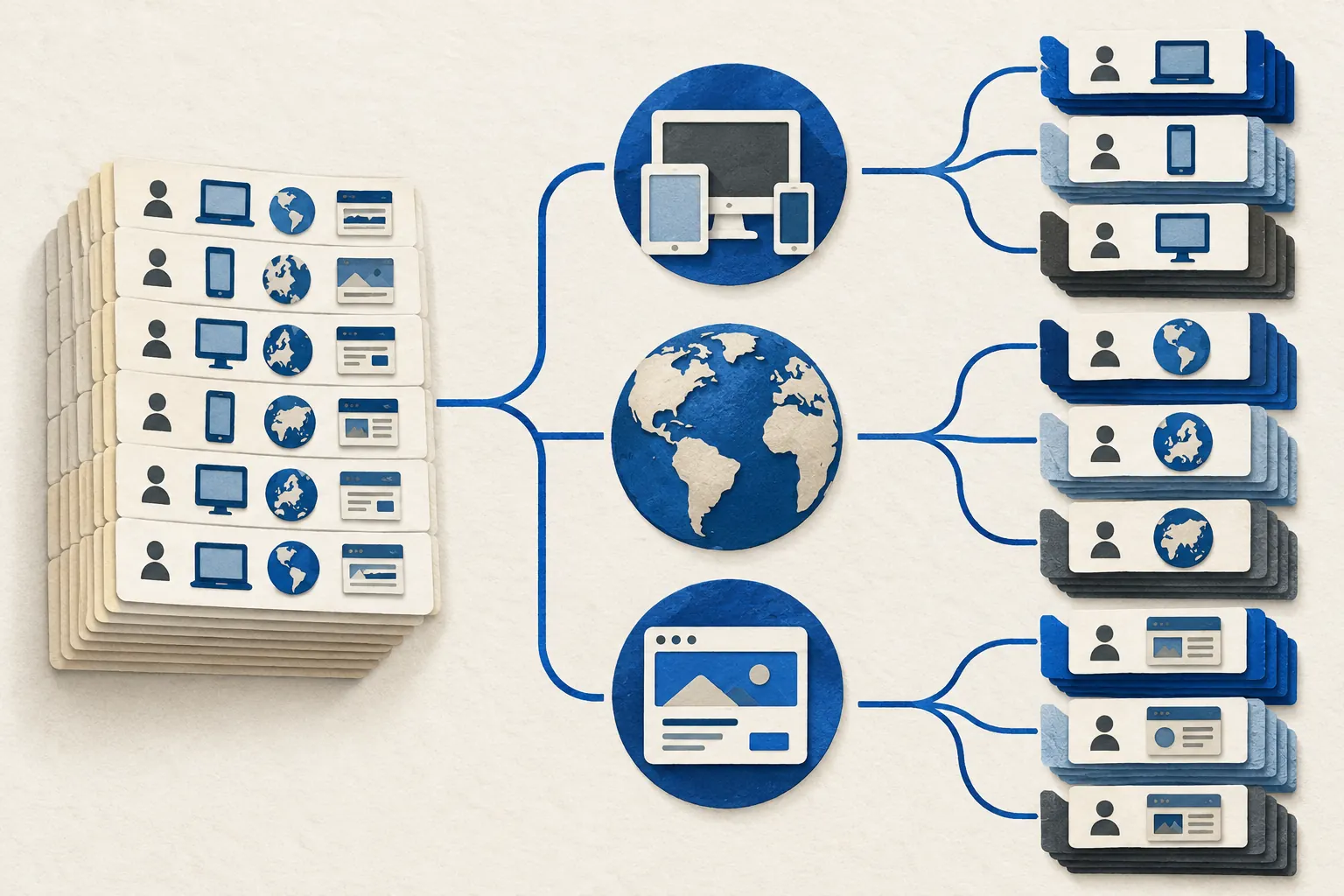
A dimension is a descriptive attribute used to group or filter analytics data, such as device category, landing page or source. The associated metric quantifies what was observed within each group.
Also known as: Dimenzió
At a glance
- A dimension describes the group being discussed.
- Scope can relate to a user, session or event.
- Similarly named dimensions can answer different questions.
On this page
How is it different from a metric?
“Mobile” is a device-category value; 200 sessions beside it is a metric. The GA4 field reference defines both types. Grouping the same quantity by different dimensions can reveal different patterns.
Why does scope matter?
First-user source describes initial acquisition. Session source describes the origin assigned to a particular visit. Confusing them can make reports appear contradictory even though they answer different questions. Choose the scope according to the decision being investigated.
Example: a mobile form problem
Imagine an overall form-submission rate remaining stable. A device breakdown reveals deterioration on mobile and improvement on desktop. The grouping identifies where to investigate without establishing the cause by itself. The form still needs inspection.
What can go wrong with detailed breakdowns?
Many distinct values can fragment the data into small groups and weaken conclusions. Do not place personal information in custom dimensions. When examining traffic acquisition, select dimensions suited to sessions rather than casually mixing them with initial-user acquisition. Clear labels make comparisons easier for readers who did not configure the report.