What is a referring domain?
A referring domain is a domain that contains at least one backlink to the website or page being analyzed; multiple links from that domain can still count as one referring domain.
Also known as: referring domain · linking domain
At a glance
- Backlink count and referring-domain count measure different units.
- Tools differ in discovery, timing and domain grouping, so their totals need not match.
- A larger count does not establish that the sources are relevant or independently trustworthy.
On this page
How is a referring domain counted?
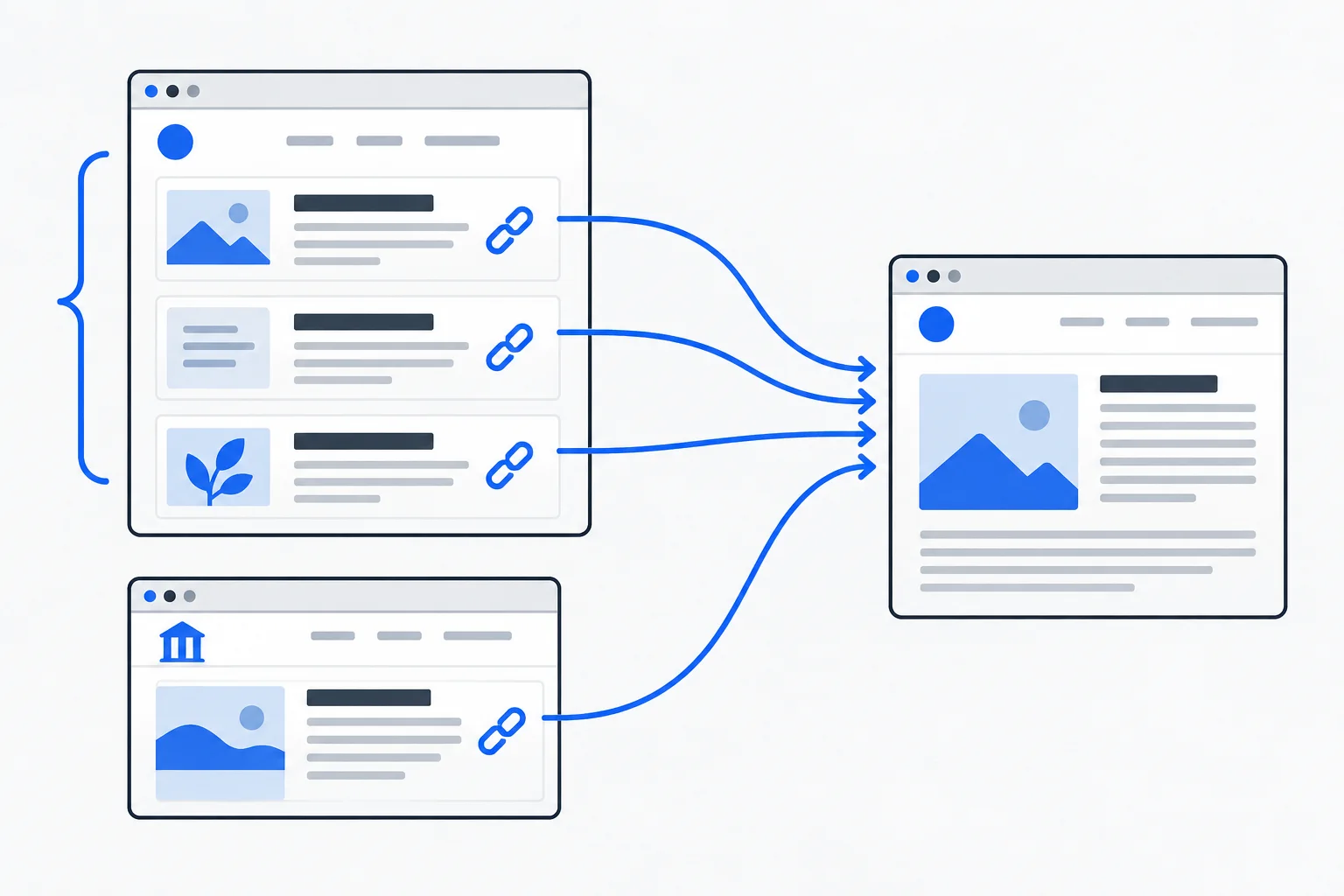
Suppose a partner publishes three articles, each linking to your website. You have links from three source pages, but they can all belong to one referring domain.
Source pages, individual backlinks and referring domains are different units. A report should make clear which one it counts and whether its target is your whole website or a particular page.
Why do tools show different totals?
Link tools discover different parts of the web at different times. They also apply their own grouping rules and may handle subdomains, redirected destinations and canonical pages differently.
The Google Search Console Links report groups linking sites and provides a sample rather than an exhaustive inventory of every link. A missing source in one report is therefore not proof that the link does not exist.
When comparing totals, keep the tool, date and target scope consistent. Open important source pages directly rather than treating a count as the final evidence.
What does a domain-level view add?
It can help distinguish wider exposure from many repeated links on one site. A navigation or footer link appearing across hundreds of pages can inflate a backlink total while adding only one referring domain.
However, ten different domain names do not necessarily represent ten independent editorial recommendations. They could belong to one operator or a low-quality network. Read the surrounding content and assess whether the mention makes sense for the audience.
A practical example
Imagine a craft workshop in Eger. Eight event pages on one local portal link to it, and a professional association publishes one further link.
That example contains nine links from two referring domains. It does not contain nine separate websites recommending the workshop. The useful next step is to check whether the pages describe the business accurately and whether their readers have a reason to visit.
The count alone does not show improved rankings, inquiries or revenue. Those are separate outcomes.
Is a referring-domain count an authority score?
No. It is one observation about the link sources found by a tool. Third-party metrics such as Domain Rating or Authority Score can use link information in broader calculations, but they are not Google’s own ranking scores.
A higher domain authority estimate does not mean every page will outrank another site. Context, the destination page and the actual search need still matter.
How should you use the report?
Record which tool produced it, what target it analyzed and when the data was checked. If the tool identifies new or lost domains, verify significant changes manually: discovery delays or a temporarily unavailable source can affect the report.
Use the list to understand relevant relationships, useful references and potentially misleading links. Digital PR and other off-page work are more meaningful when they connect useful expertise with appropriate readers than when they pursue a domain total by itself.