Customers and buying decisions
Repeat purchase: another purchase by an existing customer
A repeat purchase is a new purchase made by a customer who has bought from the business before, under a clearly defined customer and transaction scope.
Also known as: repeat buying · repeat customer purchase
At a glance
- Repeat purchase is a transaction, while retention describes a relationship over time.
- The same customer buying again is different from a new visitor or a duplicate order.
- Product need and purchase frequency affect how repeat buying should be interpreted.
On this page
What is repeated?
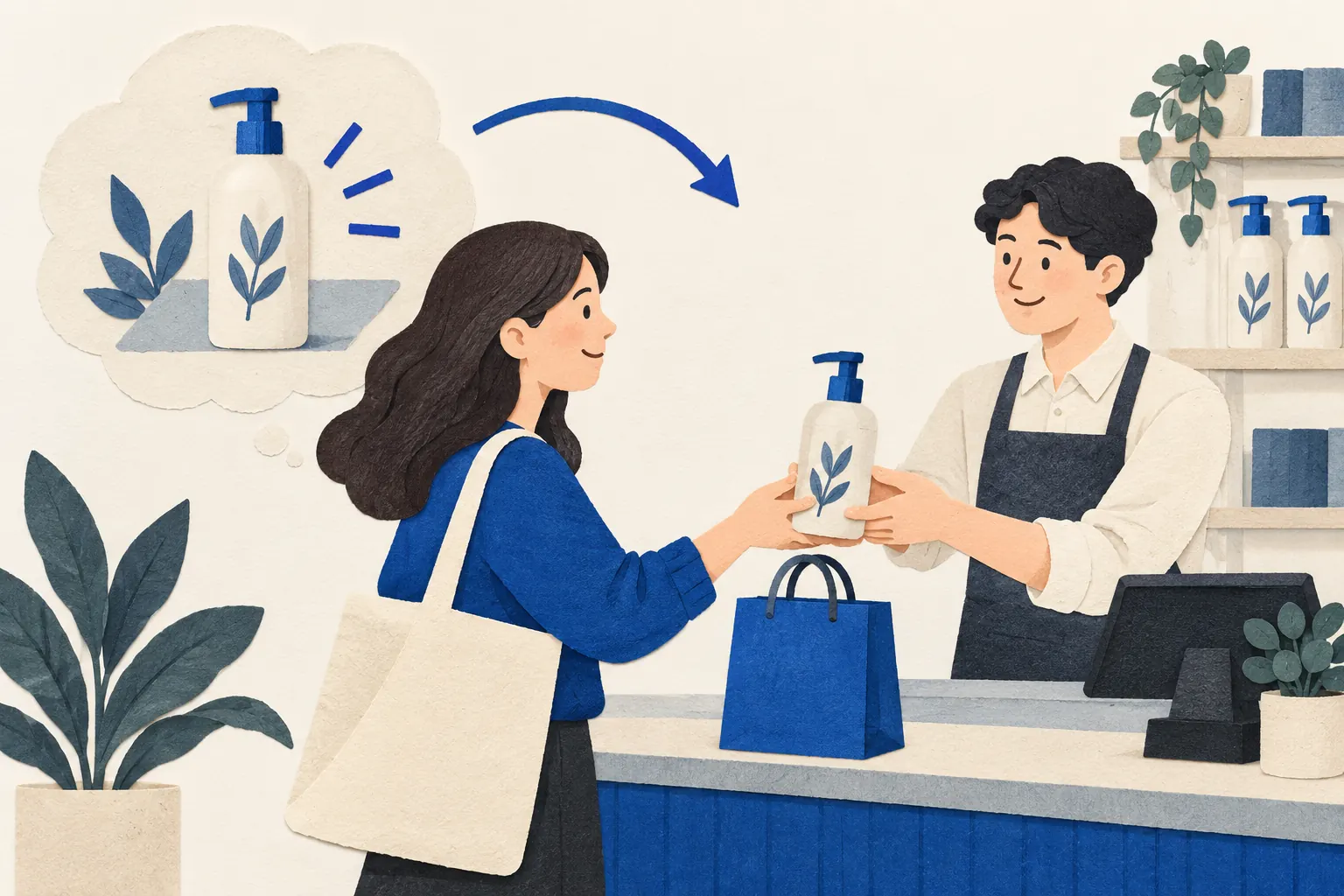
The customer returns to buy again. The next purchase might be the same product, a replacement, a complementary item or another service. Define the business scope: buying from a different company in the same category is not a repeat purchase for the original seller.
Repeat buying is a behavior. Salesforce’s customer-loyalty guide discusses repeated purchasing alongside broader loyalty concepts. A customer may buy again because the product fits, but convenience or limited alternatives can also matter. Another order alone does not reveal the motivation.
A small business example
Imagine a coffee shop selling beans for home use. A customer buys a bag, enjoys it and returns later for another. That is a repeat purchase. If the customer instead visits the website several times before the first order, those visits are not repeat purchases.
A repair workshop has a different pattern: a well-completed repair may remove the need to return soon. Comparing its repeat frequency with the coffee shop would ignore the service’s purpose. More transactions are not always evidence of a better customer outcome.
Counting repeat buyers
A repeat-purchase rate needs a defined period and denominator. For a simple hypothetical measure, take ten customers who purchased during a period. If four of them made more than one completed purchase during that same period, the proportion is 40% under that definition.
Another report might ask how many first-time buyers return within six months; that uses a different group and window. Do not compare the two as if they were identical. Exclude duplicate records and decide how canceled orders are treated before reporting.
How does content help?
Useful articles can explain care, replenishment, compatible accessories or how to decide whether an upgrade is needed. They should help the customer make an appropriate choice, not manufacture a reason to replace something that still serves them well.
Customer retention examines the ongoing relationship, and customer acquisition concerns new customers. Customer feedback can help explain why someone returns or does not. Keep these concepts separate so a rise in repeat transactions is not automatically presented as stronger loyalty or proof of a particular marketing tactic.