Search title link: meaning, examples and practical use
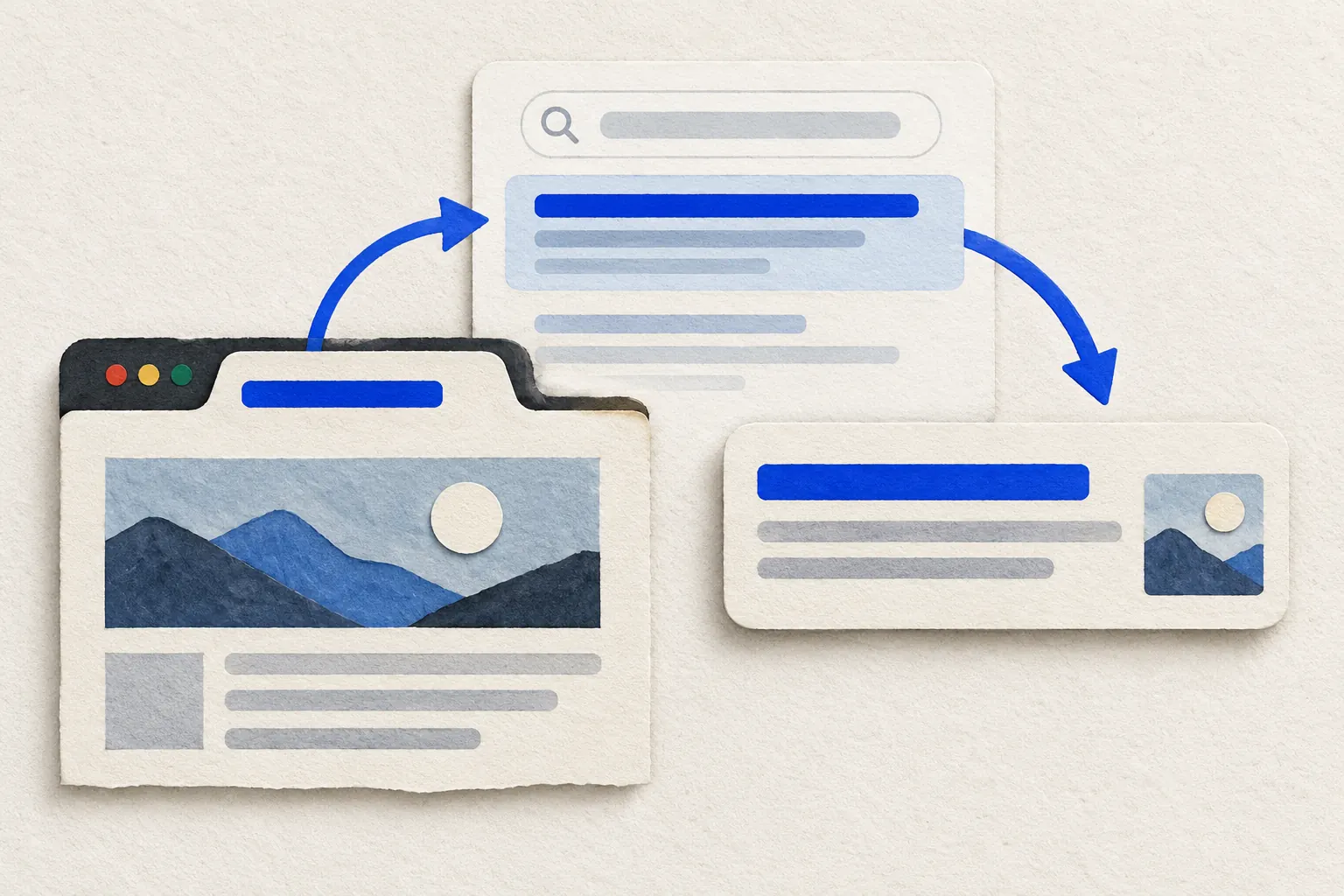
A search title link is the clickable title of a result that identifies its destination page. Google generates it automatically from multiple signals, so it can differ from the text supplied in the page’s HTML title element.
Also known as: Keresési találati cím
At a glance
- The title tag is an input; the title link is the displayed search result.
- Visible headings and metadata should describe the same page accurately.
- A change may require recrawling and processing before it appears.
On this page
Why is it not the same as a title tag?
The title tag is an element in the page source. The search title link is the wording shown to searchers. Google's documentation describes inputs including the title element, main heading and text of links pointing to the page.
How can ambiguity be reduced?
Make the heading, title and actual content describe the same task. Avoid stale years, incomplete titles and identical generic wording across every page. Use the language of the page. These practices improve clarity without giving complete control over the displayed result.
Example: an outdated year
Imagine a guide whose visible heading names a new edition while the title element retains an older year. The solution is not blindly inserting the latest year everywhere: first verify that the content actually applies to the new period.
How should a change be checked?
Inspect the source, visible heading and live search appearance separately. Recrawling and processing may be necessary. Do not automatically attribute a CTR change to the title when position, query mix or seasonality changed too. Compare sufficiently similar conditions before drawing a causal conclusion.