Content outline: plan the explanation before writing
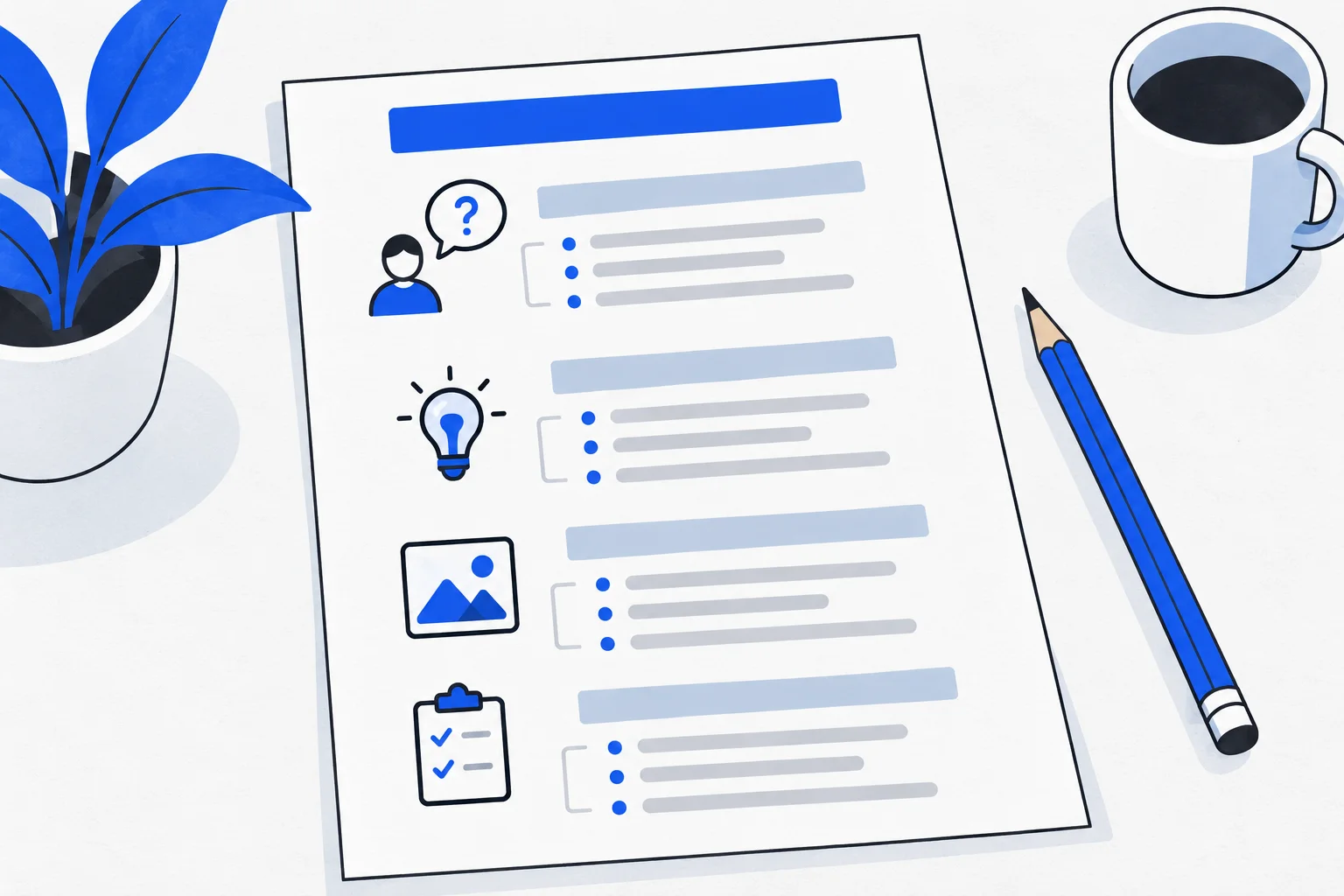
A content outline plans an article’s logical structure: the sequence of main questions, sections, important claims and examples. It shows how readers will reach an understandable answer before the full text is written. It can be more than a list of headings, but is not yet a finished article.
Also known as: content outline · article outline
At a glance
- Plan the sequence of questions and answers, not merely heading labels.
- A brief defines the assignment; an outline shows how the explanation develops.
- Flag missing evidence and uncertain claims before drafting.
On this page
Why is an outline more than a heading list?
“Introduction, benefits, disadvantages, conclusion” can fit countless topics while making very few decisions. A useful outline identifies what each section must explain, which example helps and which claims need evidence.
Ahrefs' outlining guide treats advance structure as a writing tool, not a universal template. Definitions, comparisons and practical instructions can require different organizations.
Brief, outline and table of contents
A content brief defines the audience, central question and constraints. The outline divides the response into sections. A table of contents helps readers navigate the finished page.
| Document element | Question it answers |
|---|---|
| Brief | Who is this for, and what should it accomplish? |
| Outline | In what order will the explanation develop? |
| Full draft | Exactly how will the subject be explained? |
| Table of contents | Where is each part of the finished article? |
The title and heading hierarchy can emerge during outlining and change when another order proves clearer.
Example: choosing a bicycle lock
Imagine a bicycle shop planning a guide to choosing a lock for urban riding. The main task is not listing every lock type; it is helping customers select criteria for their situation.
An outline might begin with where and how long the bicycle will be left, then compare lock types, portability and correct locking technique. A short shop visit and all-day outdoor storage provide contrasting fictional examples.
A separate note identifies security claims requiring manufacturer information or independent testing. The article should not assert that one type is safe in every circumstance without evidence. The example illustrates planning rather than recommending a particular lock.
How can you build an outline?
Write the central question in one sentence. Then identify the smaller questions needed to avoid a misleading answer. Search intent helps determine which deserve space.
Assign each section a job: clarify a concept, explain a distinction, demonstrate with an example or describe an action. Merge sections doing the same job. If an essential question fits nowhere, add a missing section or narrow the subject.
W3C's heading guidance emphasizes logical organization. Heading levels should reflect relationships rather than desired font sizes.
When should the outline change?
Adapt it when sources contradict the original assumption or drafting reveals a missing distinction. An outline is a working plan, not a reason to retain an unsupported claim.
Finally, identify natural internal links and an appropriate next step. The page should answer its central question independently; linked explanations extend the answer rather than hide essential information elsewhere.
Plan a headline that makes an accurate promise and an introduction that confirms it. Organizing sections around reader questions also makes the final content easier to scan, without reducing the substance of the answer.