Product feature: meaning and practical examples
A product feature is an identifiable attribute, component or function of an offer, such as its dimensions, material or a capability. A feature states what the product has or does; its benefit explains why that matters in a customer’s situation.
At a glance
- Describe features with precise, verifiable information.
- A feature can be useful to one customer and irrelevant to another.
- Keep the feature and the claimed benefit connected by a supported explanation.
On this page
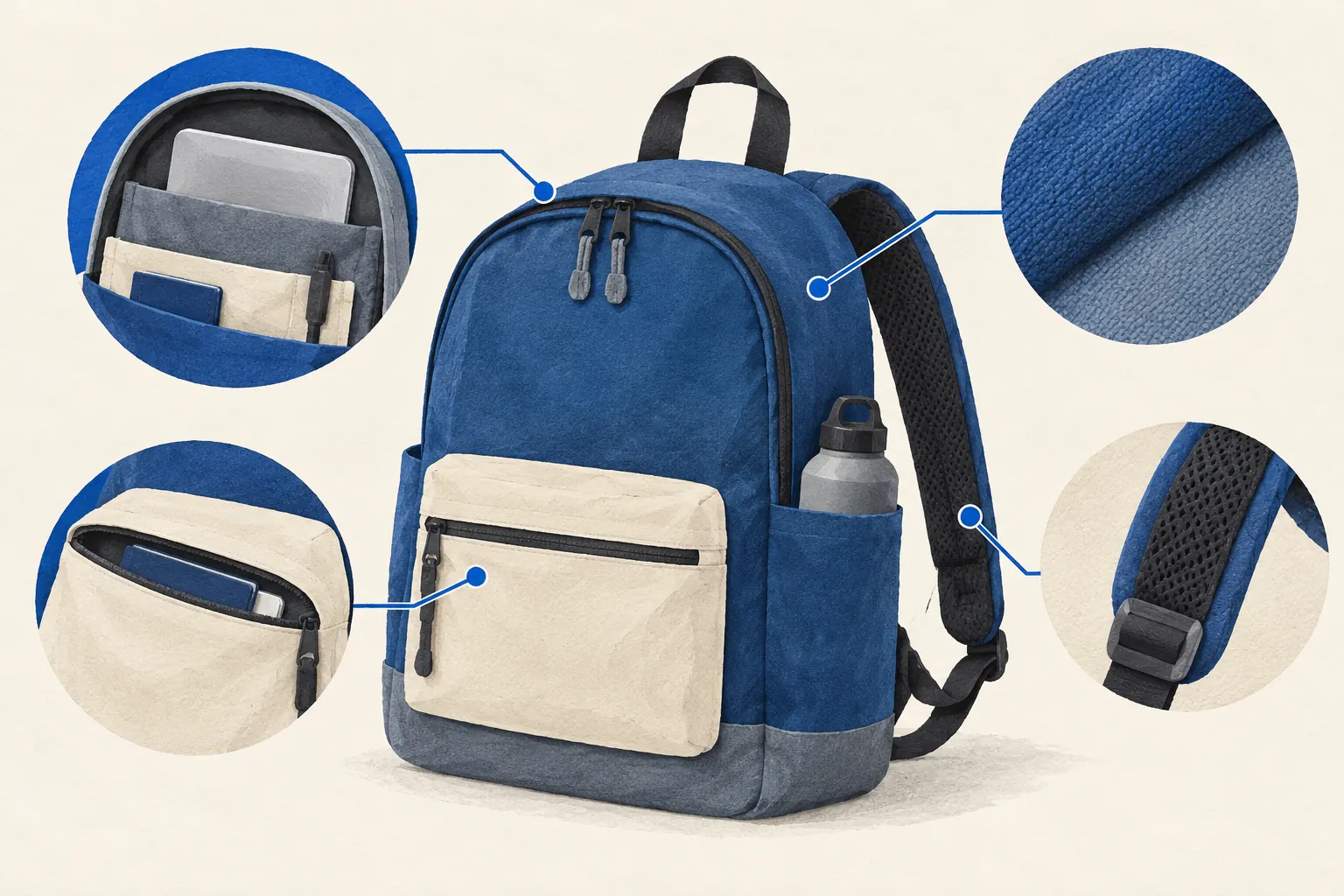
What can count as a feature?
A feature can be a physical attribute, an included component or a function. For a backpack, examples include capacity, pocket arrangement and adjustable straps. For a service, a clearly defined included step can play a similar role in explaining the offer.
OpenStax distinguishes the actual product and its attributes from the underlying benefit sought by the customer. Products and their value
How is a benefit different?
“Adjustable straps” names a feature. “The wearer can change the fit” explains a direct practical consequence. A broader customer benefit still depends on the person's body, use and other product characteristics.
Do not jump from one feature to an unsupported outcome. A larger pocket does not automatically make every journey easier, and a service checklist does not guarantee a flawless result.
Example: a bakery sells cake boxes
Imagine a bakery offering boxes with a viewing window and a carrying handle. The window helps someone see the contents without opening the box; the handle provides a way to carry it under the stated conditions.
An article can explain which box fits which cake dimensions and how to transport it appropriately. It should not invent a weight limit or promise that the cake cannot be damaged. This hypothetical example separates observable features from unsupported performance claims.
Which details need verification?
Check the current product specification, packaging and actual included items. State units and conditions clearly. If a feature is available only on one variant, identify that variant instead of attributing it to the whole range.
On a product page, vague terms such as large or premium may need concrete explanation. A customer should be able to compare relevant criteria without guessing what each label means.
How should articles present features?
Select the details that help answer the article's question. Explain necessary terminology and connect each important feature to its use and limits.
Avoid turning an educational article into an exhaustive specification dump. Keep detailed specifications accessible where needed, while the explanation helps the reader decide which details matter for their own circumstances.