TTFB: the wait for the first response byte
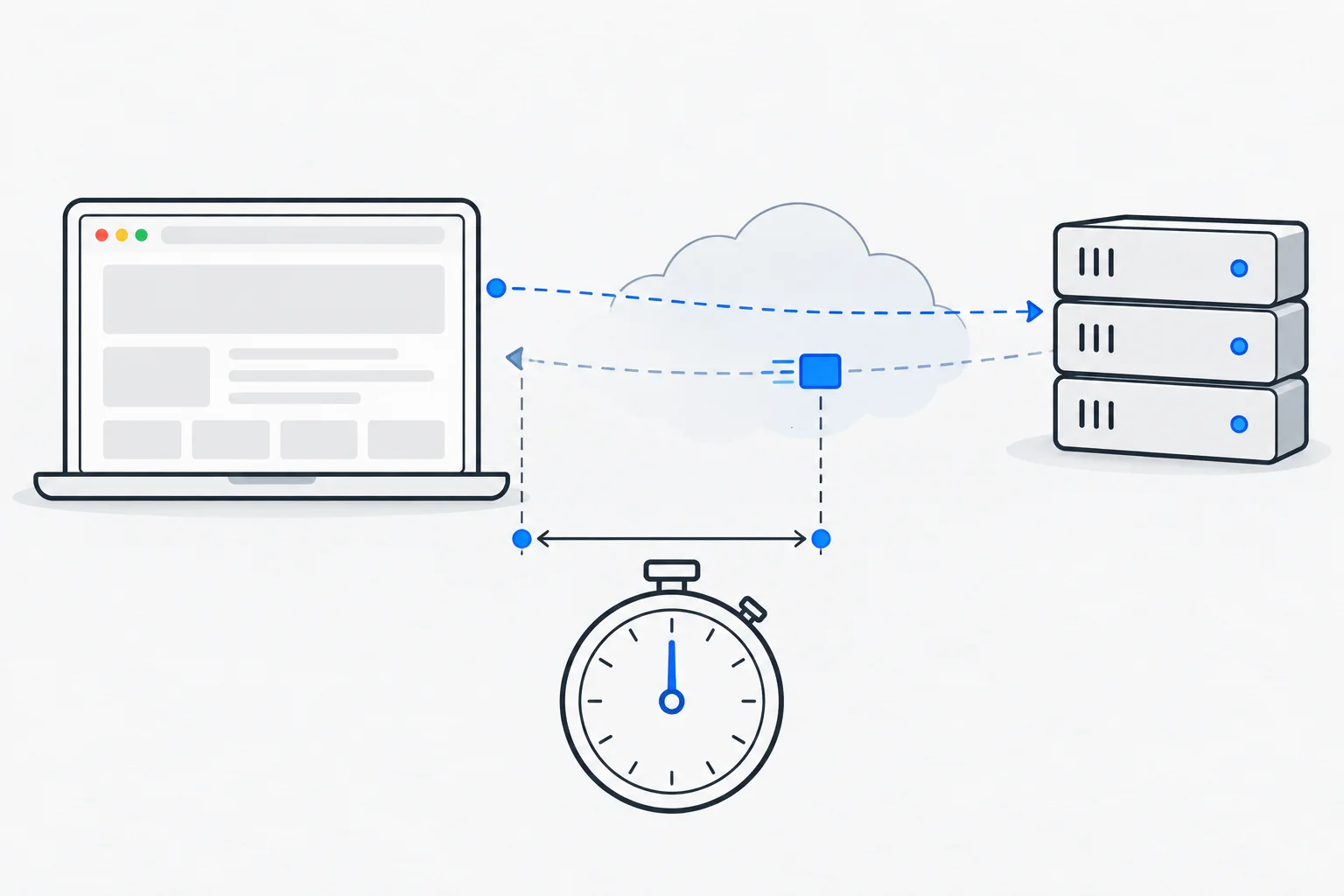
TTFB, or Time to First Byte, measures the interval from the start of navigation to the arrival of the response’s first byte. Connection setup, redirects and server-side waiting can contribute. It is neither total page-load time nor a Core Web Vital.
Also known as: Time to First Byte
At a glance
- TTFB describes the wait until the response begins.
- It is not purely the server’s internal processing time.
- The main content can still appear late after a fast first byte.
On this page
Where it fits in loading
Before a browser can draw a page, it needs a response to its request. Connection setup, redirects and server work can precede the first content byte. TTFB helps explain that early delay.
The web.dev definition spans navigation start to response start. Calling it “server response time” can conceal the network and connection components. TTFB documentation
How TTFB differs from LCP
LCP concerns the appearance of a large visible content element. Additional downloading, processing and rendering can happen after the initial response. Early response delay is only one possible part of that journey. LCP documentation
A server can send an initial response quickly while the article text or main image arrives much later. Conversely, a slow start can delay everything that follows. TTFB is a useful diagnostic metric, but it is not one of the Core Web Vitals.
What can increase it?
Distance, DNS lookup, connection and encryption setup, redirects and backend processing can contribute. A dynamic page waiting on a database can behave differently from a nearby static file.
A CDN or suitable page cache can reduce work for some requests. Not every response is safe to share: personalized content needs different treatment from a public guide. HTTP caching
Measure where time is spent, which page types are affected, from which region and under which cache conditions.
Example: a public reference article
Imagine a consultancy article showing the same text to every visitor. Each request nevertheless makes several backend calls and waits for an external service unnecessary for displaying the article.
A developer separates essential public content from later convenience features and checks whether the response can safely be reused. After changing the implementation, they measure both initial waiting and appearance of the main content under comparable conditions.
The useful outcome is earlier access to the information without compromising correctness or data separation, not a lower TTFB number in isolation.
Why tools can disagree
Measurement location, connection state, cache state, redirect treatment and timing boundaries can differ. Interim responses such as Early Hints also affect what a tool treats as the first byte. Understand the metric before comparing results from different environments. TTFB documentation
What a performance improvement establishes
As part of technical SEO, TTFB helps locate serving delays. A change can demonstrate reduced waiting and improved reading experience. Its effects on rankings, enquiries or revenue require further evidence; the overall result of SEO cannot be inferred from one timing value.