Keyword match types: meaning and practical example
Keyword match types govern which searches can match a configured keyword in Google Ads search advertising. The main types are broad, phrase and exact match. Matching can consider meaning and intent: even exact match does not necessarily require identical characters.
Also known as: broad match · phrase match · exact match
At a glance
- Match type is an advertising targeting rule, not an organic SEO setting.
- Exact match can cover searches sharing meaning or intent.
- Check real search terms and exclusions against the actual offer.
On this page
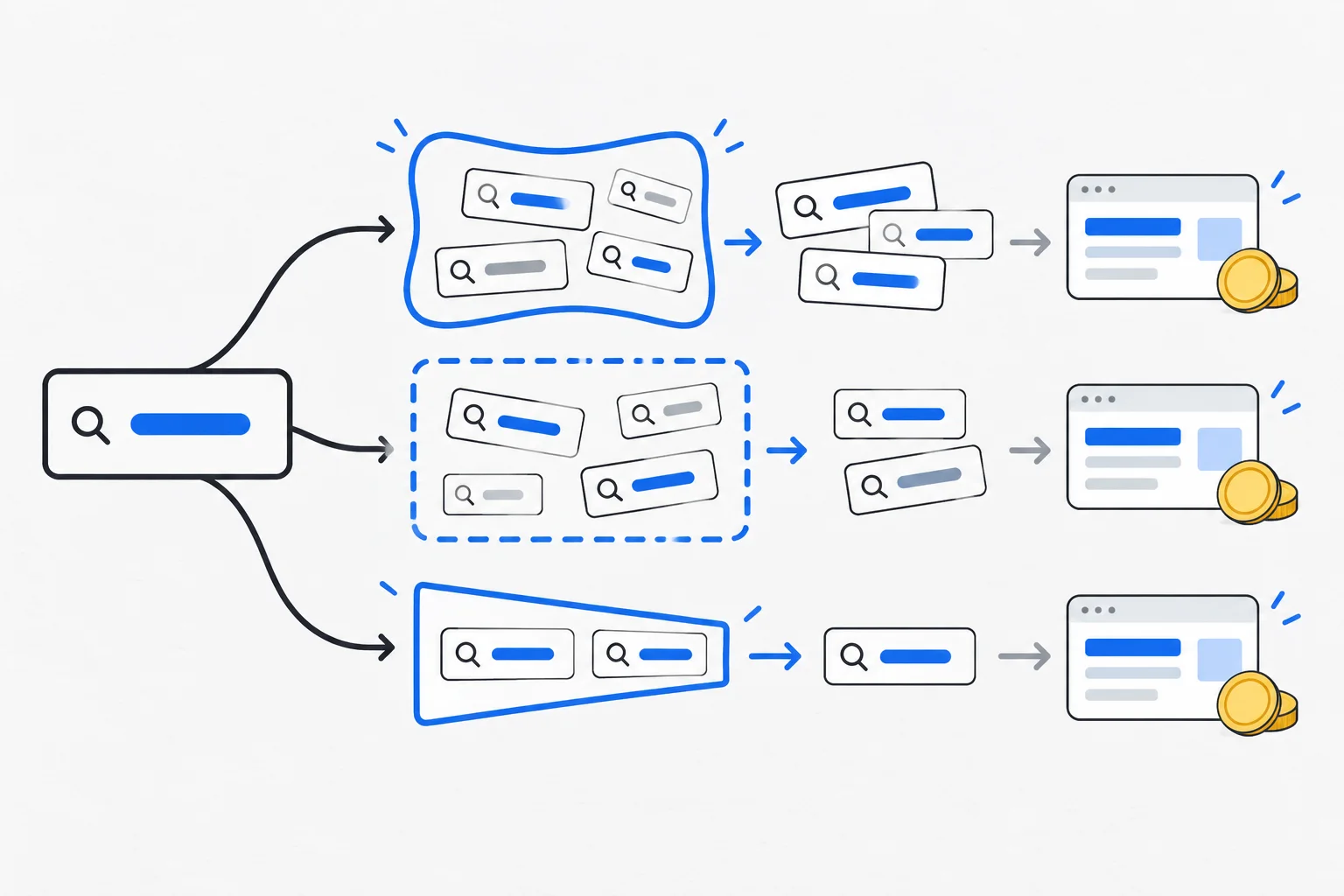
Where are match types used?
The term primarily concerns Google Ads search campaigns. An advertiser supplies a keyword, and the matching rule determines which user searches may make the ad eligible for an auction. Actual impressions also depend on other campaign conditions.
The user's search query need not be identical to the advertiser's keyword. Understanding this distinction is essential for reports: one configured keyword can lead to impressions or clicks from several actual searches.
How do the three types differ?
Broad match can cover a wider set of related searches. Phrase match requires a closer relationship to the specified meaning. Exact match is the narrowest of these, while still accommodating the same meaning or intent. Current Google Ads documentation is the primary reference for detailed rules.
| Type | Important interpretation |
|---|---|
| Broad | Related searches can extend beyond the literal wording. |
| Phrase | The relationship to meaning matters, not simply substring matching. |
| Exact | The query need not match character for character. |
Why does search intent matter?
Similar phrases can represent different needs. “Clean a sofa at home” may ask for DIY instructions; “mobile sofa cleaning service” suggests choosing a provider. Without understanding search intent, advertisers can mistake clicks from unsupported needs for valuable prospects.
Match type is not an independent success switch. Targeting, budget, bidding and landing-page content work together. Wider reach may expose more searches to investigate, without automatically improving return. Narrower matching does not guarantee a relevant customer either.
Example: an upholstery cleaner in Budapest
Imagine a company offering on-site sofa cleaning but no equipment rental. Its campaign includes sofa-cleaning keywords. During review, the team checks whether ads appeared for machine-hire or household cleaning-product searches.
Finding such a query does not simply establish a “bad keyword.” Identify the matching rule, actual search and campaign circumstances. A negative keyword may be appropriate for needs the business cannot serve, based on current settings.
This example neither launches a campaign nor promises outcomes. It clarifies that a configured keyword differs from the full set of real searches, supporting a more precise review and clearer destination page.
How does this relate to organic SEO?
Quotation marks or square brackets in website copy do not configure Ads match types for organic results. Choosing a page's subject is an editorial decision. Copying advertising syntax into an article creates no special ranking instruction.
CPC concerns advertising click costs, so interpret matching effects using the appropriate campaign data. Article readership and advertising costs belong to different measurement contexts despite shared vocabulary.
What should be reviewed regularly?
The campaign owner should examine actual searches and the answers visitors receive. Distinguish relevant, uncertain and clearly unsupported needs. Do not base exclusions on one word alone: the whole query matters.
Document setting changes with dates and reasons, making later evaluation possible. Precise terminology helps business owners understand advertising decisions without confusing matching rules with organic content writing.