Product feed: transferring accurate product data
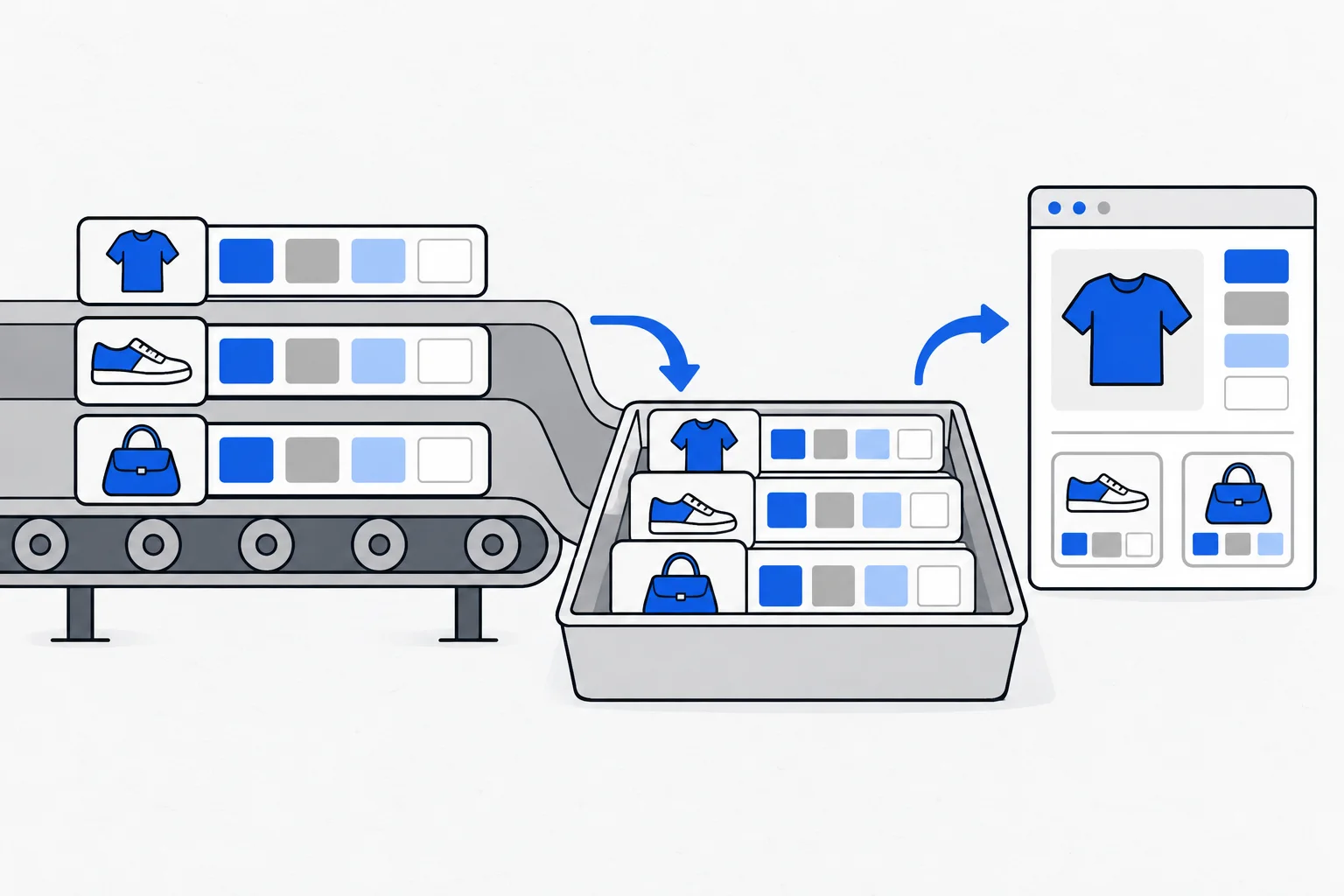
A product feed is a file, connection or other supported data flow used to transfer structured product information. Items may include an identifier, title, description, image, price, availability and landing page. The concept concerns regular machine processing of product data, not simply the appearance of a public product list.
Also known as: Product data feed · Merchant data source
At a glance
- Connect each item to a consistent identifier and the correct landing page.
- Current prices and availability matter as much as a valid file format.
- A product feed, XML sitemap and product-page markup are separate tools.
On this page
What the feed transfers
A feed provides fields that a receiving system can associate with identifiable products. Google’s specification describes accepted attributes and their conditions. Requirements can vary by product type, market and destination. Product data specification
A supported file or integration can deliver the information. Valid formatting is only one condition: a readable file can still contain the wrong price, broken link or image of another variant.
Why identifiers matter
The receiver needs to distinguish an update to an existing item from a different product. Changing a title does not necessarily create a new product, while separate variants should not accidentally be combined.
For example, a black medium T-shirt can have different availability from a white large one. Represent the relationship and differences between product variants consistently. The data model should follow what customers can actually buy.
Each row contains claims to check
| Field | Question |
|---|---|
| Title | Does it identify the correct product and variant? |
| Landing page | Is the item actually available at that address? |
| Image | Does it show the right item? |
| Price | Does it match the offer and currency? |
| Availability | Does it reflect current orderability? |
| Identifier | Does it track the same item across updates? |
This is an illustrative checklist, not a complete specification for every product. Check current requirements for the receiving service.
Feed, sitemap and markup
An XML sitemap primarily helps discover URLs. A feed supplies detailed commercial attributes. Structured data describes a product and offer on the web page itself.
Google supports several ways of receiving product information. Coordinate them rather than copying one error across multiple systems. A sitemap link cannot substitute for a missing price in a merchant data source. Sharing product data
Where updates can fall out of sync
Imagine a backpack selling out at noon while an external feed still reports the morning’s stock. Infrequent updates or failed processing may explain the mismatch. Rewriting the page title will not fix the stock-data connection.
Inspect the item’s status and diagnostics in Google Merchant Center. Successful transfer, acceptance and actual appearance are different states.
Identify the authoritative systems for prices and stock, the update schedule and who responds to discrepancies. A feed should remain a maintained data connection, not a file created once and forgotten.