URL normalization: Meaning, examples and limitations
URL normalization is the deliberate conversion of equivalent address forms into a consistent representation. It can reduce accidental duplication, but equivalence must follow the website’s real behavior rather than assumptions about case, slashes or parameters.
At a glance
- Normalize only variants that genuinely mean the same resource.
- Redirects and canonical hints serve different purposes.
- Path case and parameters can be meaningful to an application.
On this page
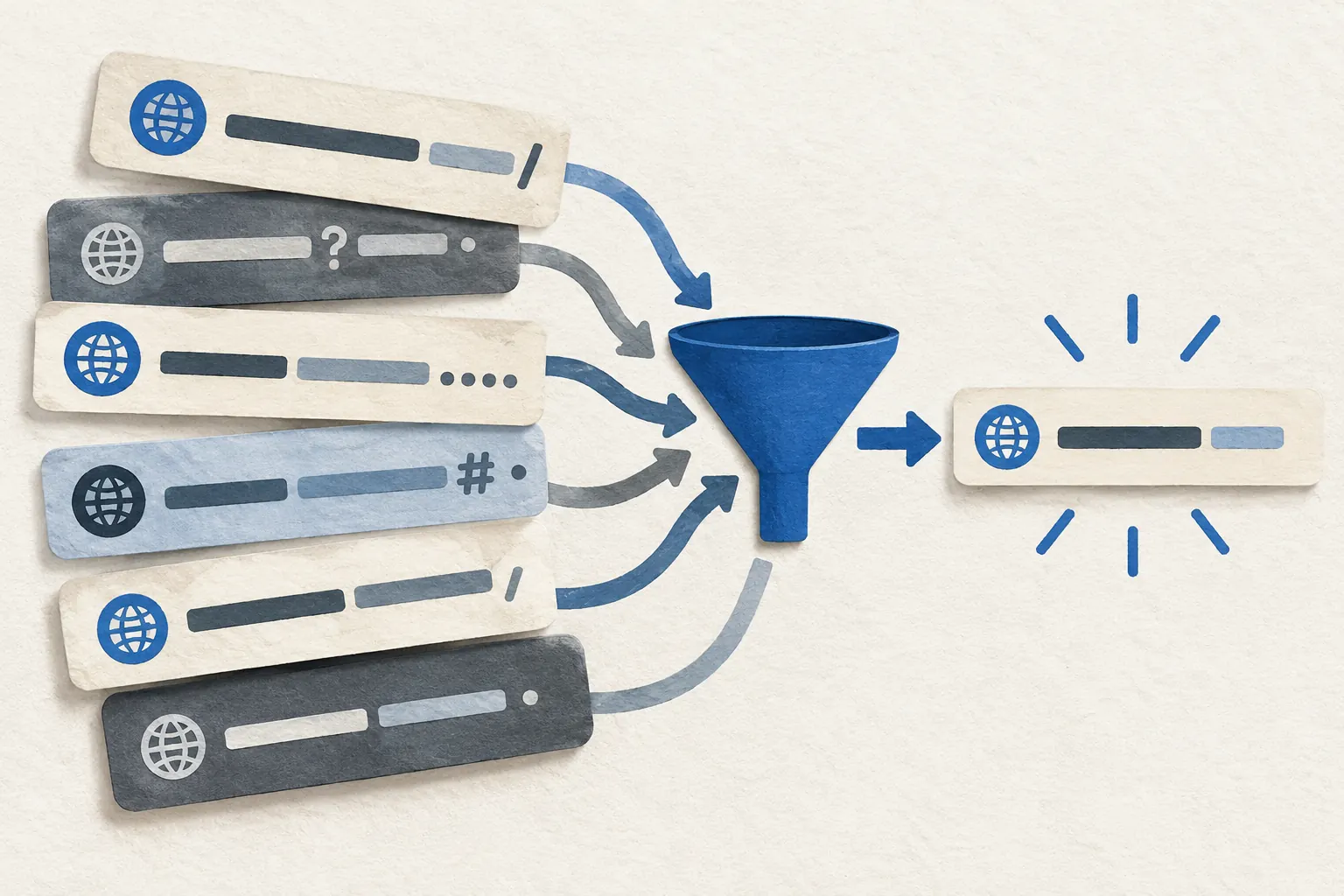
Which variations might be equivalent?
A site may receive addresses with different hostnames, trailing slashes, tracking values or encodings. Some resolve to the same intended document; others do not. The normalization policy states which form is preferred and how alternatives behave.
Do not blindly lowercase every path or discard every query string. A server can treat those differences as meaningful. Google's URL guidance recommends consistency, not arbitrary rewriting of application semantics.
Example: one guide with several entry addresses
Imagine a guide accessible at both a slash-ending and non-slash address. If they truly represent one document, the owner can choose a stable form and make internal links use it. A redirect can send visitors from an equivalent alternative to the chosen address.
A canonical link instead signals a preferred version for search processing. It does not itself redirect the browser. Keep those two behaviors distinct when reviewing the result.
How can normalization go wrong?
Removing a content-changing parameter can show the wrong product selection. Rewriting case can break a case-sensitive path. Applying a rule before identifying the intended hostname may redirect customer or preview domains unexpectedly.
Test positive examples and counterexamples: two equivalent addresses, two genuinely different pages, an unknown address and any important query values. Consistency is useful only when it preserves meaning.
What should the public site agree on?
Navigation links, sitemap URLs, canonical metadata and redirects should express the same preferred destinations. Avoid redirect chains that repeatedly transform one variant into another. Inspect actual GET and HEAD responses rather than assuming the configuration is active. A normalized URL structure improves clarity; it does not by itself establish page quality or a ranking advantage.