Keyword: meaning, examples and use in SEO
In SEO, a keyword is a word or phrase used to connect a page’s content with the searches it aims to serve. It can be one word, a multiword phrase or a complete question. The search actually entered is a search query; in Google Ads, a keyword can also mean a targeting item configured by an advertiser.
Also known as: SEO keyword · Google keyword
At a glance
- A keyword can contain several words or a complete question.
- A chosen keyword and a user’s actual query are not necessarily identical.
- Useful content requires understanding the searcher’s purpose, not simply repeating the phrase.
On this page
What does a keyword mean in practice?
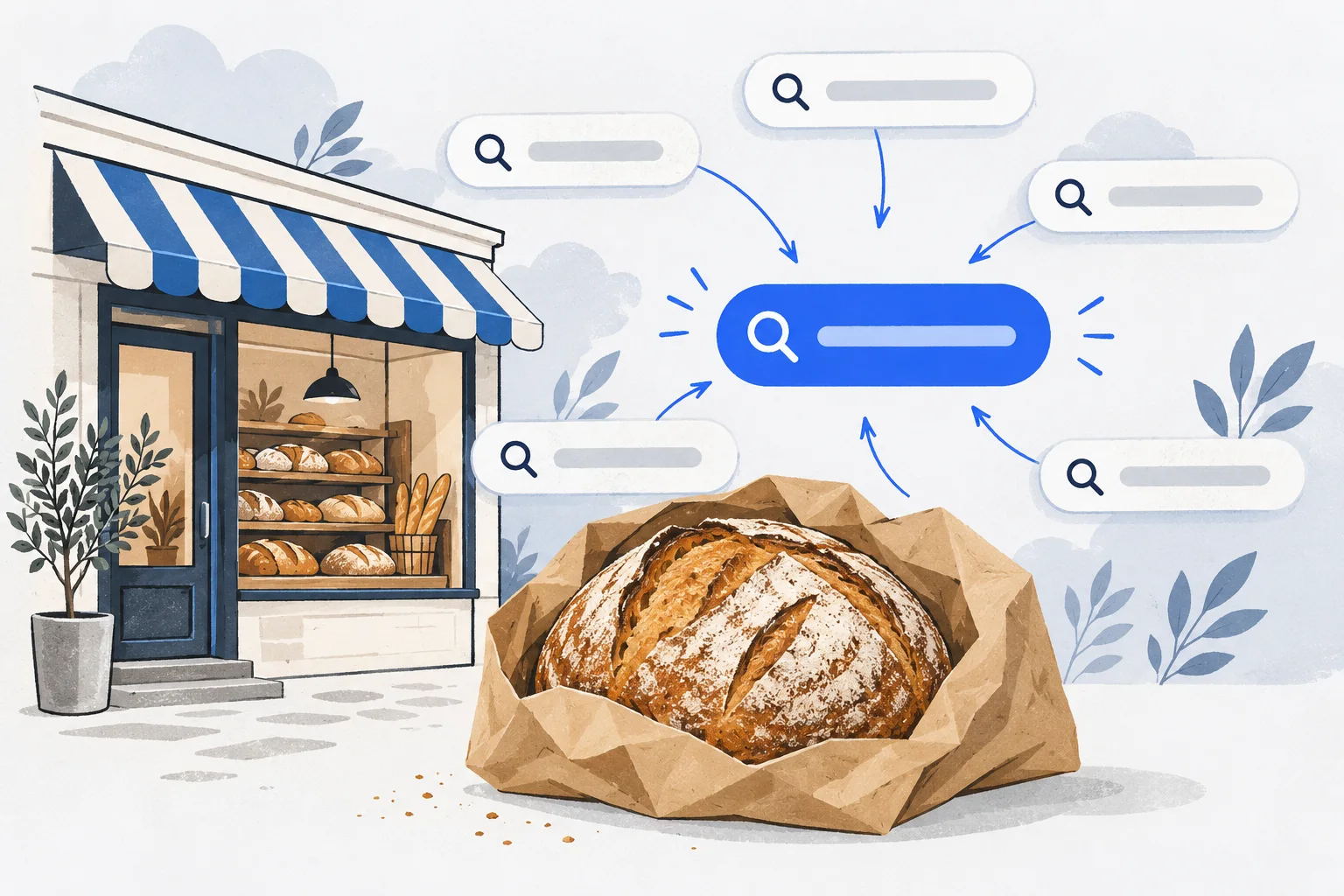
A business can describe the same offer in different ways. Its internal product name, technical terminology and customers' wording may differ. Keywords connect the business topic with what people search for.
“Sourdough bread,” “storing sourdough bread” and “where to buy sourdough bread” can all be keywords. They concern the same product but request different answers: a broad explanation, practical advice and a purchase location. This underlying purpose is search intent.
Alongside a keyword, write: “The reader wants to find out…” This states the job the page must do. An appealing topic title alone does not establish the reader's need.
Keyword, search query and advertising keyword
These are often used interchangeably in conversation, but keeping them distinct helps planning and measurement.
| Concept | Meaning | Example |
|---|---|---|
| SEO keyword | Target phrase chosen for a page | “storing sourdough bread” |
| Search query | What someone actually enters | “how to keep sourdough bread fresh” |
| Google Ads keyword | A configured advertising targeting item | “sourdough bread” added to an ad group |
Google Ads documentation distinguishes advertiser keywords from user search terms. Do not automatically apply that advertising meaning to every SEO situation. An editor's primary keyword is not a targeting setting submitted to Google's organic search engine.
Example: what should a bakery target?
Imagine a Budapest bakery presenting its sourdough products. Three pages could meet distinct needs:
- A product-range page explains the breads, sizes and purchasing options.
- A storage guide explains how to keep and later use the bread at home.
- A shop page provides the address, opening hours and contact details.
Someone searching “where can I buy sourdough bread in Budapest's 13th district” may need the address and current hours more than the microbiology of sourdough. Someone asking whether sourdough freezes well needs storage advice.
These are fictional examples, not measured queries. They demonstrate that keyword research also involves choosing each page's role. A distinct page needs a distinct useful job; changed word order alone does not justify one.
How do you choose a keyword for a page?
Start with what the business actually provides and what customers need to understand. Collect questions, recurring uncertainties and the words customers use. A customer's sentence can inspire a topic without proving how often others search for it.
Define the page's job. “Bicycle repair” might suit a service page, whereas “why do bicycle brakes squeal?” needs an explanation. Both concern the same business but require different answers.
Group similar phrasings. “Keyword meaning” and “what is a keyword” can belong on the same definition page. A search query, however, is a distinct concept; linked explanations clarify that distinction.
Ask whether the page can offer more than a general introduction: a concrete example, clear comparison, original experience or usable steps. The keyword names the task; the content must deliver the answer.
Where should the keyword appear?
Use it naturally where it helps readers recognize the topic: the title tag, main heading, opening explanation and relevant subheadings. Do not force the same phrase into every paragraph.
The Google SEO starter guide explains that its systems can relate different phrasings; every variation need not appear verbatim. Google also does not use the meta keywords tag. Prioritize accurate explanations and natural terminology over repetition.
Image alt text should describe the image's meaning. A bread photograph should not receive a list of every target query instead of an appropriate description. Visible content and its description should concern the same subject.
What does a keyword list fail to tell you?
A list does not predict visitors or buyers. Research-tool figures refer to particular settings. In Google Keyword Planner, location and period affect average search volume, while “Competition” describes advertisers rather than organic ranking difficulty.
Customer wording also matters in AI search, where a longer question may contain several connected needs. A short keyword offers a starting point without replacing the full question.
A page's primary keyword identifies its main focus; related expressions can form a keyword cluster. Advertising involves different choices: match types and negative keywords affect which searches make an ad eligible for an auction.