Content decay: meaning, examples and practical use
Content decay is the loss of usefulness, accuracy or performance of a previously valuable page over time. It can result from changed facts, new reader needs or stronger alternatives; falling traffic alone does not identify which cause is responsible.
Also known as: Tartalom elavulása
At a glance
- Age alone does not make a page obsolete.
- Falling traffic is a symptom whose cause needs investigation.
- Improve inaccurate or missing material rather than merely changing the date.
On this page
What kind of deterioration is involved?
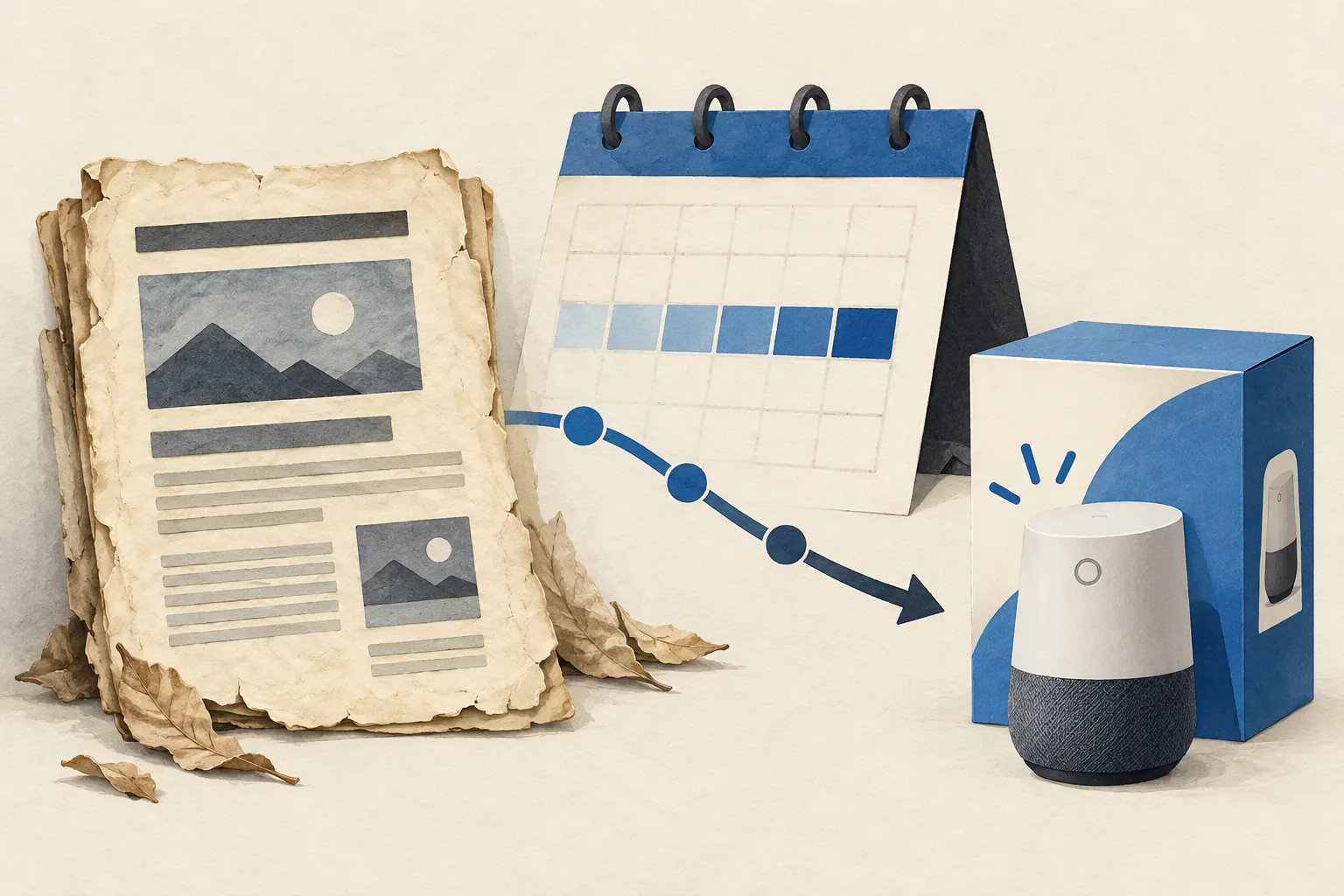
An interface button can disappear, a price can change or new solutions can emerge. In other cases, the explanation stays correct but fewer people search for the topic. Editorial obsolescence and declining organic performance can be related without being the same phenomenon.
How should the cause be investigated?
Compare appropriate periods and check seasonality, indexing and measurement continuity. Then review what the page promises and actually delivers. A content audit can identify information now missing from the explanation.
Example: a software guide
Imagine an article pointing to an old menu option. Readers can no longer find it, so the procedure fails. Repair requires updated screenshots, accurate steps and a version check. Changing the date in the header does not fix the underlying problem.
When is a full rewrite unnecessary?
An accurate conceptual definition can remain useful for years. If a decline reflects the end of a season, replacing all the text may accomplish nothing. Match the refresh to the problems found and preserve sections that still help. Record the substantive change so a later reviewer understands what improved.