Manual action: understanding a Search Console notice
A manual action occurs when a human review at Google determines that a website, or part of it, violates Search spam policies. The action can reduce or remove the affected pages from search results and is reported separately in Search Console.
Also known as: Google manual penalty · Search Console manual action
At a glance
- A manual action has a specific Search Console notice; not every ranking decline is one.
- The fix must address the stated cause across the full affected scope.
- A reconsideration request follows actual remediation and explains what was changed.
On this page
How do you know a manual action actually happened?
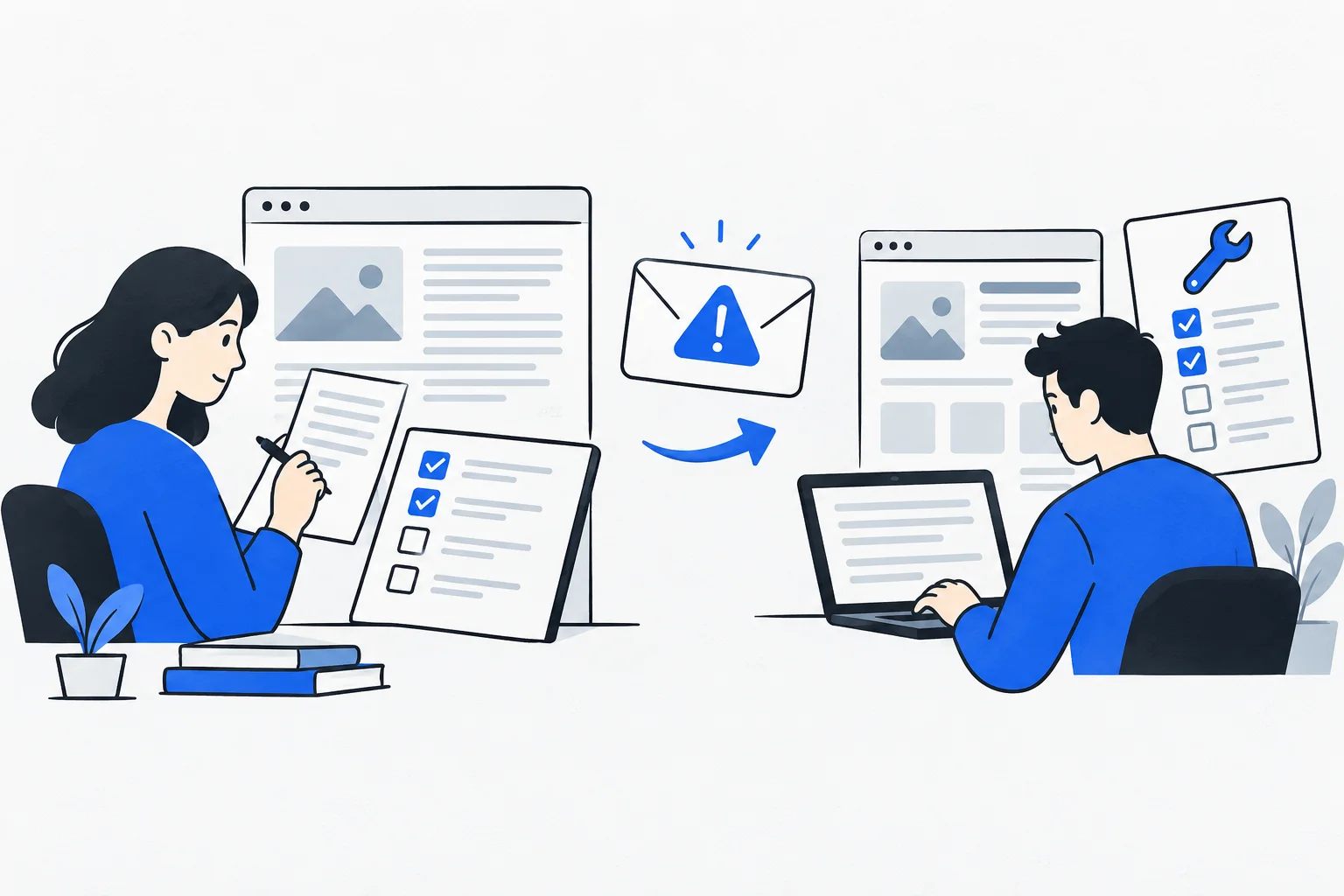
According to Google's documentation, a manual action appears in the relevant Search Console report and message centre. The stated reason and scope are the starting points for investigation. A red warning in an external SEO tool or a traffic decline is not itself that notification.
Someone with access to the appropriate Search Console property should check the report. A different domain, subdomain or incorrectly selected property may not reveal the affected website's status. Record the actual notice before making changes.
How is it different from an algorithmic change?
A Google core update is a broader change to search systems. A manual action is a review process associated with an identified policy violation. Confusing the two can direct corrective work toward the wrong problem.
A page missing from the index is not automatically penalized either. It might be an intentionally excluded duplicate, removed content or an access problem. Without a manual-action notice, investigate a traffic decline using other evidence. Looking for a reconsideration form does not replace technical and editorial analysis.
What does the affected scope mean?
An action can affect the whole website or a particular part. Example URLs in a report can help reveal the pattern, but limiting a fix to those few examples may leave the underlying problem intact. A shared template or repeated publishing practice can produce the same issue elsewhere.
If manipulated links are involved, review the affected link-building practice as a whole. If the problem concerns text, cosmetically rewriting keyword stuffing may not resolve a lack of useful information. Understand the underlying policy instead of merely removing a word mentioned in the notice.
Example: a paid link package on a business blog
A fictional business bought article packages whose main promise was to place links intended to influence rankings. It later receives a manual-action notice about unnatural links. The business investigates the relevant agreements and pages rather than assuming every external link is bad.
It documents which content was removed, which links changed, and where the disputed practice ended. It also changes the purchasing process so the next article package does not recreate the same problem. This is an illustrative scenario, not a universal remedy for every manual action.
When should reconsideration follow?
A reconsideration request should clearly explain the problem, completed fixes and their results. The official report guidance describes steps for the relevant type of action. Review can take time; repeatedly sending requests should not be treated as a shortcut.
A concise, verifiable account of actual work is more useful than “we fixed everything.” Do not describe unfinished remediation as complete. The request cannot substitute for resolving the substantive issue.
What does removal of the action establish?
Removal of an action and restoration of previous search performance are separate questions. The website still competes in a changing search environment, and remediation may have removed some content. Previous rankings cannot therefore be promised automatically.
Continue assessing technical accessibility, content quality and performance together. A lasting business lesson is to make the publishing process transparent: how content is produced, what agreements support it, and who is responsible for its claims and final publication.