PageRank: what do links between pages signify?
PageRank is one of Google’s historical and continually developed link-analysis systems, using relationships between pages in search evaluation. It is not the entire ranking algorithm and cannot be replaced by a third-party SEO tool’s public domain score.
Also known as: Google PageRank · PR
At a glance
- PageRank concerns relationships between pages rather than simple link totals.
- Google ranking combines many systems; PageRank is one part.
- Third-party domain authority is not Google’s internal PageRank value.
On this page
What is the underlying idea?
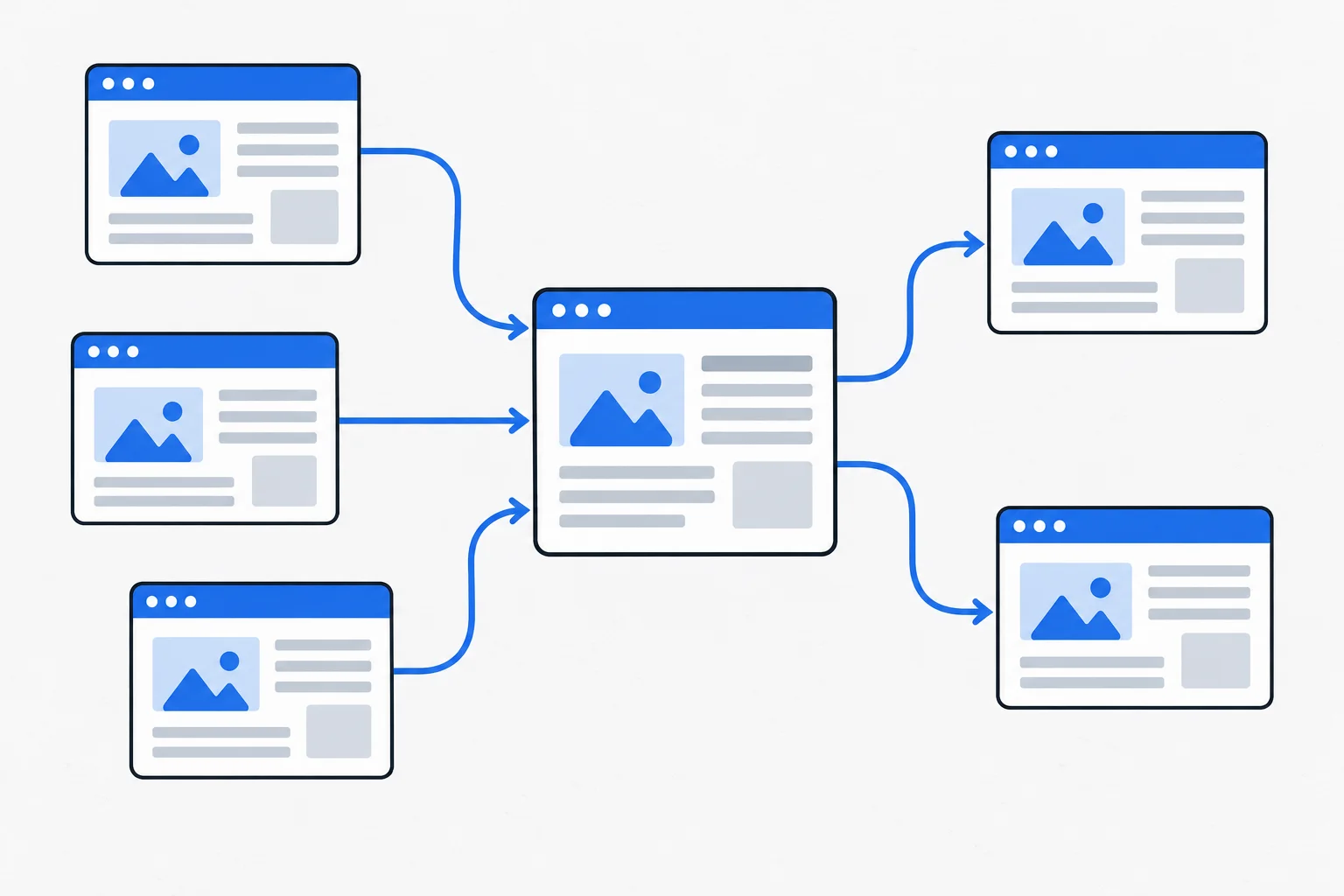
Web pages link to each other instead of existing in isolation. PageRank's historical idea is that this network contains information about page importance. Network position matters beyond simply counting incoming links.
Google's ranking-system guide explains that PageRank has changed substantially and remains part of core systems. Its original mathematical model is not a simple formula for calculating today's search positions.
Why are link counts insufficient?
Imagine one guide linked by five relevant professional websites and another by one hundred automatically created pages without meaningful audiences. Totals alone cannot describe context, quality or purpose.
Backlinks and referring domains are different units: one site can supply many links. Also assess whether a reference helps readers and naturally belongs in its source content.
How does domain authority differ?
Domain authority and similar scores are third-party metrics. They may help particular comparisons but do not directly display Google's internal PageRank. Providers can use different datasets and models.
An increased domain score does not establish that a specific page will rank higher for every search. Relevance, content and other systems still matter. Name the metric's provider and limitations.
Example: links within a knowledge base
Imagine a financial reference homepage linking to a business-startup guide, which links onward to invoicing and budgeting explanations. Readers move from a broad question into needed detail. Internal links also communicate content relationships.
The editor does not connect every paragraph to every page. Links appear where another explanation helps. The example cannot quantify ranking gains, but demonstrates a reviewable choice: important pages receive meaningful places in navigation and related content.
What do link attributes mean?
Nofollow, sponsored and ugc qualify relationships. Google's guidance distinguishes paid links and user contributions. Attributes do not replace examining the actual arrangement.
Do not assume every outbound reference leaks a known quantity of “SEO power.” A necessary authoritative source can help readers. Hoarding or artificially multiplying links can undermine usability.
How should the concept inform decisions?
PageRank reminds us that relationships matter. Useful implications include coherent structure, accessible important pages and relevant references. It does not imply buying link counts or maximizing one score at any cost.
Assess actual page performance and business roles. Easier navigation is directly verifiable. A presumed change inside Google's systems is not a measured fact merely because an external chart moved.