Search results and measurement
UTM parameters: labeling campaign links consistently
UTM parameters are campaign labels appended to a link’s URL. Analytics can use them to distinguish the named source, medium and campaign behind a click. The labels describe the link’s origin; they do not themselves measure purchases or improve search rankings.
Also known as: UTM · Campaign parameters · Urchin Tracking Module
At a glance
- Keep source, medium and campaign names consistent.
- Do not label internal navigation as a new external campaign source.
- Tagging supports comparison but does not establish a campaign’s business impact.
On this page
What the labels contain
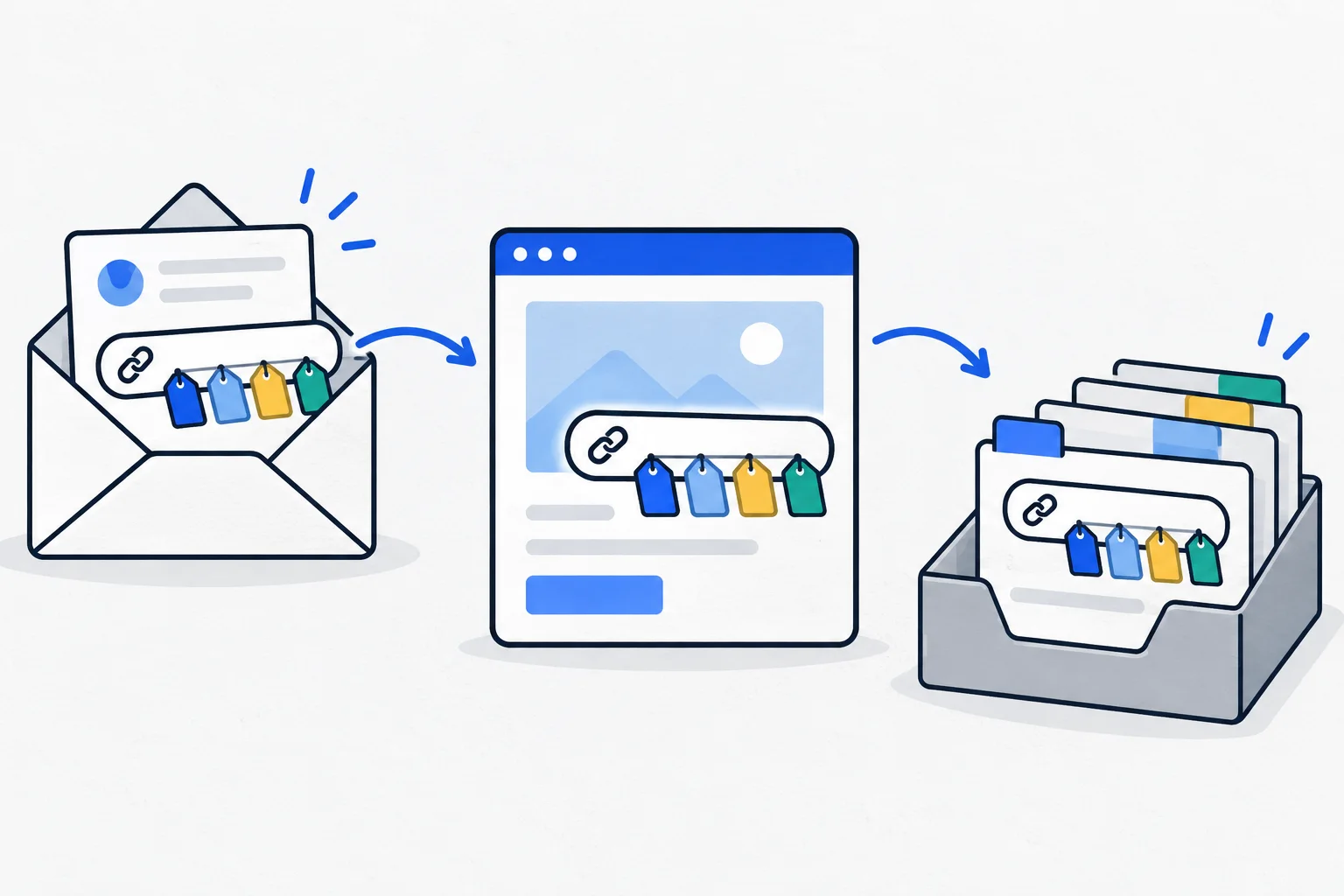
Campaign identifiers become part of the clickable URL. A newsletter and partner website can link to the same destination using different tags, allowing their reported traffic to be examined separately.
Common parameters are utm_source, utm_medium and utm_campaign. They name the source, distribution type and initiative. Together they inform traffic-source interpretation. Manual tagging guidance
Example: a furniture newsletter
A fictional furniture shop might share:
https://example.com/guide?utm_source=newsletter&utm_medium=email&utm_campaign=autumn-materials
This is an illustrative URL, not a live campaign.
| Parameter | Example | Meaning |
|---|---|---|
utm_source | newsletter | Named starting source |
utm_medium | email | Distribution medium |
utm_campaign | autumn-materials | Campaign initiative |
utm_content | header-button | Link placement or creative variation |
A short naming convention prevents unnecessary reporting cleanup later.
Appropriate uses and misleading ones
Tagging is useful for newsletters, partner placements and other external distribution. Check advertising platforms’ automatic tagging before adding manual values; their interaction depends on the measurement setup.
An internal link from an article to your offer is different. Treating it as another external campaign can confuse interpretation of the original arrival. Measure internal buttons through suitable events or navigation analysis instead. Traffic-source dimensions
Why consistency matters
Using Email, email and newsletter-send interchangeably as the medium makes comparison harder. Channel groups use rules, so unexpected names may fall into unexpected categories.
Define permitted mediums, source meanings and campaign naming. Correcting future links and regrouping already-collected data are different operations.
What UTMs do not prove
A label identifies a tagged link, not attentive reading, an enquiry or a purchase. Those require defined conversions and measurement.
People can forward or copy links, and redirects may lose parameters. The label therefore does not always identify the person’s entire actual journey. Attribution applies further rules to observed interactions. Attribution documentation
Test the final shared link
Open the exact URL, confirm its destination and check whether needed tags survive redirects and appear as intended in analytics. Record the campaign and distribution location.
Avoid personal or confidential information in visible parameters: URLs can be copied and logged by multiple systems. A campaign identifier is sufficient for grouping.