Headline: a clear promise about what follows
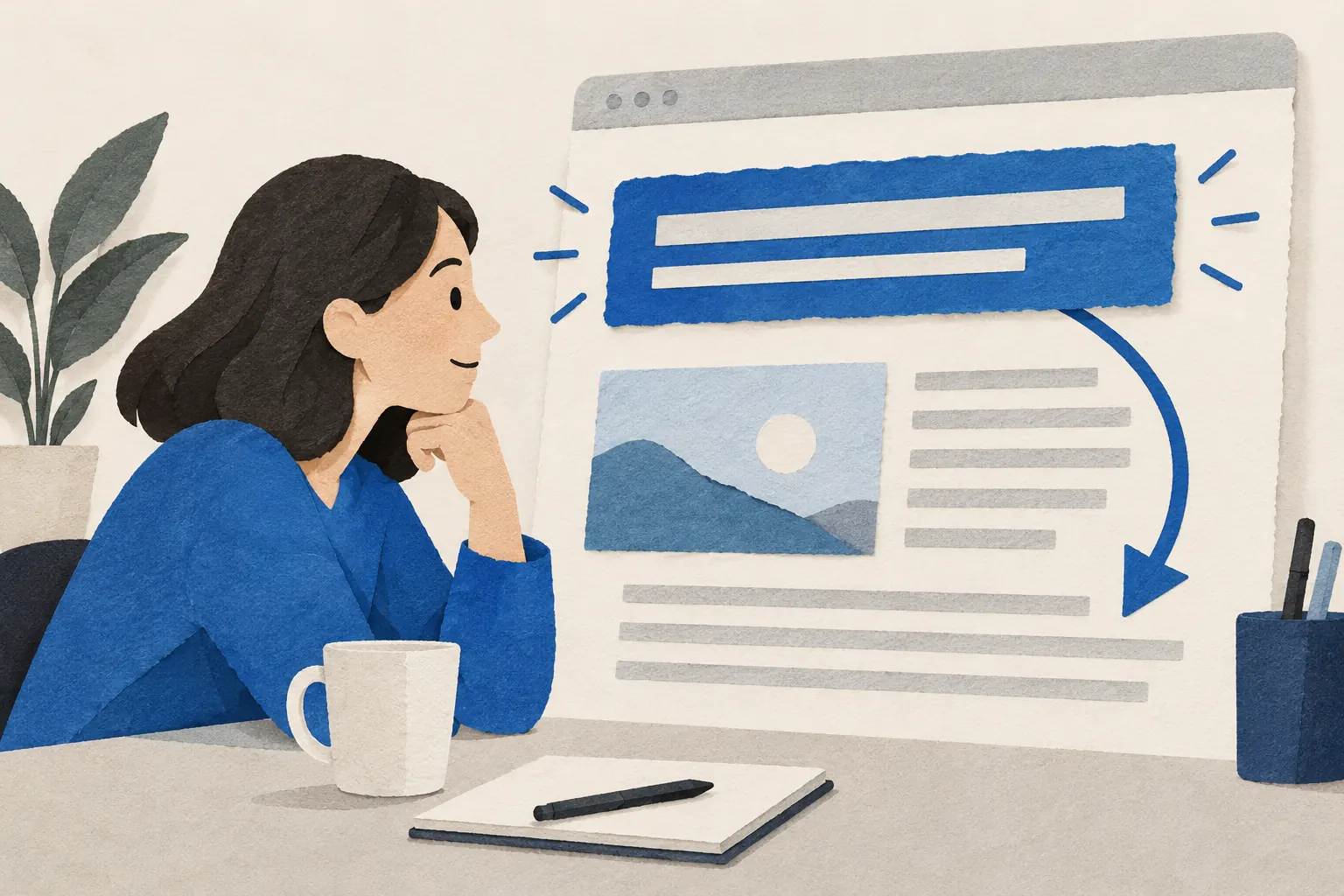
A headline is a prominent heading that identifies and frames a piece of content. It helps a reader decide whether to continue. An article headline differs from the technical page title and from the title a search engine may choose to display.
At a glance
- Make the subject and useful distinction clear.
- The article must fulfil the expectation created by the headline.
- Catchy wording is not a substitute for accurate scope.
On this page
What should the reader learn from the heading?
A useful headline identifies the subject and the reason to read this particular piece. “Choosing a dining table for a narrow room” is more informative than “Everything you need to know.” It signals a situation without pretending to cover every furniture decision.
The Australian Government’s heading guidance recommends clear, topic-specific headings. The practical test is whether the intended reader can predict what follows without already knowing the article.
A headline is not every title field
The visible article heading serves readers on the page. A title tag is a separate metadata element, and a search service can display another title link. These should be consistent in meaning, but they need not be identical strings in every setting.
Within the article, a heading hierarchy organises sections. Giving every section the same broad heading does not help readers distinguish their purposes. The main headline frames the whole piece; section headings guide individual questions.
Example: a balcony-furniture shop
Imagine a shop preparing an article about outdoor chairs for small balconies. “How to check whether a chair fits a narrow balcony” promises a specific method. The article should explain the relevant measurements and leave room for doors and ordinary movement.
“Perfect chairs for every balcony” promises much more than one general guide can establish. If the article offers only a product list, a how-to headline is also a mismatch. The introduction can clarify scope, but it should not immediately withdraw the headline’s central promise.
Edit for relevance, then interest
Write several versions and compare the expectations each creates. Remove numbers that imply a list the article does not contain, time claims without support and superlatives that cannot be justified. Keep terms customers actually recognise.
A shorter heading is not automatically better if it removes the useful distinction. A long heading should still fit the screen and remain easy to understand. Testing different wording can inform a decision, but a higher click count does not establish that readers received the answer they expected. Review the headline and the finished article together.