Search results and measurement
Organic click: clicks from unpaid search
An organic click is a click on an unpaid search link counted under the measurement system’s rules. In Search Console it represents a Google-to-website interaction within the chosen report. It is not a unique person, automatically a new session or proof of a business outcome.
Also known as: organic search click
At a glance
- Clicks differ from impressions and website-measured visits.
- Report type, filters and aggregation rules matter.
- Interpret more clicks alongside destination pages and subsequent actions.
On this page
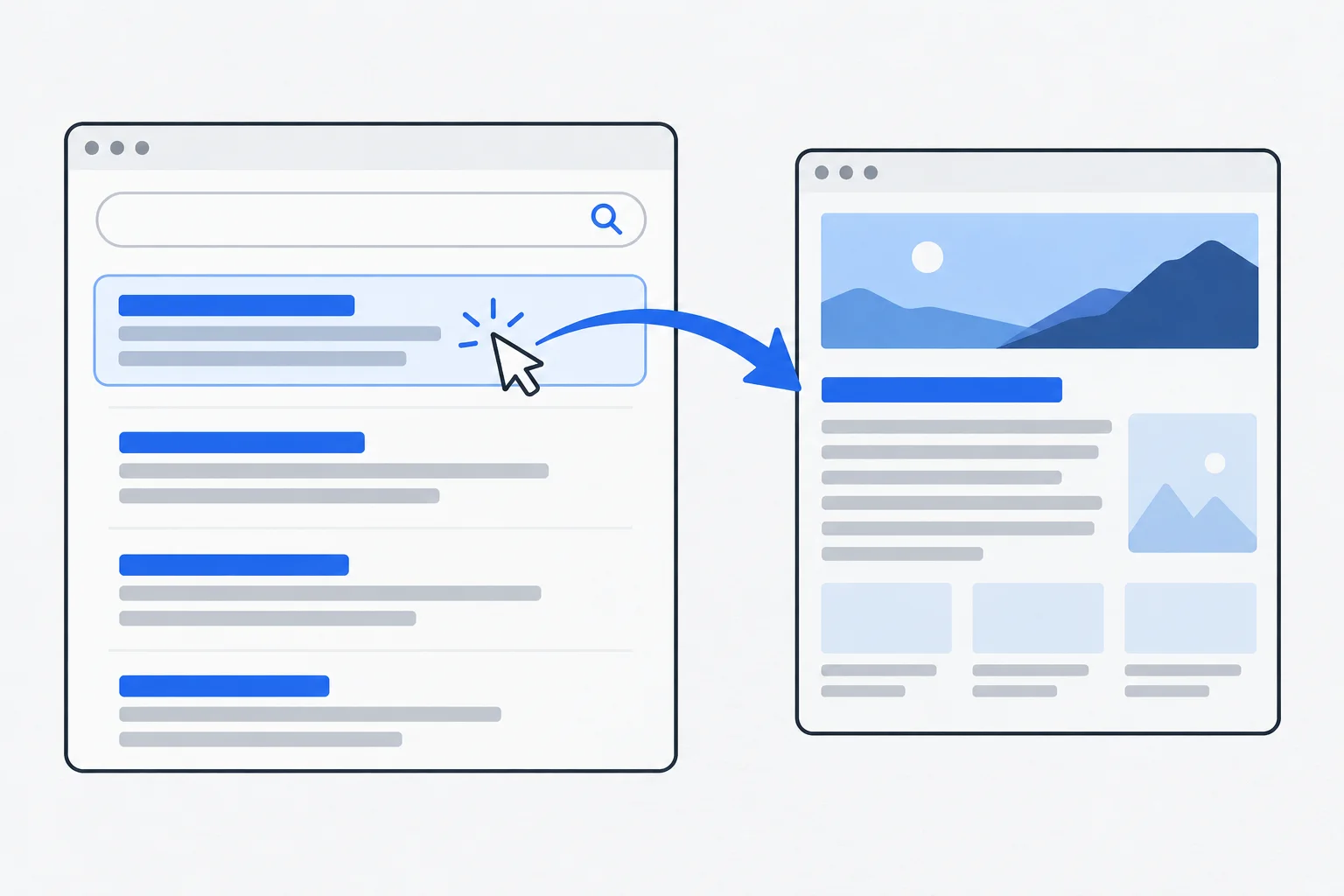
When is a click organic?
Clicking an unpaid search link can represent organic acquisition. Advertising clicks are different even when they reach the same website. The report defines which surfaces and interactions are included.
An organic result is an appearance; a click is an associated action. Google documents counting details that vary by result type and interaction. 1
Why is it different from an impression?
A search impression records an appearance under the applicable rules. The person may choose another result, search again or obtain an answer without clicking.
CTR divides clicks by impressions within the same scope. Forty clicks from 1,000 impressions gives 4%, not forty buyers among 1,000 distinct people.
Result presentation, query composition and layout can affect the rate. A raw click count does not explain those factors.
Why can analytics disagree?
Search Console observes search interaction. Website analytics records an event or session later under different conditions. A visitor may leave before tracking starts, or return from search several times within one session.
GA4 acquisition reporting groups website-measured origin and activity. 2 Differences alone do not prove faulty tracking; compare measurement scopes first.
Dates, time zones, filters and URL groups also matter. Different boundaries describe different populations.
Example: a repair workshop's guide
Imagine a guide rising from eighty Google clicks to 120: a 50% increase. That does not reveal which queries or audiences produced it.
The workshop examines queries and landing pages. Growth in informational searches from another country need not imply equivalent growth in local service interest. More relevant local clicks support a different interpretation.
Then check whether measured visitors reach service information and appropriate contact options. Connecting organic traffic with a goal is more useful than celebrating the click count alone.
What matters when reading the report?
Site-level and page-level aggregation can differ when multiple links from one property appear. Google's counting rules matter when comparing table sums with the headline chart. 1
Data attributed to a canonical URL may differ from the exact variant opened. Parameterized URLs need not appear as separate rows for every click. The Search Console overview describes the reporting scope. 3
What should you do with the observation?
Ask which content receives clicks for which needs, and whether the destination fulfills its promise. Relevant clicks create an opportunity without eliminating the need to review content and offer.
Form a hypothesis and test it with appropriate breakdowns. A better title, refreshed article or seasonal demand can accompany growth. The observation may be real while its proposed cause still needs evidence.