Search results and measurement
Rich result: enhanced search displays and eligibility
A rich result is a search appearance with additional details or a special layout appropriate to the content, beyond an ordinary text result. Examples include a product’s price and availability or a recipe’s preparation time. The search engine determines eligibility and presentation.
Also known as: rich result · rich snippet
At a glance
- Structured data describes content; a rich result is the actual search appearance.
- Valid markup and a successful test can support eligibility without guaranteeing display.
- Supported types change: Google discontinued FAQ rich results in May 2026.
On this page
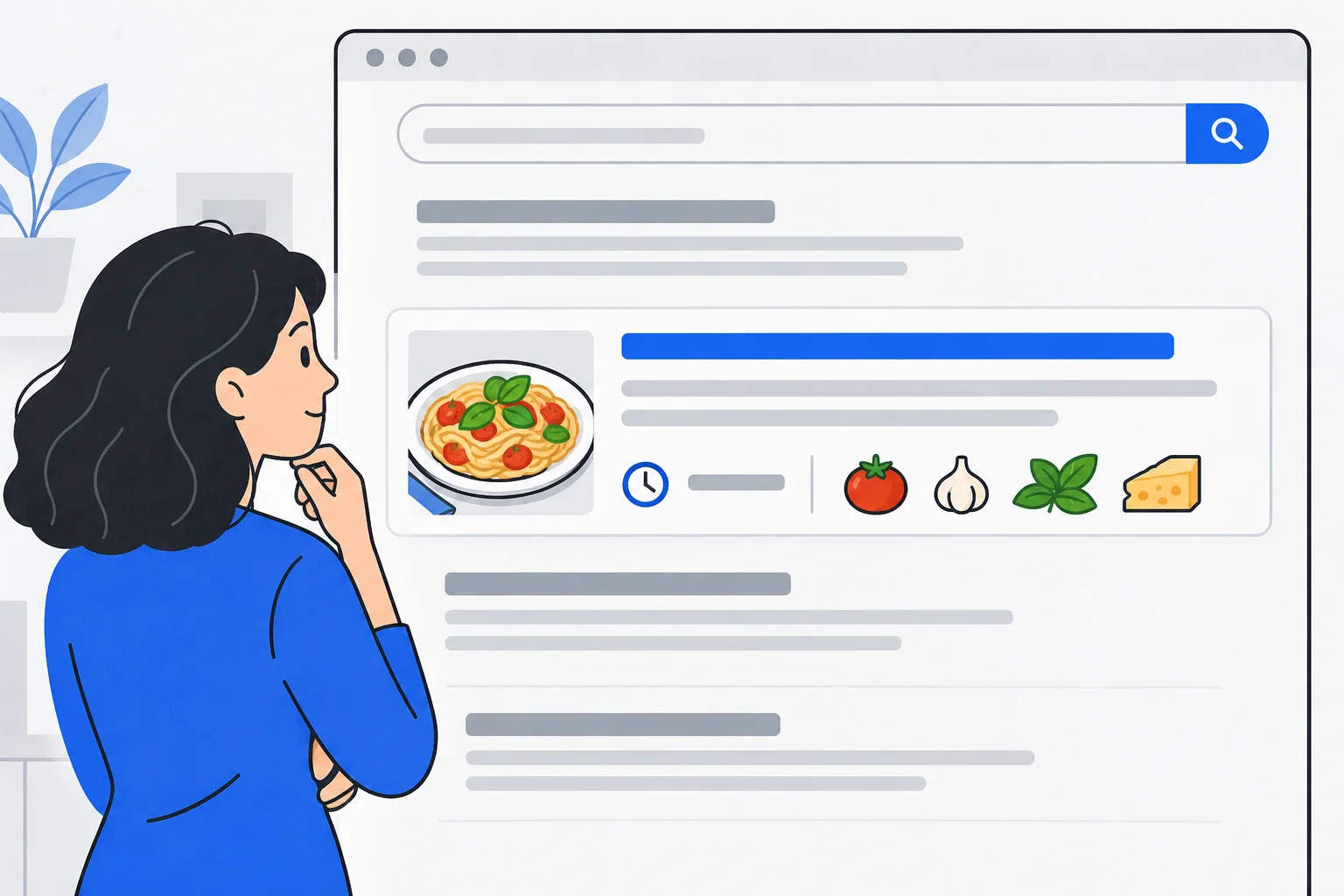
What does a rich result add?
An ordinary organic result typically directs readers to a page through a title, URL and snippet. A rich result can add information or use a different layout. Product price and availability or recipe preparation time can help someone choose.
Each supported type has its own conditions. A service having a price does not mean every service page should be labeled as a product. Begin with the actual content and the search engine's current supported features.
Markup and appearance are different things
Structured data can identify which value represents a price, currency or availability status. It must agree with information accessible to readers.
Google's Rich Results Test can identify supported items and errors. Passing it does not reserve space in results. The page still needs to be accessible and satisfy quality and type-specific requirements. The search engine decides whether to display an enhancement for a particular search.
Example: a product price mismatch
Imagine a hiking shop whose bottle page displays HUF 8,990 and “in stock,” while its markup retains the old HUF 7,990 price. The two representations conflict.
Correct the underlying data and visible information together. After validation, the shop can state that prices agree and the test reports no error. It cannot yet claim to have secured a price-enhanced Google result.
Actual appearance and its date need separate observation. Accurate information helps customers even when Google chooses an ordinary text result. This example is fictional, not a measured implementation outcome.
What is easily confused with a rich result?
A featured snippet highlights an answer to a query. It is different from an enhancement based on a supported structured-data type. AI answers, advertisements and sitelinks are also distinct elements.
Support changes over time. Google's documentation changelog states that FAQ rich results stopped appearing from May 7, 2026; the associated documentation was subsequently removed. A helpful FAQ page can still serve customers, but the retired display should not be promised as a current benefit.
What should you check before implementation?
Choose a real page type and an appropriate currently supported feature. Check required fields, their visible equivalents, crawlability and validation results. Assign responsibility for keeping prices, stock and other changing information current.
Observe impressions and clicks over suitable periods. A more detailed display is not automatically better business performance: a visible price may filter out people for whom the product is unsuitable.
The aim is accurate information reaching an appropriate audience. A rich result is one possible way to support that aim, not an outcome guaranteed by adding markup.