Search trends and seasonality: meaning and practical examples
A search trend is a change in interest in a topic over time; seasonality is a recurring pattern associated with a particular period. Google Trends reports relative interest rather than a direct monthly search count. Trend analysis helps explain when, and in what circumstances, a customer question may become more relevant.
Also known as: Google Trends · seasonal search demand
At a glance
- A Google Trends score from 0 to 100 represents relative interest, not a count of searches or people.
- A one-off spike and a season that returns each year are different patterns.
- The topic, search term, country and period selected all affect interpretation.
On this page
What is a trend, and what is seasonality?
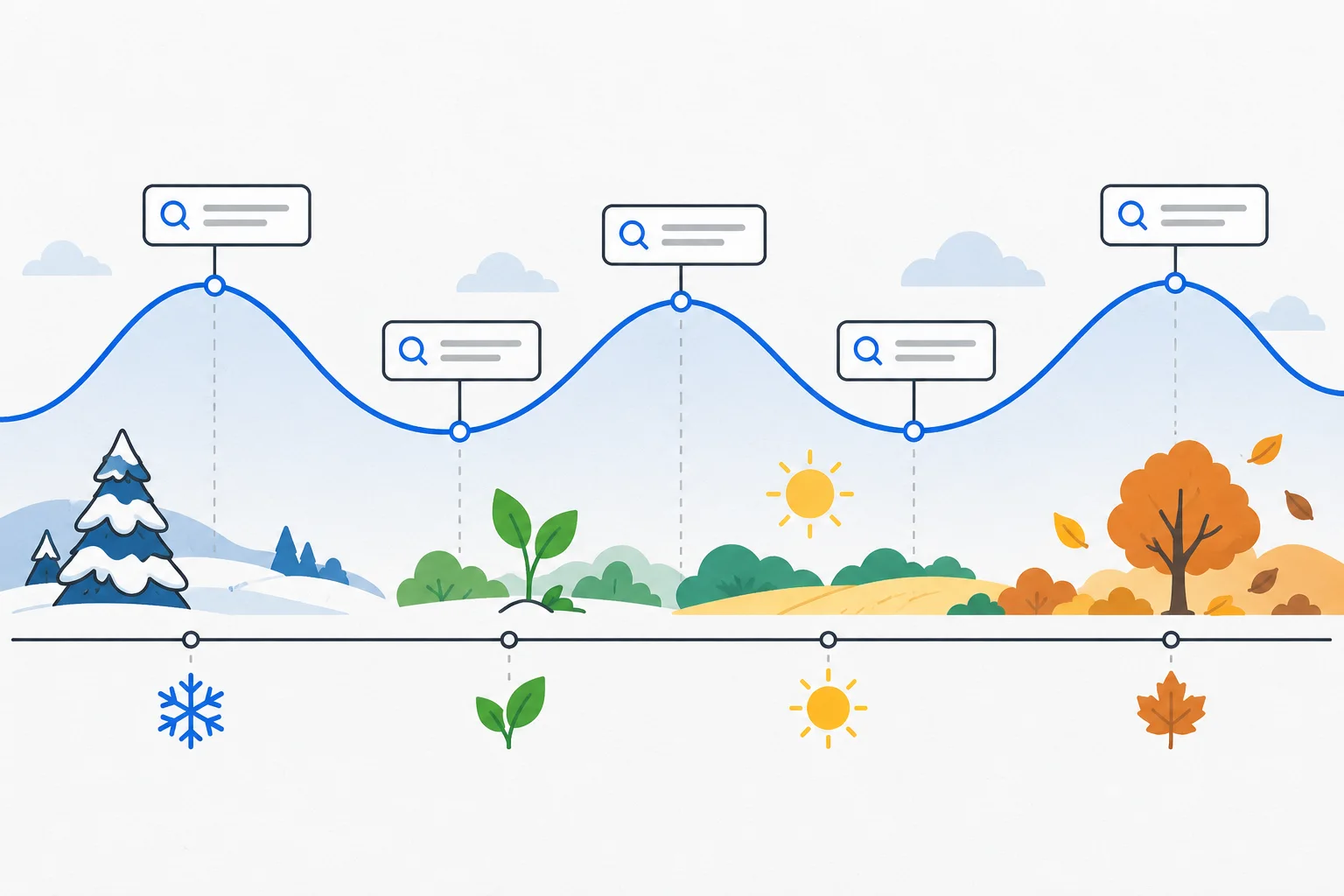
Interest in a question can grow steadily, decline gradually or jump suddenly because of an event. All are changes over time. Seasonality means a pattern returns around a similar period, perhaps linked to weather, holidays or a regular business cycle.
Compare several suitable periods before interpreting the pattern. One strong week does not establish an annual season. A monthly average for search volume can hide fluctuations that matter when planning content. The two measures answer different parts of the same research question.
What does the Google Trends index show?
Google's explanation of Trends data describes normalized interest values. A score of 100 marks the strongest point in the selected comparison, not one hundred searches. The same score on two separately configured charts does not necessarily represent the same number of searches.
A low or zero displayed value does not automatically establish that demand is absent. Small datasets can make the interface less informative. In keyword research, record the settings and uncertainty instead of treating the curve as a complete census of the market.
Which settings affect the comparison?
Location, time period and the selected search surface all affect what is being compared. A typed search term and a suggested topic can cover different sets of searches. Start by checking that the two series answer the same research question.
The meaning of a search query can also vary. An everyday word may describe several products or events. Without looking at related topics and real market events, it is easy to invent a misleading story around a spike. Two things moving together does not establish that one caused the other.
Example: a fictional bicycle repair shop
A repair shop near Lake Balaton wants to understand when people start preparing bicycles for longer rides. It compares several years using consistent Trends settings, then considers its own booking calendar. This example does not present a measured curve or real monthly search figures.
If interest repeatedly increases in spring, the shop can make an editorial decision: have its inspection and pre-ride maintenance articles ready in advance. That does not mean publication will necessarily outrank competitors. It means preparing a useful answer for the expected timing of a customer need.
A summer race might create a separate, one-off peak. The shop records it separately because it may not recur in the same way next year. Its editorial calendar can then distinguish a recurring season from an opportunity tied to a particular event.
How does this inform content planning?
Evergreen content can remain useful throughout the year while demand for it is seasonal. The principles of bicycle storage may change little, even though more people ask about them during particular months. Lasting usefulness and steady demand are different properties.
Content strategy determines which topics to prepare and review, and when. A trend should not automatically dictate a publication quota. Updating one accurate existing page may be more useful than publishing several similar seasonal articles.
What evidence should accompany the decision?
Save the comparison settings, the period observed and the editorial decision drawn from it. Distinguish what the data shows from what the business assumes. If the cause of a peak is unknown, do not supply an explanation that implies certainty.
After publication, your search reports and incoming customer questions can add evidence. The earlier trend was preparation, not a performance guarantee. Its value increases when you review the original decision alongside actual experience before the next season.