Google Business Profile: maintain accurate local business information
Google Business Profile lets eligible businesses manage their business information on Google Search and Google Maps. It can include contact details, opening hours, categories and service information. It complements the business website; Google may also obtain information about the place from other sources and users.
Also known as: Google Business Profile · GBP · Google My Business
At a glance
- Eligibility depends on actual operations rather than desired search visibility.
- Managing a profile and editing a website are separate responsibilities.
- Public information can change and requires regular checks.
On this page
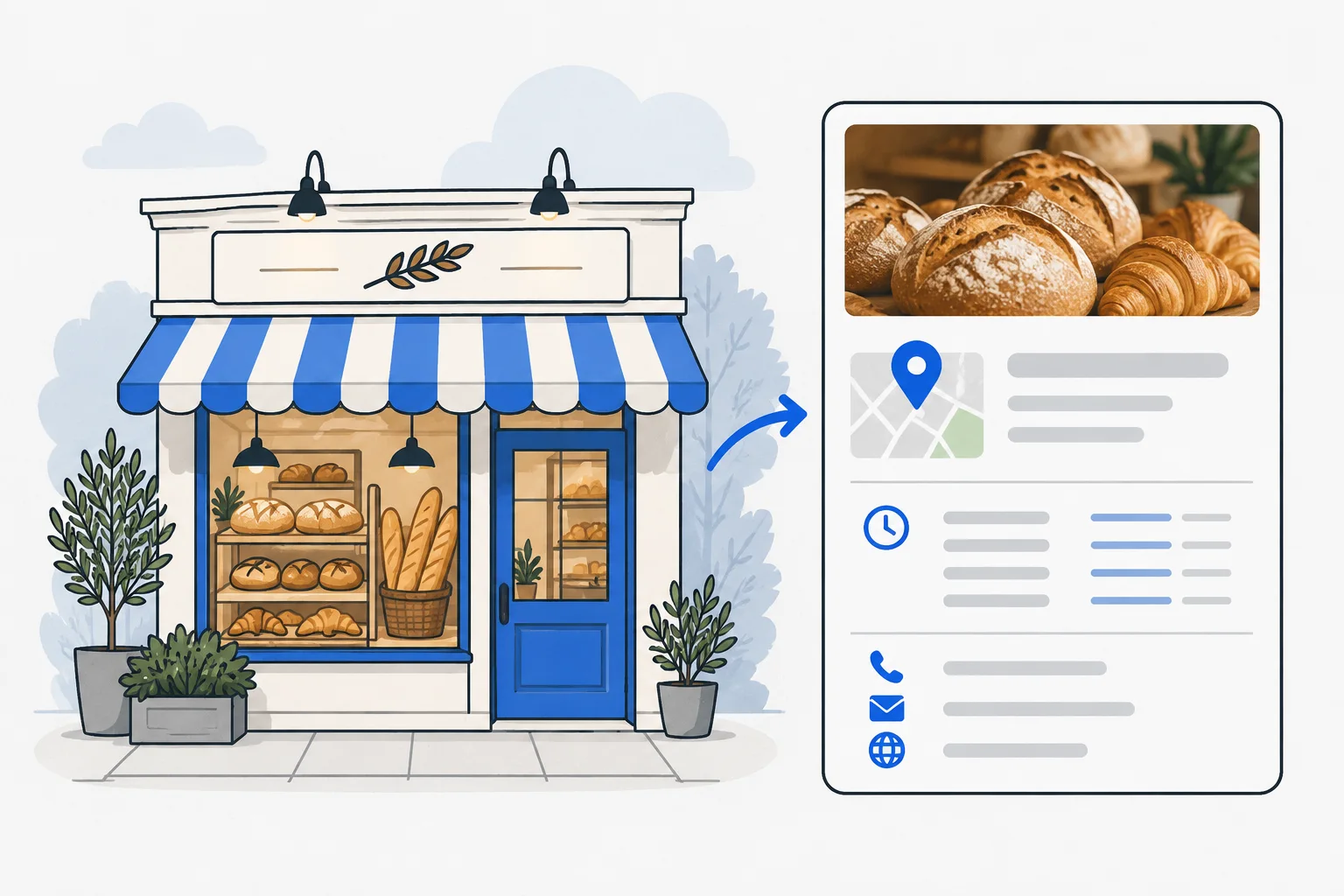
What is the profile for?
It gives people quick information about a business: its name, activity, contact details and opening hours. It may be their first encounter with the company. Outdated hours can cause problems even when the website is accurate.
A category describes the real business type. The manager does not control the entire search page: users can contribute reviews, and Google can use other data sources. This is a distinct product with its own eligibility and management rules.
Which businesses are eligible?
Google's guidelines generally concern businesses that meet customers in person or travel to them. An exclusively online service does not become eligible merely by having a registered address. A virtual address does not prove customer-facing premises.
Clarify how and where service occurs. A workshop, a service-area technician and a business combining a shop with delivery can need different address treatment. A competitor's visible listing does not establish that the same setup is appropriate for you.
How does it complement the website?
The profile highlights concise decision information; the site can explain processes, conditions and common questions in detail. Both should describe the same real offer.
Website editing does not automatically update profile hours, and changing the profile does not correct an outdated service page. Review NAP consistency across both after moves, phone changes or changes in services.
Example: a bicycle workshop changes its hours
Imagine a Szeged workshop extending spring hours and introducing booked bicycle drop-offs. The website shows the new schedule while the profile retains winter hours. Someone relying on Google may decide it is too late to visit.
The immediate remedy is aligning real opening information across important surfaces. The profile receives correct hours and category details; the website explains intake, fault assessment and quotation steps.
A later article can explain which symptoms customers should describe before repair. It complements the listing rather than duplicating it. This fictional example makes no ranking or revenue claim.
What can a manager control?
Managers can maintain business information, reply to reviews and inspect public appearance. They cannot order local rankings or freely rewrite customers' genuine reviews. Google's review guidance distinguishes replies from reporting policy violations.
A brand mention, phone action, directions request and website click are different events. Keep them separate when interpreting business outcomes.
What maintenance routine helps?
Assign responsibility and record changes in hours, location or scope. Inspect the public version after editing, because a saved value and the user's current display may differ.
Google's source documentation explains why unexpected changes and old external information deserve attention. The goal is that customers reach the actual business under the conditions shown.
Verification concerns management authority. Suspension is another state with its own process. If several listings represent the same business, investigate duplication before creating another.
Your website can provide context that does not fit a brief profile. An About us page explains who operates the business, while a contact page tells visitors how to reach the right person. Keep factual business details consistent and maintain each destination when they change.