Open Graph: meaning, examples and practical use
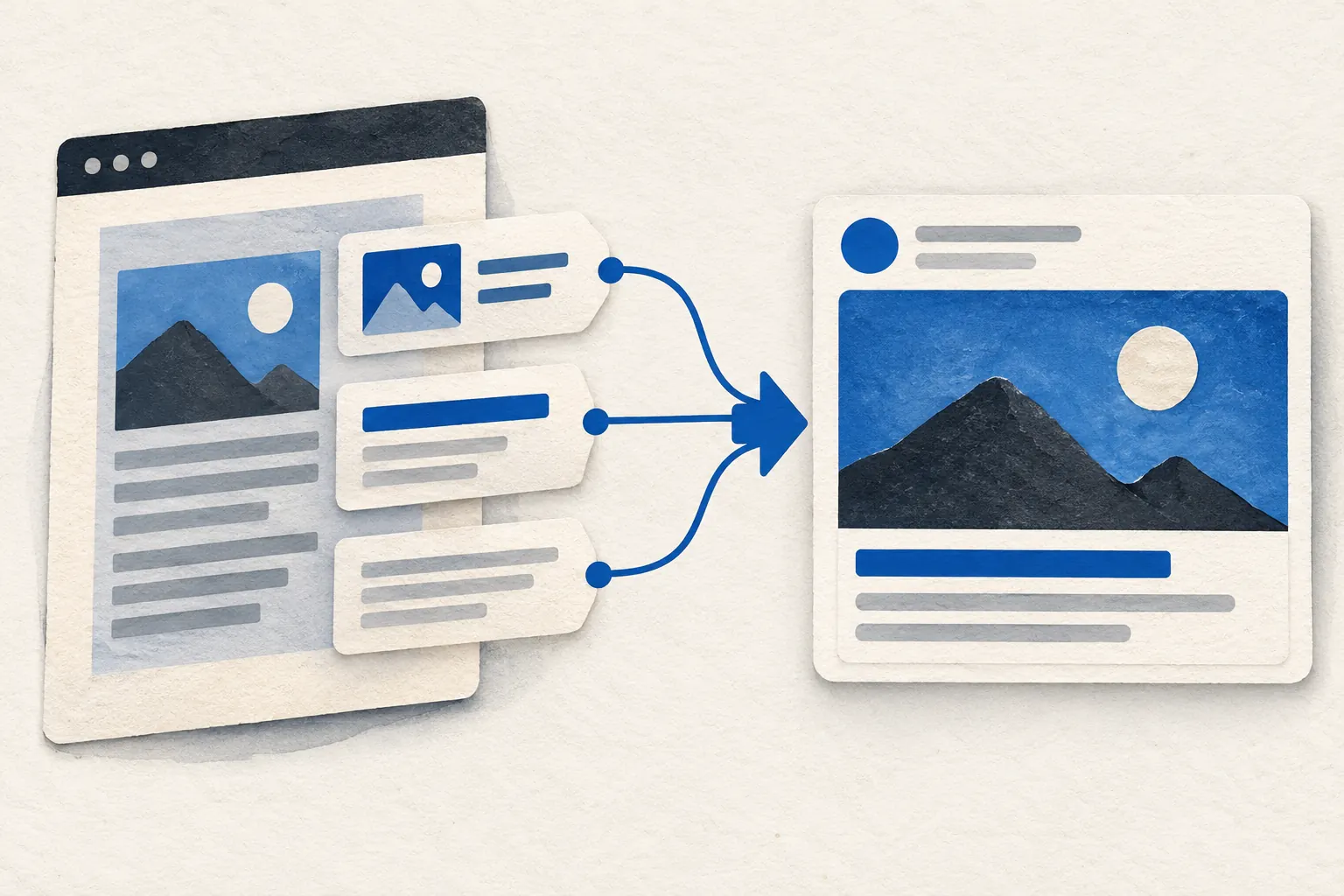
Open Graph is a webpage metadata protocol through which publishers describe a page’s shareable title, image, type and identifying URL. It mainly supplies information for link previews; it is not the visible page content or the same system as Google’s structured-data features.
Also known as: Open Graph
At a glance
- Metadata supports link previews, but each platform controls its display.
- The preview image should be accessible and relevant to the page.
- og:url does not replace a search canonical annotation.
On this page
What information does it carry?
The protocol specification defines title, type, image and URL as basic properties. Additional properties can supply a description or image alternative text. These values appear in the HTML head for a service processing the shared link to read.
How does it differ from other metadata?
The meta description, title and Open Graph fields can describe related information but use different annotations. og:url does not replace a canonical URL signal for search. A shared content model can still produce consistent values across them.
Example: sharing an article in a message
Imagine an article with an accurate title and relevant illustration. A platform processing its link can create a preview card. If the image is private, missing or inaccessible to the platform's crawler, the preview may be incomplete even though its logged-in author can see the file.
Why can an old image persist?
A platform can cache its preview. Check the metadata on your website and the card displayed by the service separately. Correct Open Graph markup does not guarantee a Google ranking or prove that every sharing surface will present the page identically.