Content repurposing: meaning, examples and practical use
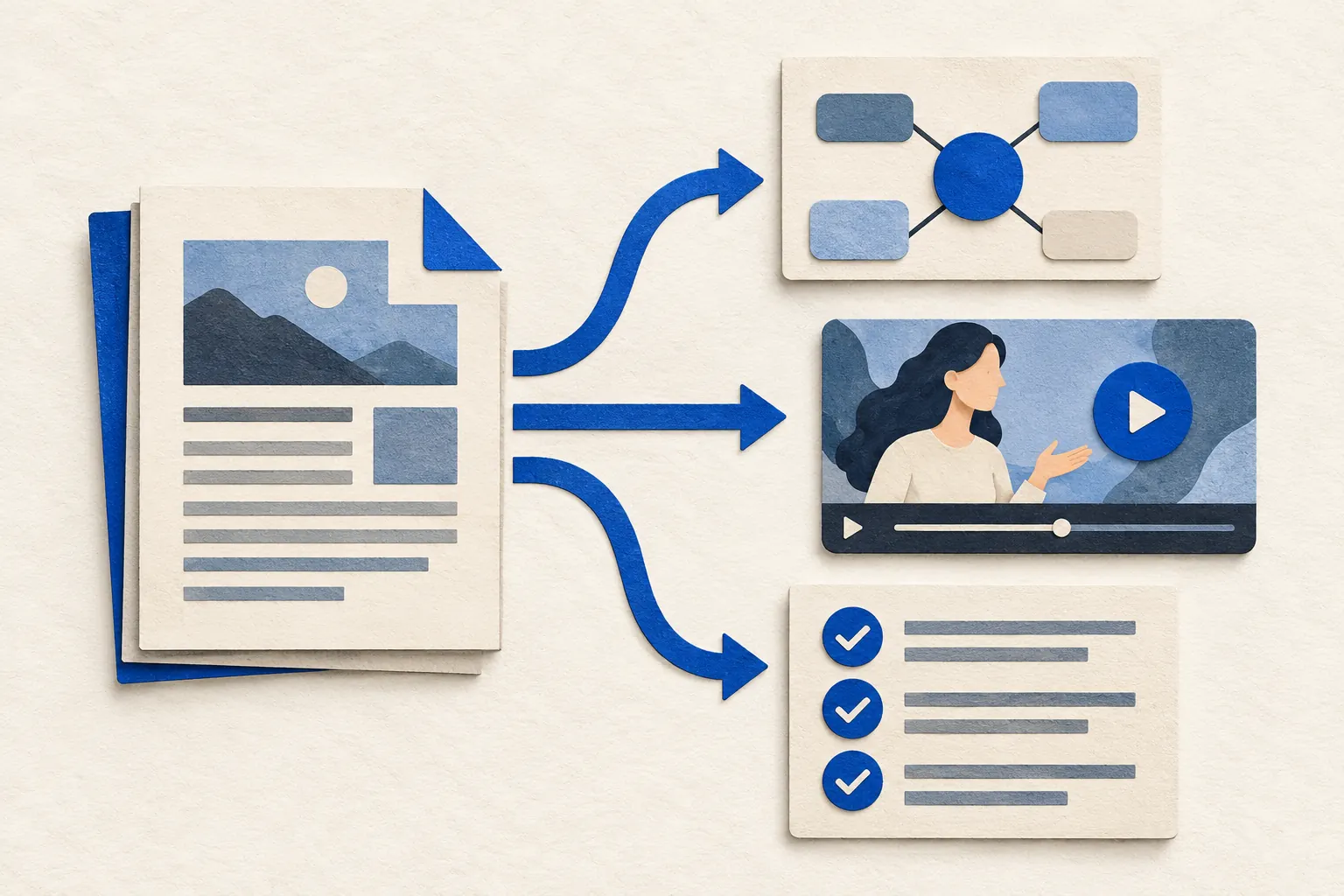
Content repurposing adapts an existing useful work to a different format, channel or reader task. A detailed study might become a checklist, or a professional presentation might become a guide; the new version should be independently usable.
Also known as: Tartalom újrafeldolgozása
At a glance
- A new format should serve a different task or consumption situation.
- Shortening must preserve important conditions.
- Repurposing differs from republishing an unchanged piece.
On this page
How does it differ from syndication?
Content syndication takes substantially the same material to another destination. Repurposing changes its format or practical job. Turning a table into a decision aid can create a different way to use the same verified evidence.
How can a short version stay accurate?
Do not remove a crucial exception simply because the format is small. A source and period can still matter in a compact graphic. When the original evidence changes, revisit every derivative version so an outdated claim does not survive in distributed copies.
Example: workshop training material
An imaginary instructor turns a longer checked explanation into a pre-work checklist. The checklist supports daily inspection, while the complete guide explains reasoning and exceptions. They link to each other, and neither claims to cover every possible situation.
When is another page unnecessary?
If only a few words change and the reader's task remains identical, a separate URL may add little. Before solving duplicate content questions, ask what the new version gives the reader. More copies are not the same as more value. Maintain a record of related versions so corrections can reach all of them.
Choose the content format for the reader’s task. Turning a guide into an ebook requires a coherent reading sequence; adapting it into a webinar calls for a useful presentation and opportunities to clarify questions.