Link spam: when does link acquisition become manipulative?
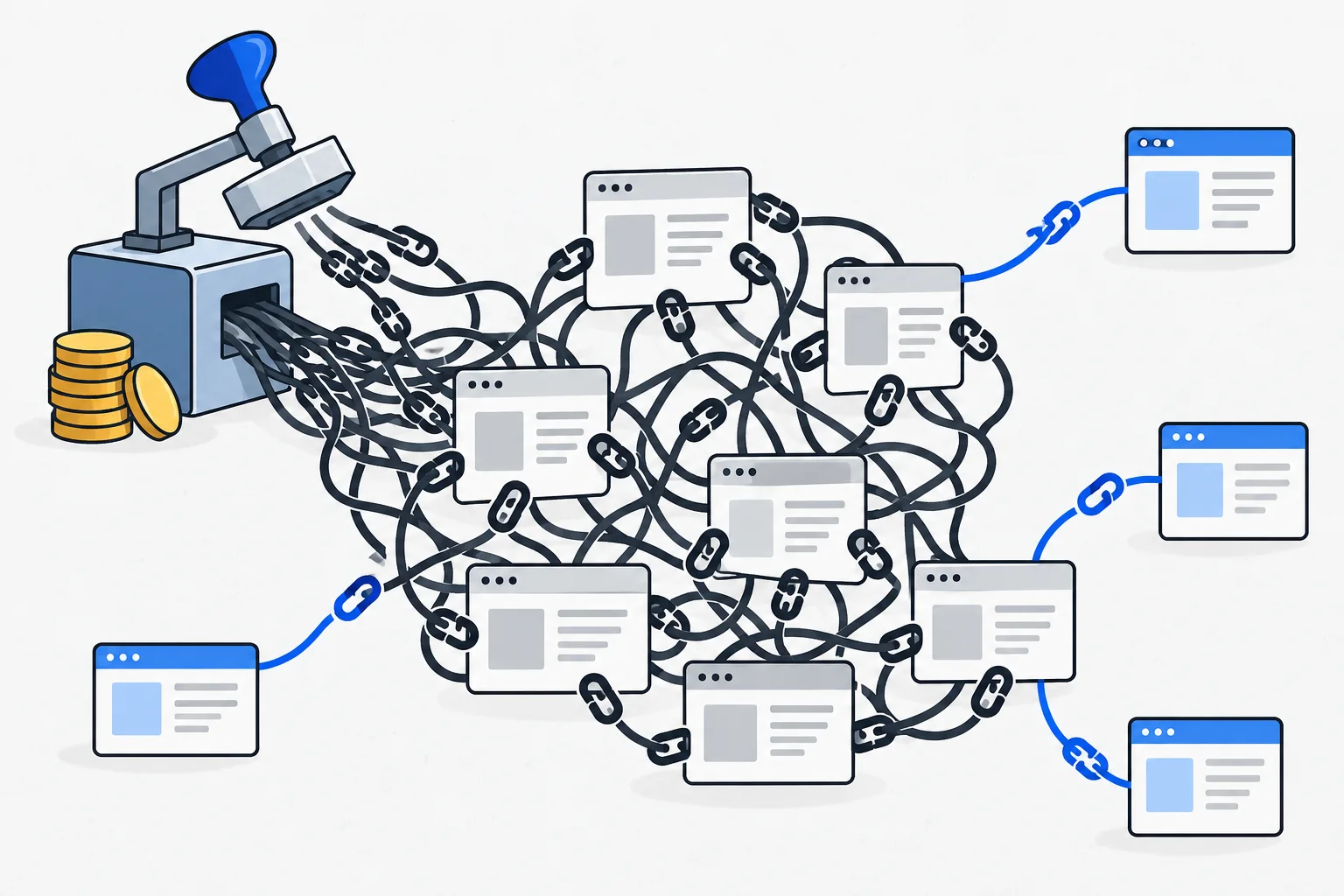
Link spam is a linking practice primarily intended to manipulate search rankings. Not every paid appearance or external link is spam: the purpose of the arrangement, treatment of the link and signals supplied to search engines all matter.
Also known as: link manipulation
At a glance
- Examine why links exist and how they were obtained, not just their number.
- Google recommends sponsored qualification for paid links.
- A high third-party score does not automatically make a link package trustworthy.
On this page
What makes a linking practice problematic?
Links naturally provide sources, additional explanation or related services. Link spam does not describe a blanket prohibition on these connections; it concerns practices organized to manipulate rankings.
Google's link-spam policy includes examples such as ranking-driven purchases and excessive exchanges. A backlink does not establish quality by merely existing. How it was obtained and the underlying agreement matter too.
What about paid appearances?
Advertising, sponsored content and partner introductions can be legitimate business communication. The relationship should be correctly qualified for search engines. Google's guidance recommends rel="sponsored" for paid links; nofollow is also acceptable.
Qualification does not automatically make all content appropriate. Claims in a paid article still need to be accurate, and readers should understand the relationship. Technical signals and human transparency are separate tasks that should align.
What should you ask about a link offer?
Ask where the links will appear, in which content, why they help those readers and how payment is disclosed and qualified. A count or external tool score does not answer these questions.
Link building can involve relationships, sharing professional material and real editorial interest. That differs from a package whose sole purpose is repeating targeted anchor text across apparently independent websites. Examine the actual agreements to understand the pattern's purpose.
Example: product coverage or a link package?
Imagine an equipment manufacturer paying for a product introduction on a specialist publication. The article contains real technical information, identifies the commercial relationship and qualifies its link. Reaching an interested audience can be a legitimate objective.
Another offer promises 100 unrelated websites, identical keyword-rich anchors and guaranteed ranking gains. It is a different arrangement. Comparing only prices and link counts ignores audience, relevance and relationship qualification.
What does nofollow mean here?
Nofollow and related attributes inform search engines about a link's relationship. They do not prevent people clicking, nor prevent discovering the destination through another route. They are not access controls.
Do not assume every unfamiliar source is bad. A small specialist blog can provide a useful reference, while a famous website can host a problematic arrangement. Context and evidence matter more than automatic “good domain” or “bad domain” labels.
What is a sustainable direction?
As part of off-page SEO, professional presence and sharing useful resources can be worthwhile. An accurate guide, original data or documented method can give someone a reason to link without guaranteeing it.
If manipulative practices occurred, investigate the actual relationships and agreements. The aim is to stop the problematic process rather than buy another package with a different name. A defensible link leads readers to genuinely relevant information.