HTTP 404: Meaning, examples and limitations
HTTP 404 is a response status indicating that the server cannot find the requested resource. It describes the response to a particular URL, not the health or availability of the entire website.
At a glance
- A missing page should return an actual 404 status, not just display an error message.
- Use a relevant redirect only when a meaningful replacement exists.
- A 404 is different from a temporary server failure.
On this page
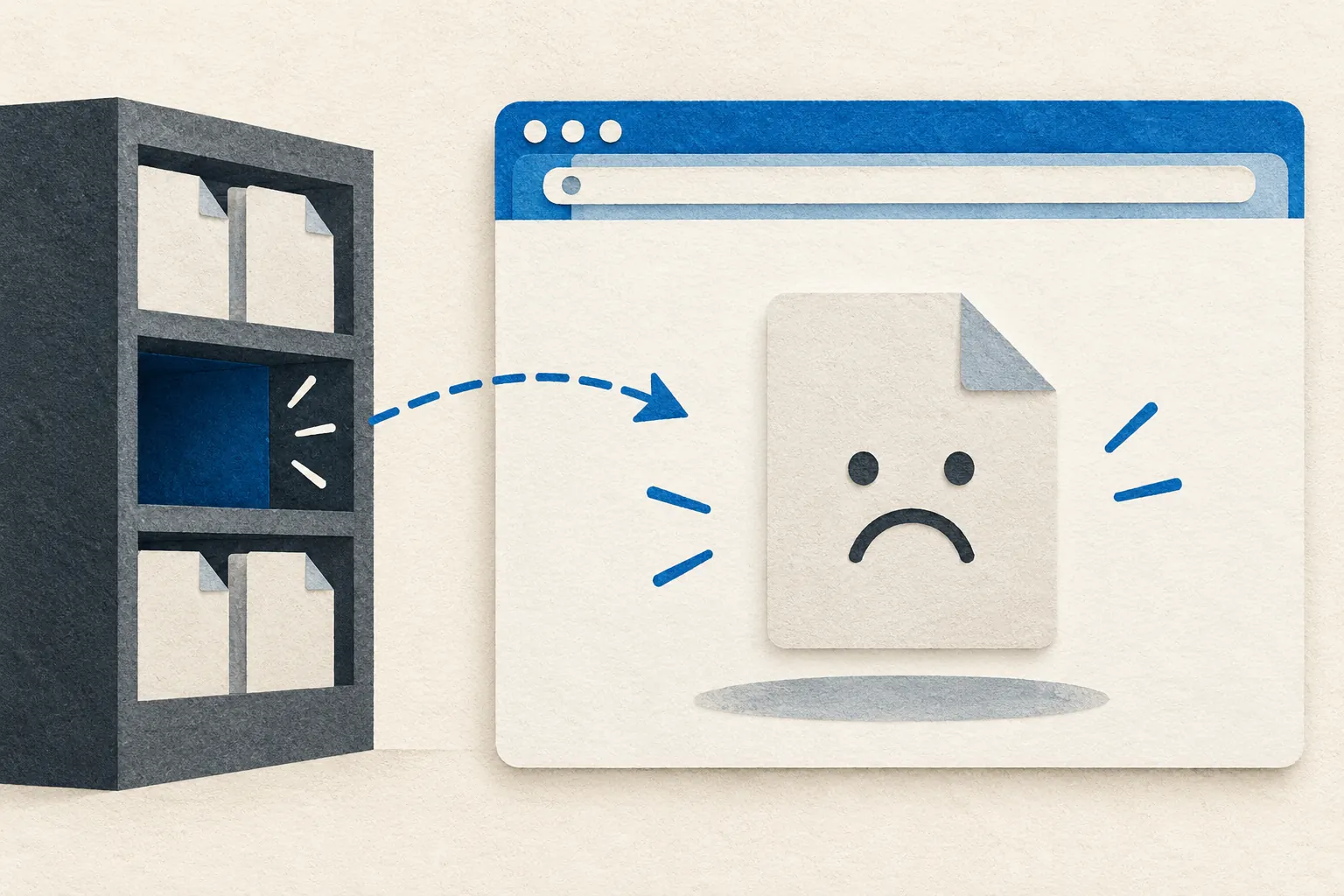
What does the response tell you?
A browser asks for an address; the server answers that it cannot find that resource. The response may still contain a helpful, branded error page. Its appearance does not change the underlying HTTP status. A page saying “not found” while returning 200 can instead be treated as a soft 404.
The code does not establish why the address is missing. Possible causes include a mistyped link, a removed page or a routing error. Investigate the intended page before choosing a remedy.
Example: a retired service page
Imagine a repair business that stops servicing one appliance brand. Its old service page has no equivalent replacement. A clear 404 page can explain that the address is unavailable and offer navigation to current services. Redirecting every missing address to the homepage would hide the distinction between a replacement and unrelated content.
If the service merely moved to a new, equivalent address, a permanent redirect is a different and more suitable response. This is a hypothetical publishing decision, not a rule to redirect all retired URLs.
What should be checked?
Inspect the HTTP response, then check links, navigation and the sitemap. A broken internal link to an accidentally missing service page deserves a fix. A random mistyped URL returning 404 is normal. Prioritize known addresses with visitors, useful inbound links or current navigation references.
For an intentionally removed URL, remove obsolete internal references and sitemap membership. Keep a useful error page with ordinary navigation. A crawler needs to see the actual response; a cosmetic error message alone is insufficient.
What does it mean for search?
A missing resource is not a working search landing page. Its absence does not by itself mean that every other page is penalized. Track the specific URL and its intended replacement, if any. 410 Gone more explicitly communicates a known permanent removal; 503 describes temporary unavailability instead. Google's documented handling, rather than the visual design of the error page, determines how its crawler interprets the response. Primary reference
Google describes crawler-specific responses to these status codes in its HTTP status reference.