Plain language: make the meaning easy to understand
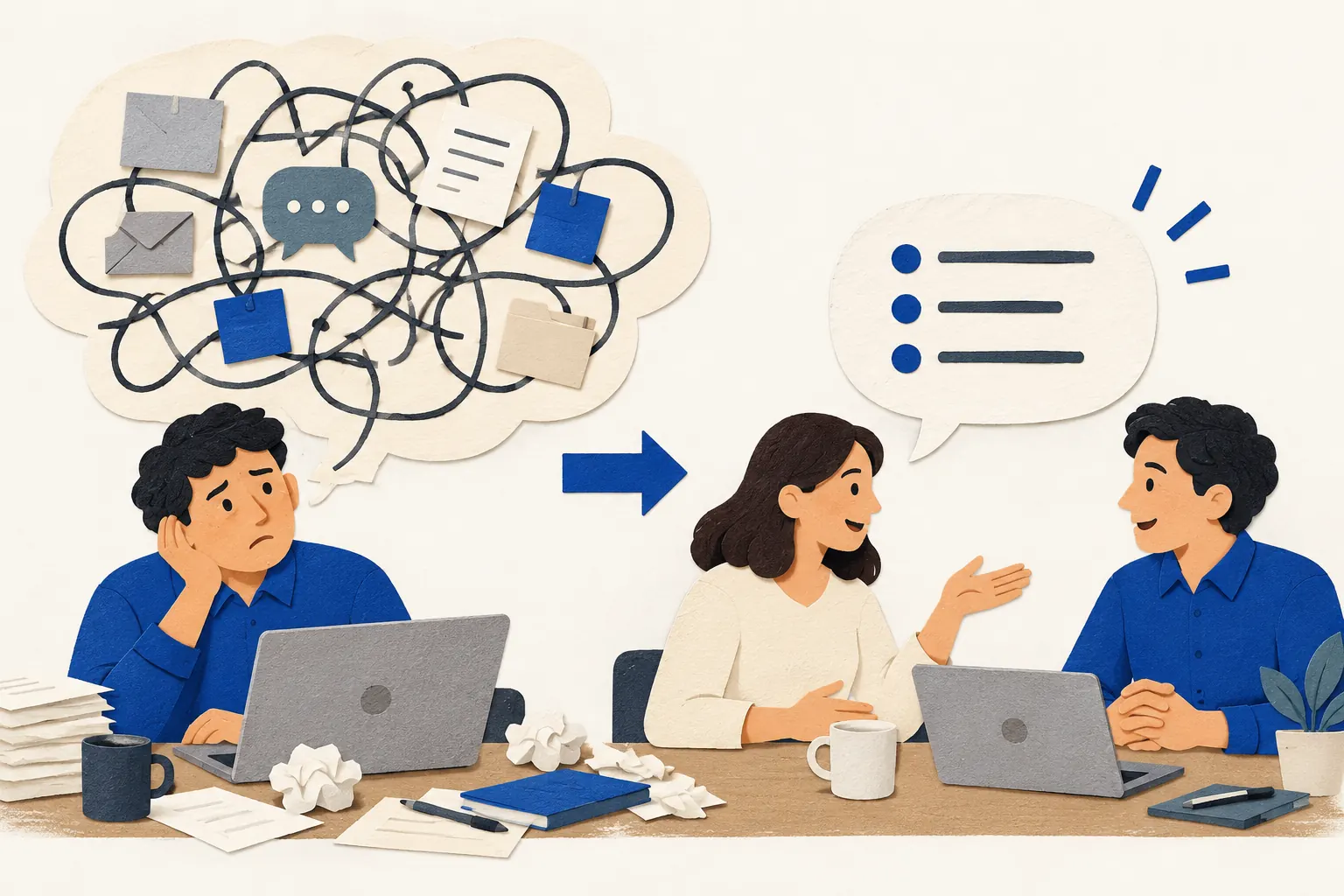
Plain language is wording and organisation that help the intended audience find, understand and use information. It uses familiar expressions, explicit relationships and a clear structure. It does not mean removing necessary detail or treating adult readers as children.
At a glance
- Write for the knowledge and task of the intended audience.
- Explain necessary technical terms instead of replacing them with vague words.
- A shorter sentence is useful only if it preserves the meaning.
On this page
Begin with the reader, not the vocabulary list
A useful explanation depends on who needs it and what they are trying to do. A specialist may recognise a term that a first-time customer does not. Digital.gov’s plain-language guidance places the audience at the centre of understandable communication.
Do not simply ban every long word. Keep an exact term when the distinction matters, explain it once and use it consistently. Replacing three different processes with “the thing” makes the writing shorter while making its meaning harder to follow.
Make relationships explicit
State who acts, what happens and under which conditions. Put a necessary exception beside the rule it qualifies. If an offer depends on confirming an appointment, do not describe it first as unconditional and reveal the condition much later.
Readability concerns how easy text is to read; scannable structure helps someone find the relevant part. Plain language connects these choices with meaning. A page can have short sentences and still fail to explain what the customer must do.
Example: requesting a repair estimate
Imagine a repair shop replacing “Upon receipt of the requisite photographic documentation, an indicative assessment shall be furnished” with “Send a photo of the damage. We will use it to prepare an initial estimate.”
The second version identifies the action and result. If the final price requires inspection, add that condition clearly. Removing it for a cleaner sentence would change the offer rather than improve the language.
Test the intended meaning
Ask a prospective reader to explain the next step in their own words. Give them a realistic situation and observe which information they use. “Was this clear?” often produces a polite response without showing what was understood.
Do not assume an automated reading score establishes comprehension. It may flag long sentences while missing an undefined abbreviation or a contradictory condition. In educational content, retain the distinctions the lesson needs. The aim is accurate understanding with less avoidable effort, not a childish tone, a fixed word count or a perfect software score.