Sponsored link: meaning, examples and practical use
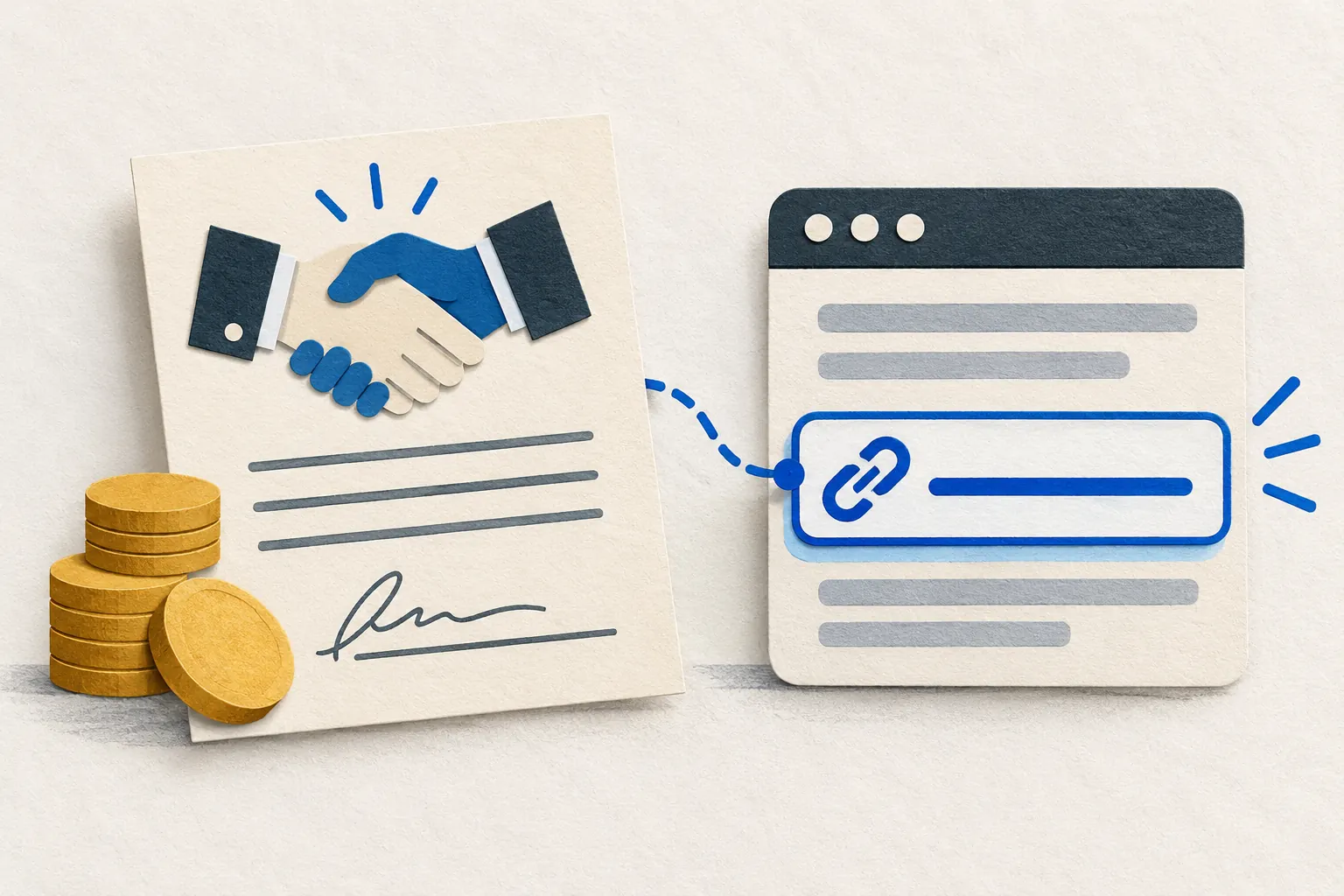
A sponsored link is a hyperlink associated with compensation, such as a paid placement or advertisement. The rel="sponsored" attribute identifies that relationship to search systems; it does not replace an understandable disclosure for readers.
Also known as: Szponzorált link
At a glance
- Mark the paid relationship appropriately in the link.
- A machine-readable attribute is not a visible advertising disclosure.
- The attribute does not automatically make every paid content practice acceptable.
On this page
When is the attribute appropriate?
Use it for links connected to advertising, paid placement or other compensation. Google's link qualification guide recommends sponsored for this purpose. An affiliate link can also carry a commercial relationship.
What does the HTML look like?
For example: <a href="https://example.com/offer" rel="sponsored">Offer details</a>. The attribute qualifies the relationship. It does not hide the destination, prevent a visitor from clicking or declare that the target cannot be indexed.
Example: a paid product feature
Imagine a publisher paid to feature a tool. The link receives an appropriate rel attribute, while the article also makes the sponsorship recognizable to readers. Technical marking does not justify invented test results or fabricated personal experience.
How is it different from nofollow?
Nofollow is a more general qualification. Sponsored specifically identifies compensation; Google also accepts nofollow for paid links. Regardless of the attribute chosen, the link text and genuine nature of the destination still matter. Technical link handling and the accuracy of the surrounding article remain separate responsibilities.