Email nurture: helping interested people make an informed decision
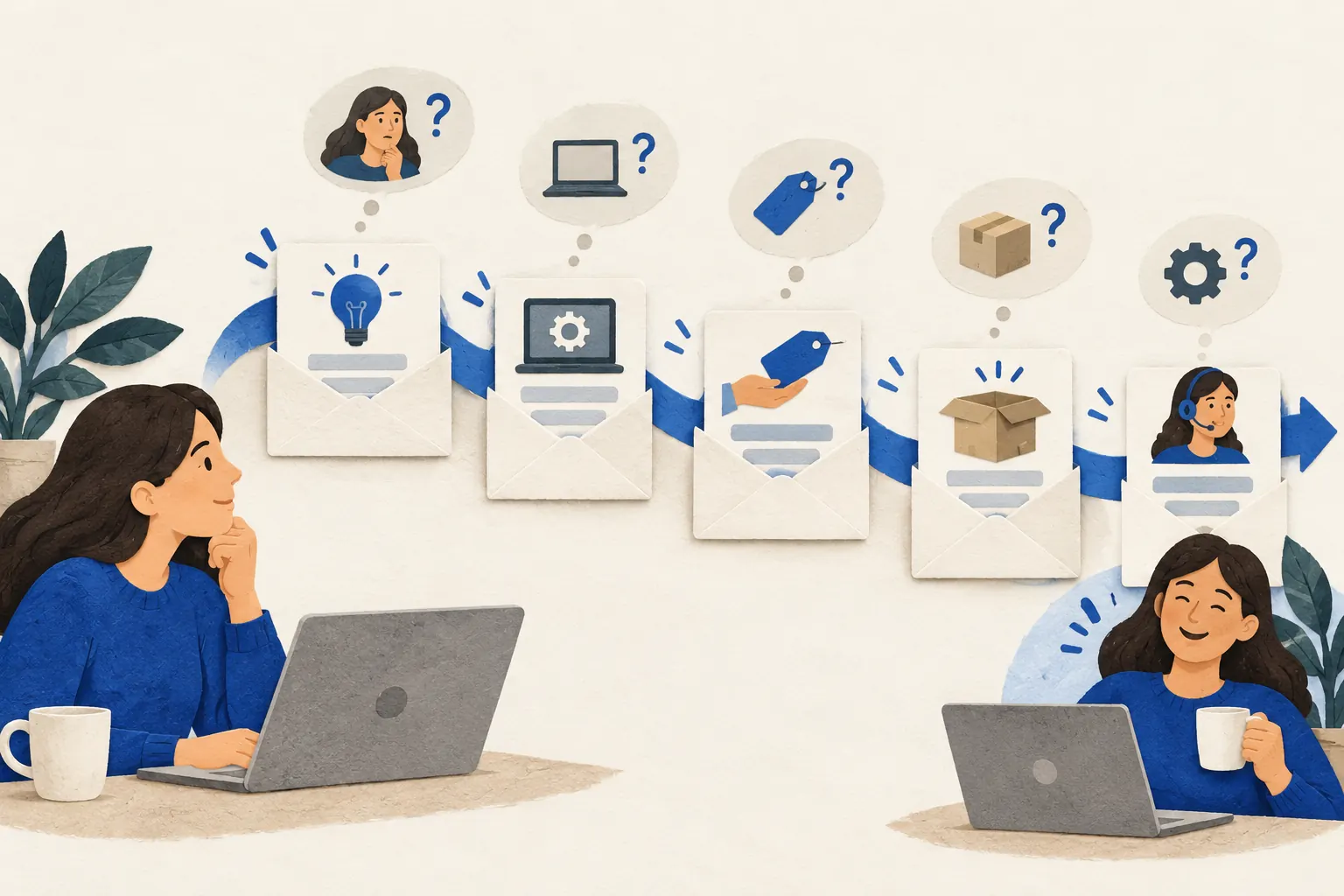
Email nurture is the use of relevant follow-up emails to help interested people understand a problem, evaluate options and decide whether an offer fits their needs.
Also known as: lead nurturing by email · email nurturing
At a glance
- Nurture follows the reader’s questions, not just the seller’s schedule.
- A sequence can educate without asking for a purchase in every message.
- Newsletter, welcome email and nurture describe different communication roles.
On this page
What does nurturing actually involve?
Someone can be interested without being ready to buy. They may need to compare approaches, involve a colleague or understand the work involved. Email nurture supplies relevant help over time instead of treating every contact as an immediate sales opportunity.
A fixed series is often called a drip campaign. Mailchimp describes drip marketing as scheduled or action-triggered messages. Nurture is the broader purpose: the message should fit what the person needs next, whether it is sent manually or through a configured sequence.
A practical example
Imagine an office furniture supplier offering a guide to planning a small workspace. A subscriber’s first follow-up explains how to measure the room. A later message links to an article about choosing desks for shared use. Another covers delivery and assembly questions.
These are hypothetical messages, not a promised sales formula. Someone who already requested a quotation should not keep receiving an introductory series that ignores that conversation. Their customer journey has moved on.
What belongs in the sequence?
Start with the question behind the original interest. Choose articles, examples or explanations that resolve distinct uncertainties. A message about dimensions should lead to dimensions; a message about cost should explain the relevant cost factors.
A welcome email sets the initial expectation. A newsletter is a continuing publication, usually sent by issue. Either can support a relationship, but neither automatically constitutes a purposeful nurture sequence. Endless reminders of the same discount are not evidence of useful progression.
How should a business assess it?
Define the intended next step for the particular audience: reading a comparison, replying with requirements or asking for a consultation. Check whether people can understand the offer and whether their subsequent inquiries are relevant. Do not count every click as purchase readiness.
Keep promises about the type of messages people receive, make stopping them straightforward and remove obsolete information. A helpful sequence also has an endpoint or a clear transition. When a person’s needs no longer match the offer, respectful communication matters more than forcing them through the remaining messages.