Content distribution: get a useful piece to the right readers
Content distribution is the planned delivery or placement of content through channels where its intended audience can encounter it. It covers where the material lives and how it reaches people. Distribution can use owned, earned or paid channels; publication alone does not ensure discovery.
At a glance
- Choose channels because the intended readers use them for the relevant need.
- A link, an excerpt and a full copy create different maintenance obligations.
- Keep distribution separate from the claim that someone actually read or acted.
On this page
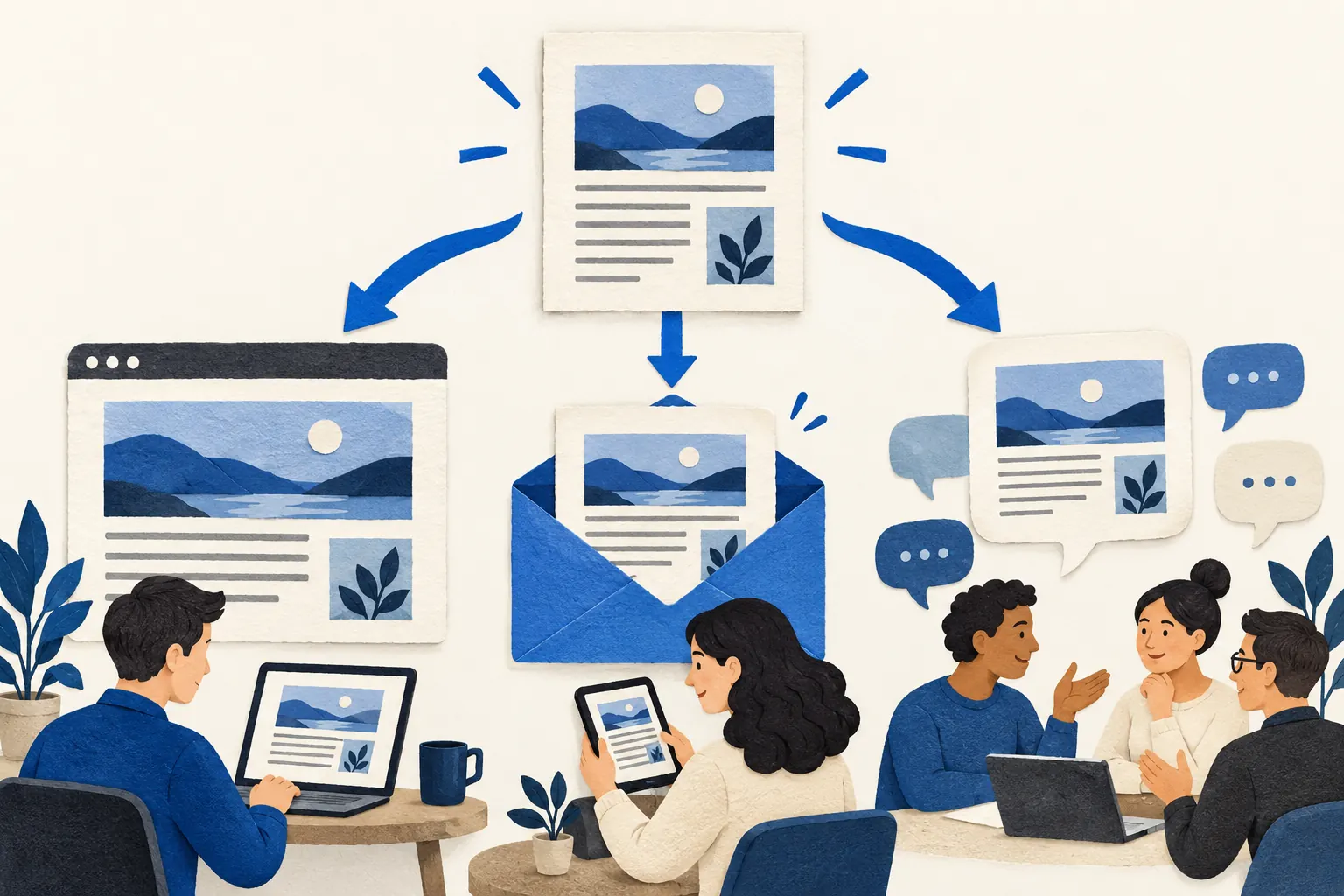
Decide where the complete answer belongs
A distribution plan starts with the material itself. Will the full explanation live on your website, in a document or on another publisher’s platform? Then decide which channels lead people there. Mailchimp’s distribution overview describes several channel types; their usefulness depends on the audience and purpose.
An owned channel gives the business more editorial control than independent coverage. A shared link, a quoted extract and a full republished article are different arrangements. Know who can correct each version when information changes.
Match the route to the question
A guide about preparing for an appointment may fit a confirmation message. A broader explanation may belong in a resource section or a relevant community discussion. Posting the same link everywhere does not make the distribution relevant.
Promotion draws attention to a particular piece. Distribution is the wider plan for making it available and reachable. The terms sometimes overlap in practice; stating the intended activity avoids arguments about labels while leaving responsibility clear.
Example: a sewing workshop’s fabric guide
Imagine a workshop publishing advice on choosing fabric for a beginner class. The complete guide sits on its website. A confirmation email links to it, a class information page points to the relevant section and a short community post explains who the guide helps.
If course requirements change, the workshop updates the main explanation and reviews the shorter references. Sending an old PDF as an attachment to every customer could make outdated instructions harder to replace. The right choice depends on whether customers need an offline copy.
Check reach and use separately
A sent message is not proof that its recipient read the article. A platform impression is not a completed task. Define what you can observe and which useful next action matters, without treating every channel’s numbers as equivalent.
Paid placement belongs to paid media, while independent voluntary coverage is a different relationship. Include writing, adaptation and maintenance in the plan as well as any placement fee. Distribution should make a useful answer easier to find; it cannot rescue an irrelevant article or guarantee that an audience will respond.