Grounding: connect an AI answer to verifiable information
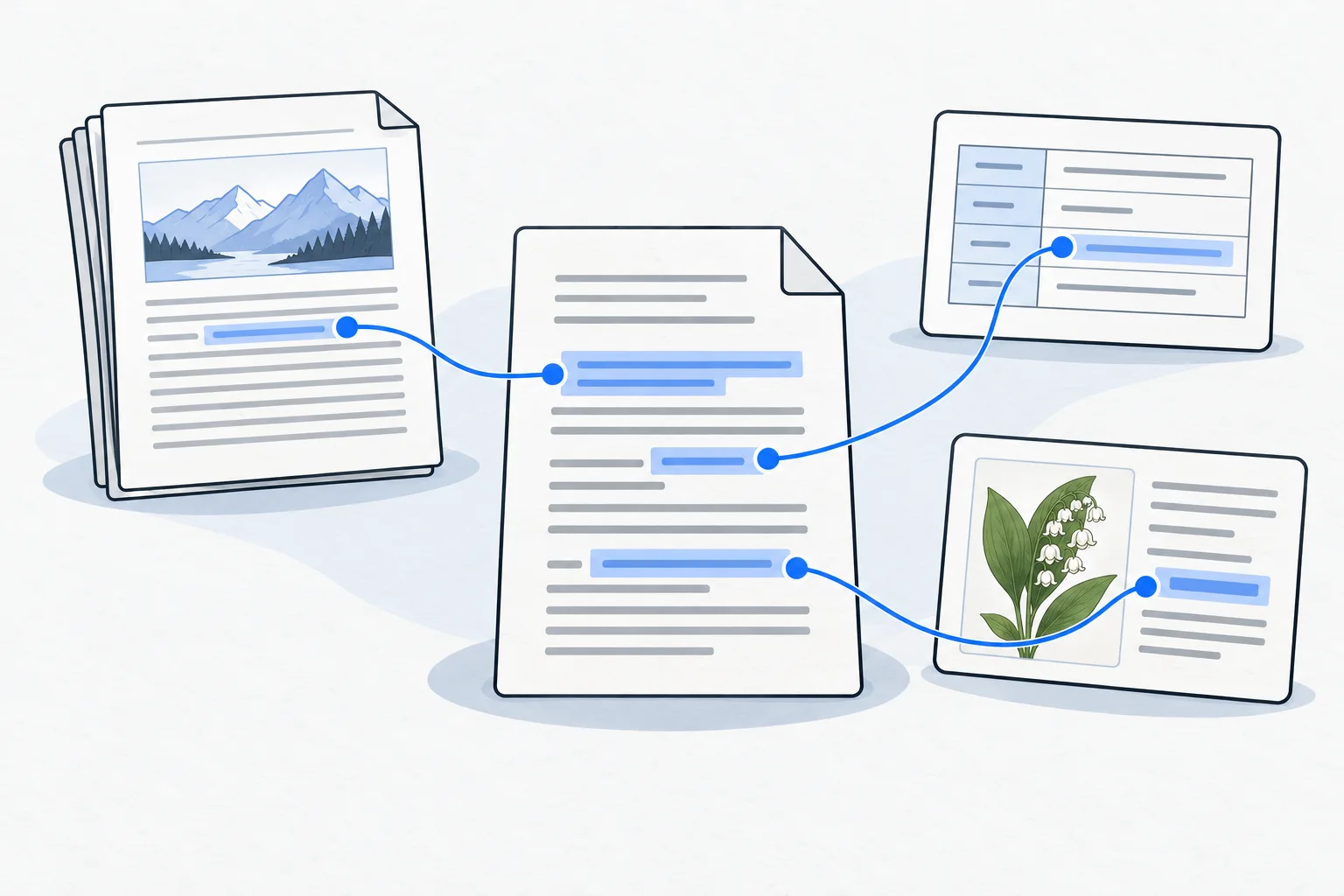
Grounding connects an AI answer to specified, verifiable information sources instead of relying only on patterns learned during model training. It is a broader objective than any particular retrieval technique and is not equivalent to merely displaying a link.
Also known as: grounding · source-grounded generation
At a glance
- Grounding aims to connect claims with available supporting information.
- Both source quality and accurate interpretation matter.
- RAG is one possible approach; a citation is a visible route to checking evidence.
On this page
Why is grounding useful?
A plausible sentence does not necessarily rest on verified current information. When asking about a company's products, documents or terms, it matters which evidence supports the statement. Grounding addresses that connection.
Google Cloud's overview describes connecting output to verifiable information. A large language model can then use specified data, while source quality and interpretation remain separate concerns.
What can serve as a source?
Public webpages, an internal document library, a product catalog or another available dataset can provide grounding information. The source must suit the task. Current product terms require different evidence from a historical explanation of a concept.
Access alone is insufficient. A document collection may contain old and new versions, drafts and approved material. Which version reaches the answering system affects reliability. Organizing sources is therefore part of useful answer generation.
How does grounding differ from RAG and citations?
RAG is a pattern in which relevant information is retrieved before generation. Grounding is the broader aim of anchoring output to information and can be implemented through different approaches.
An AI citation exposes a source connection to the reader. A link can still accompany a conclusion that goes beyond what the source supports.
The objective, technical approach and visible path to evidence are different layers. They should not be treated as synonyms.
Example: equipment-return conditions
Imagine a rental company's assistant answering from an approved policy that requires a particular machine to be returned clean. A grounded answer connects that condition to the correct document without inventing an extra fee or grace period.
A question about a different product may need another policy. If a fee is absent, the assistant cannot fill it in on the company's behalf merely because other rental firms charge one.
This fictional example shows why correct source selection and faithful wording are both necessary. Neither replaces the other.
How can an apparently grounded answer remain wrong?
The system can select the wrong document, misread a table, combine incompatible conditions or use outdated material. Grounding can reduce some hallucination risks without eliminating review.
Ask three separate questions: did the system receive suitable material, does the claim appear in it, and does it apply to this situation? A “has sources” checkbox cannot answer all three.
How should the term be used accurately?
When describing a product as grounded, identify the source type and verifiable behavior. Do not infer that all responses are current, every link is correct or every task uses the same source.
A prompt can ask the system to flag missing information and distinguish inference from evidence. The actual output still needs checking. Grounding's value lies in traceable claims, not the presence of the label.