SERP analysis: understanding the answers a search calls for
SERP analysis systematically examines the results and answer elements shown for a particular search. It helps identify the task a search engine appears to interpret, the page types it presents and questions left unresolved for readers. It provides contextual evidence, not a guaranteed ranking formula.
Also known as: Search results analysis
At a glance
- Examine the page type and actual answer, not just collected headlines.
- Results can suggest user needs, but the inference needs checking.
- Copying a competitor’s structure does not add your own information value.
On this page
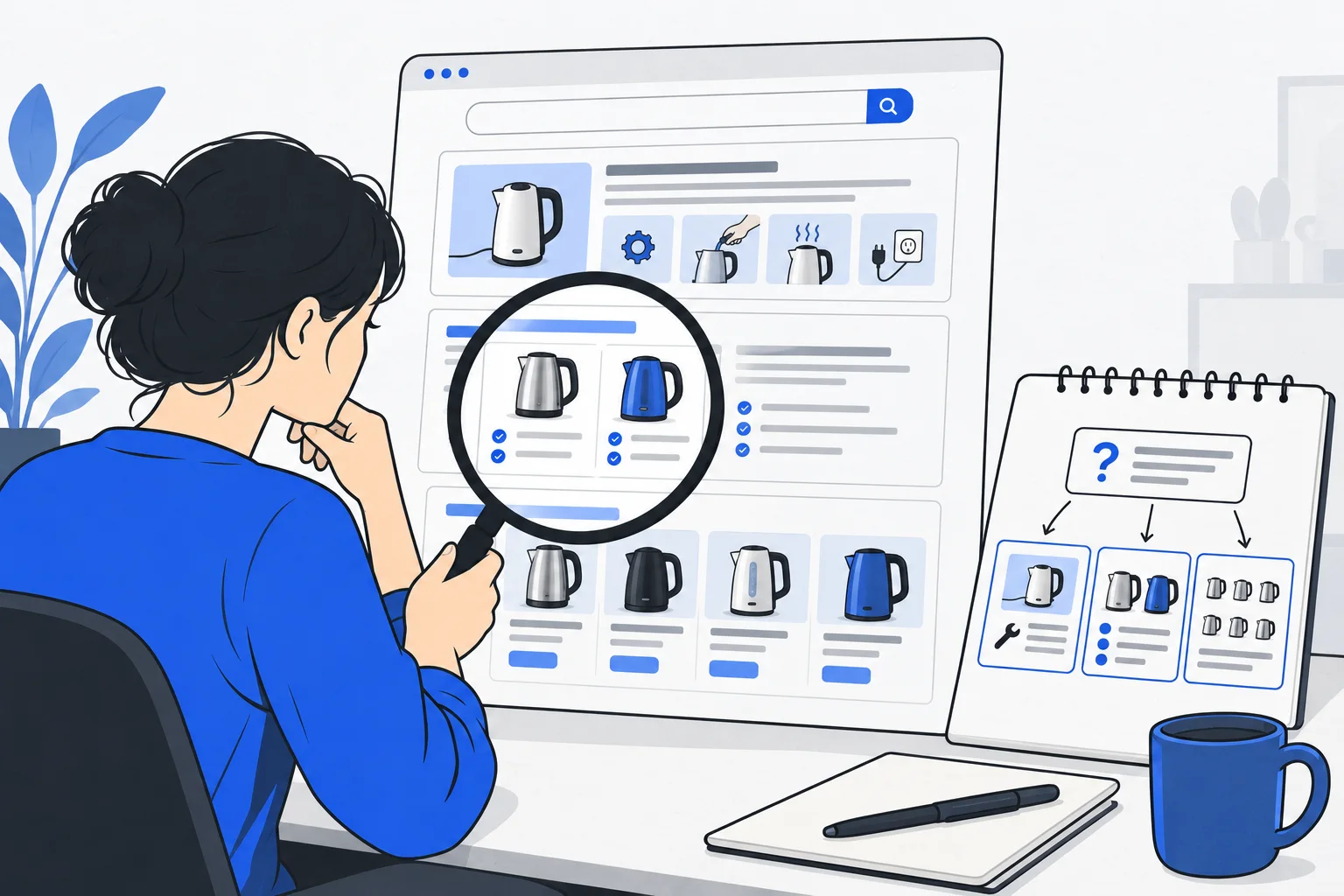
Start with the task, not a word count
Ask what the results appear to help people do: understand a concept, compare products, choose a service or find a place. This informs an interpretation of search intent. Counting the words in the first result does not answer that question.
A SERP can include images, videos, local blocks and other features. Inspect the whole interface, because conventional text results show only part of the available journey. Search visual elements
Open the results you compare
A headline may promise a comparison while the full page sells only one product. Determine the actual task from the content, not solely from the snippet.
| Aspect | Question |
|---|---|
| Page type | Guide, category, service page or product page? |
| Main answer | Which specific question does it resolve? |
| Evidence | Does it offer experience, data or verifiable sources? |
| Gap | Which important condition remains unexplained? |
| Next step | What can the reader do after understanding? |
Tools can help collect observations, but their data and scope require interpretation. Keyword Overview documentation
Example: a patio-cover installer
Imagine an installer planning content about patio covers. The business does not assume a long general article is the right format. It checks whether the selected search context shows solution types, ready-made products or local providers. This example does not claim to describe a current live SERP.
The research might identify two tasks: choosing a suitable type of cover and preparing information for an installation quote. Separate pages may be justified if these tasks genuinely differ. If they would repeat the same answer, one well-organized explanation may be better.
Competitors and meaningful gaps
A search competitor can be a trade publication or manufacturer with a different business model. Identify its information role and what real knowledge your business can contribute.
A content gap is not simply a heading another page omitted. That heading may be irrelevant to its audience. A meaningful gap leaves a question unanswered that matters to your reader’s decision.
What can distort the conclusion?
Location, language, device, time and personalization can change results. Record the circumstances and revisit important observations. One screenshot cannot establish a permanent order or one universal audience need.
Separate paid elements from organic results. A high position does not prove every sentence is correct or that word count caused the ranking.
Turn observations into an assignment
A short content brief should name the reader, main question, appropriate format and required evidence. Keyword research can supplement the decision without overriding relevance.
The finished content needs its own accurate answer. Use analysis to identify where you can offer a clearer, better-supported or more practical explanation. Helpful content guidance