Service-area business: meaning and practical example
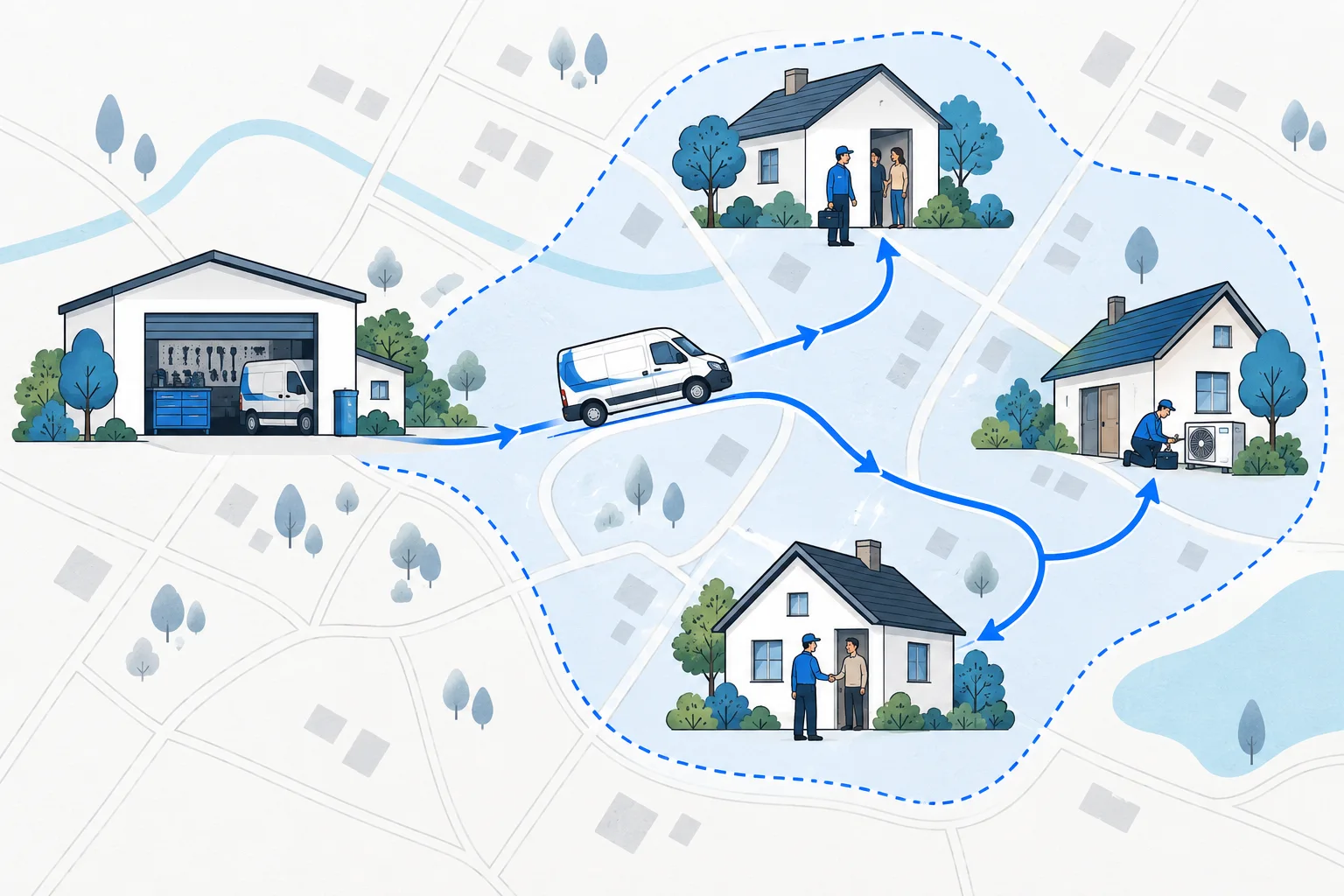
Under Google Business Profile guidelines, a service-area business visits or delivers to customers but does not serve them at its own address. A service area describes the places the business actually serves; it does not mean the business has a separate staffed location in every listed town.
Also known as: SAB · service-area company
At a glance
- Displaying an address depends on whether customers are genuinely served there.
- Listing a service area does not guarantee local rankings in every named town.
- A hybrid business serves customers at its premises and also visits or delivers to them.
On this page
What kind of operation does the term describe?
A window cleaner, cleaning company or repair technician commonly works at the customer's address. The business may still have an office or storage facility, but that does not necessarily make it a shop customers can visit. The term describes how in-person service is delivered, not the company's legal form.
Represent this accurately in a Google Business Profile. An address used for accounting or correspondence does not establish that customers are served there. People need to know whether the business visits them or whether they should visit genuine premises during stated opening hours.
How does a hybrid business differ?
A hybrid business serves customers at its own location and also visits or delivers to them. A florist with a real shop and a delivery service is one example. Both are part of the same business, although customers may face different conditions for each.
Google's service-area guidance distinguishes the address from the service arrangement. If customers are not served at an address, do not present it as a visitable shop. Apply the current product rules to the actual operation, rather than designing a fictional operation around the map appearance you want.
How should you describe the area served?
The service area should reflect places you can actually reach. Your website can explain details a town list cannot: which jobs you accept farther away, how appointments are arranged and which tasks are restricted to a smaller area.
For local SEO, a genuine connection to the area matters more than listing as many names as possible. Selecting a town does not create premises there or guarantee a leading local position. Customers should understand the service conditions before requesting an appointment.
Example: an upholstery cleaner in Győr
Imagine a cleaner who takes equipment to customers' homes. Their home address is the administrative business address, but they do not receive furniture there. Presenting it as a shop could incorrectly suggest customers should bring items to that address.
The website instead explains the on-site service and any access, parking or advance-photo requirements. “Mobile upholstery cleaning Győr” is an illustrative search query; no search volume or guaranteed orders are claimed.
For more distant towns, the company requests advance discussion because job length and the day's route matter. It explains this before contact, helping customers make a real decision that a bare list of towns cannot support.
Which shortcuts cause problems?
Inventing an office in every served town is misleading. A rented mailing address is not equivalent to staffed customer-facing premises. Business representation guidelines depend on real operating conditions, with separate requirements for distinct locations.
Mass-produced town pages may also offer little value. If only the place name changes, readers receive the same incomplete answer. Understanding search intent helps identify which local differences justify distinct explanations and which belong on one shared page.
What should you check after changes?
Confirm that both the public profile and website describe the correct service model. Remove wording that encourages travel to an address customers cannot visit. Update important surfaces consistently when your territory or accepted work changes.
As part of on-page SEO, headings and paragraphs should reflect that precise offer. First check whether customers understand the conditions. Search and business performance require separate observation; a correctly configured area is not itself a results report.