Structured data: describing the content a page actually contains
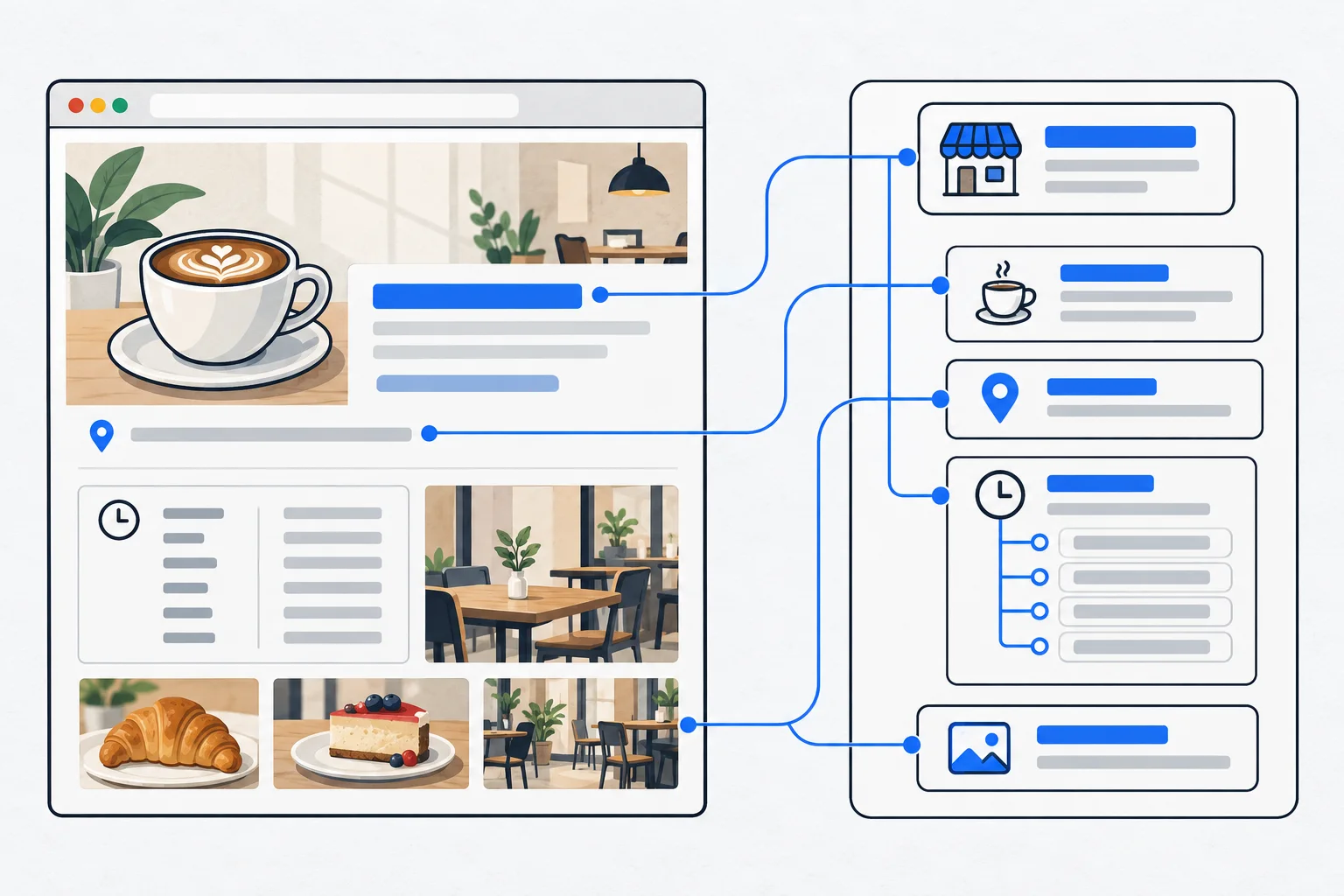
Structured data describes page content in a machine-readable form using defined properties. A product’s name, price and availability can appear in separate fields. Schema.org provides a vocabulary of types and properties; JSON-LD is one format for expressing them.
Also known as: Schema markup · Schema.org · JSON-LD
At a glance
- Markup describes actual page content; it does not replace it.
- Schema.org is a vocabulary, while JSON-LD is a format.
- Valid markup does not guarantee a Google rich result or an AI citation.
On this page
Why describe readable content for machines?
A person can use context to recognize whether a number is a price, duration or measurement. Machine processing can benefit from an explicit property name. A product’s name, image and offer price can then be connected through defined fields.
For SEO, this is a more precise description of content, not a hidden layer for promises that differ from what visitors see. Google’s guidance relates markup to the content of the particular page. Introduction to structured data
Schema.org and JSON-LD are different things
Schema.org supplies a shared vocabulary for articles, products, organizations and their properties. JSON-LD is a data format that can express those relationships. The names are related, but not interchangeable.
This illustrative fragment is not a complete implementation:
{
  "@context": "https://schema.org",
  "@type": "Article",
  "headline": "How to choose an office chair",
  "inLanguage": "en"
}
It describes an article and its headline. It does not establish compliance with every Google feature. Supported search appearances can have their own required and recommended properties.
What makes markup truthful?
The data must agree with the actual page. Do not invent a review, author, price or date that the content and real operation cannot support. A machine-readable field does not make a fabricated claim credible. General guidelines
The title tag, visible heading and structured data can provide different signals about the same page. Their wording need not be identical, but their meaning should be consistent. The canonical URL should also agree with the document being described.
Maintain dates according to real changes. Automatically replacing a date every day is not the same as substantively updating an article.
Example: a bakery’s recipe
Imagine a bakery publishing a detailed bread recipe. Its visible text contains ingredients, baking temperature and preparation steps. Appropriate recipe markup can describe that information in machine-readable fields.
A page listing the bakery’s shops should not be labeled as a recipe just because recipe results look prominent. Nor should invented customer ratings be added to attract attention. Markup describes useful content already present; any resulting search appearance remains the search engine’s decision.
How to verify an implementation
First identify the page’s real content type. Then check syntax, required properties and agreement with visible content. Google’s Rich Results Test checks supported rich-result features; it is not a complete audit of every Schema.org type or business claim.
Breadcrumb navigation, for example, has a dedicated BreadcrumbList representation. Breadcrumb guidance Check access to the final page with URL Inspection as appropriate. Inspection tool Correct JSON cannot compensate for an inaccessible page.
What markup cannot promise
Valid markup does not force a rich result or an AI citation. AI visibility requires actual observation. A rich result and a knowledge panel are also different search appearances.
Start with real content, a clear structure and accurate data, then implement and verify the markup. It supports understanding; it does not replace expertise or evidence.