Backlink: a link to your site from another website
A backlink is a link from a page on another website to a page on the website being examined. The name describes the destination’s perspective: the same link is outbound from the source. A brand mention without a clickable link is not a backlink.
Also known as: inbound link · incoming link
At a glance
- A backlink comes from another website to the page being examined.
- Link counts alone do not establish relevance or search impact.
- Buying or mass-producing links to manipulate rankings can violate search policies.
On this page
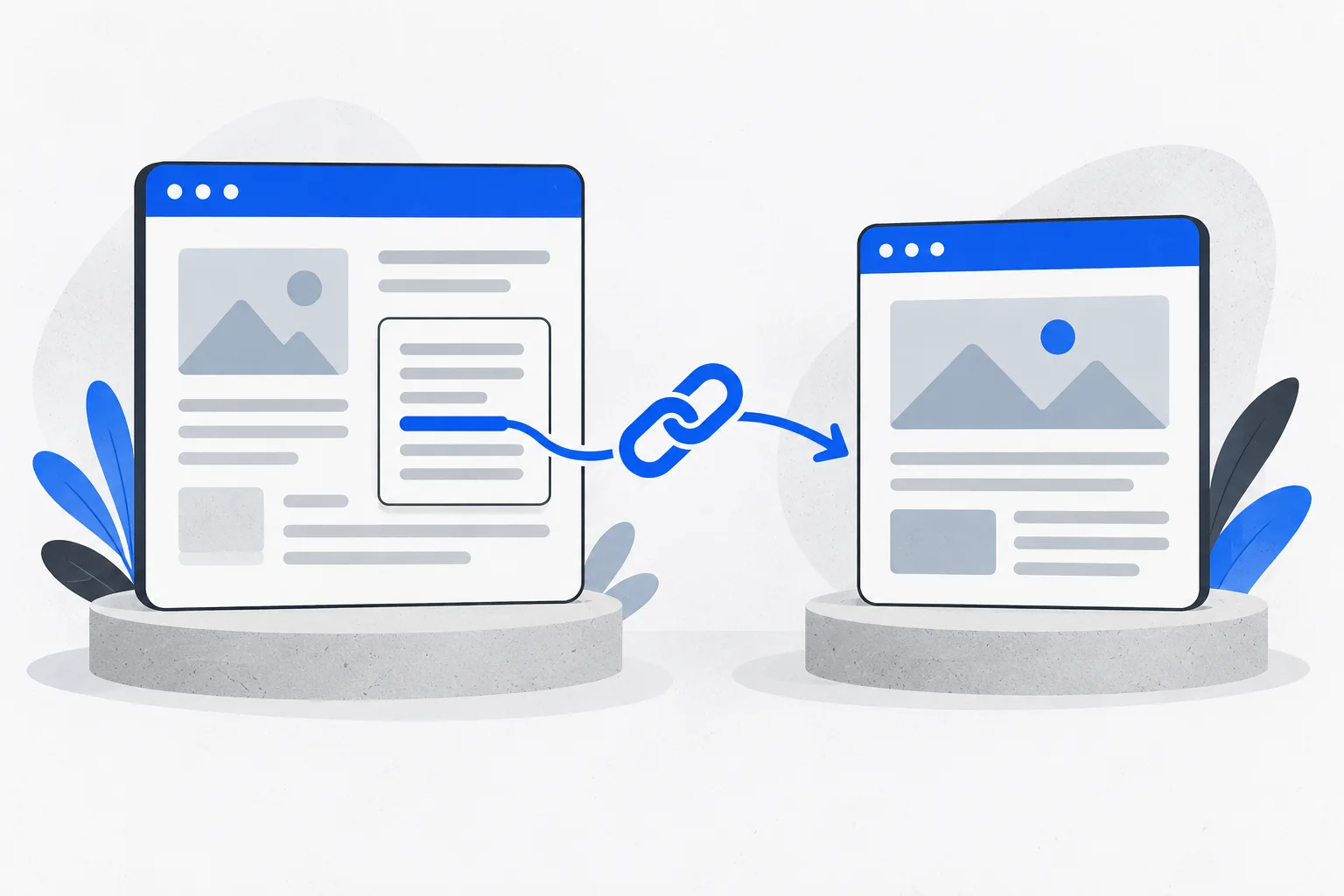
Inbound, outbound or internal?
Always state the website's perspective. A local newspaper linking to your bakery's ordering page creates a backlink for you and an outbound link for the newspaper. Linking from your bread-storage guide to your own products creates an internal link.
The distinction also clarifies control. You normally maintain your own link text and destinations; another publisher decides how to reference you. Finding a mention does not give you authority over that publisher's editorial choices.
A brand mention is broader. An event report can name the bakery without linking. That may create attention, but it is a different event in a link report.
Why do backlinks matter in SEO?
Google's guidance explains that links support discovery and understanding relevance. It does not imply equal value for every link or a guaranteed position at a particular count.
A link can also provide a direct path for a reader. Someone arriving from a professional comparison already has context; another person may click only to check a source. Potential SEO effects and actual visits are separate observations.
A useful reference need not immediately generate a sale. An educational page citing your instructions can help readers verify the information's origin.
What should you assess beyond the count?
| Question | What it helps establish |
|---|---|
| Where does the link appear? | The reader's starting context |
| Why is the destination referenced? | Whether it supports a claim or serves another purpose |
| Which URL does it open? | Whether it delivers the promised content |
| What does its anchor text say? | Whether expectations match the destination |
| Does it still work? | Whether an old report reflects the current page |
These are editorial considerations, not Google's ranking formula. Ten links from one site are not ten independent publishers' recommendations. Referring domains and individual links are different counting units.
Example: a ceramics workshop
Imagine a Debrecen workshop publishing care instructions for its handmade mugs. An interiors writer uses the guide as a source and links to the relevant explanation.
The reader can verify and explore the advice. Buying identical links on a thousand unrelated pages is a different activity; the larger count does not demonstrate greater reader value.
This fictional example makes no measured ranking claim. A later AI citation would also require separate observation: a conventional backlink does not prove that an assistant will cite the page.
What about paid and nofollow links?
Google's link-spam policies address purchased links, automated schemes and excessive exchanges intended to manipulate rankings. Properly identified advertising is a different case.
The qualification guidance describes rel="sponsored" for paid links and ugc for user-generated content; nofollow is also appropriate in specified circumstances. These communicate relationships to search systems. A qualified link can still help readers and send traffic, so “nofollow means worthless” confuses different purposes.
How can you inspect incoming links?
Search Console's Links report is a sample, not an exhaustive current inventory. It may contain previously observed links that have disappeared and does not identify nofollow status separately.
Check important references on the original pages. Record the source, destination, anchor text and inspection date. An unfamiliar domain alone does not establish a penalty or urgent removal need.
Link building describes acquisition work; domain authority is a third-party metric. Digital PR is communication work that may result in relevant mentions or links.