Product description: the facts and uses that help someone choose
A product description is the written explanation of what a product is, how it can be used and which characteristics or limitations matter when deciding whether to buy it.
At a glance
- Help the reader judge fit, not merely admire the product.
- Connect a feature to a plausible use without inventing performance.
- Dimensions, compatibility and limitations can be decisive information.
On this page
What is the description’s job?
It helps a person understand the item well enough to judge whether it suits their situation. Online shoppers cannot inspect the product in the same way as in a shop. Nielsen Norman Group’s product-page research emphasises accurate information that answers purchasing questions.
The description is one component of a product page. Images, availability, pricing and purchase controls have separate roles, although they should all tell a consistent story about the same item.
Begin with identity and relevant detail
Name the product plainly before introducing persuasive language. Include the characteristics that change its suitability: dimensions, material, capacity, compatibility or care requirements, depending on the category.
A product feature describes what the item has. A customer benefit explains why that feature may matter in a specific use. The connection should be supported by the actual product rather than a generic claim that every feature makes life easier.
A hypothetical backpack example
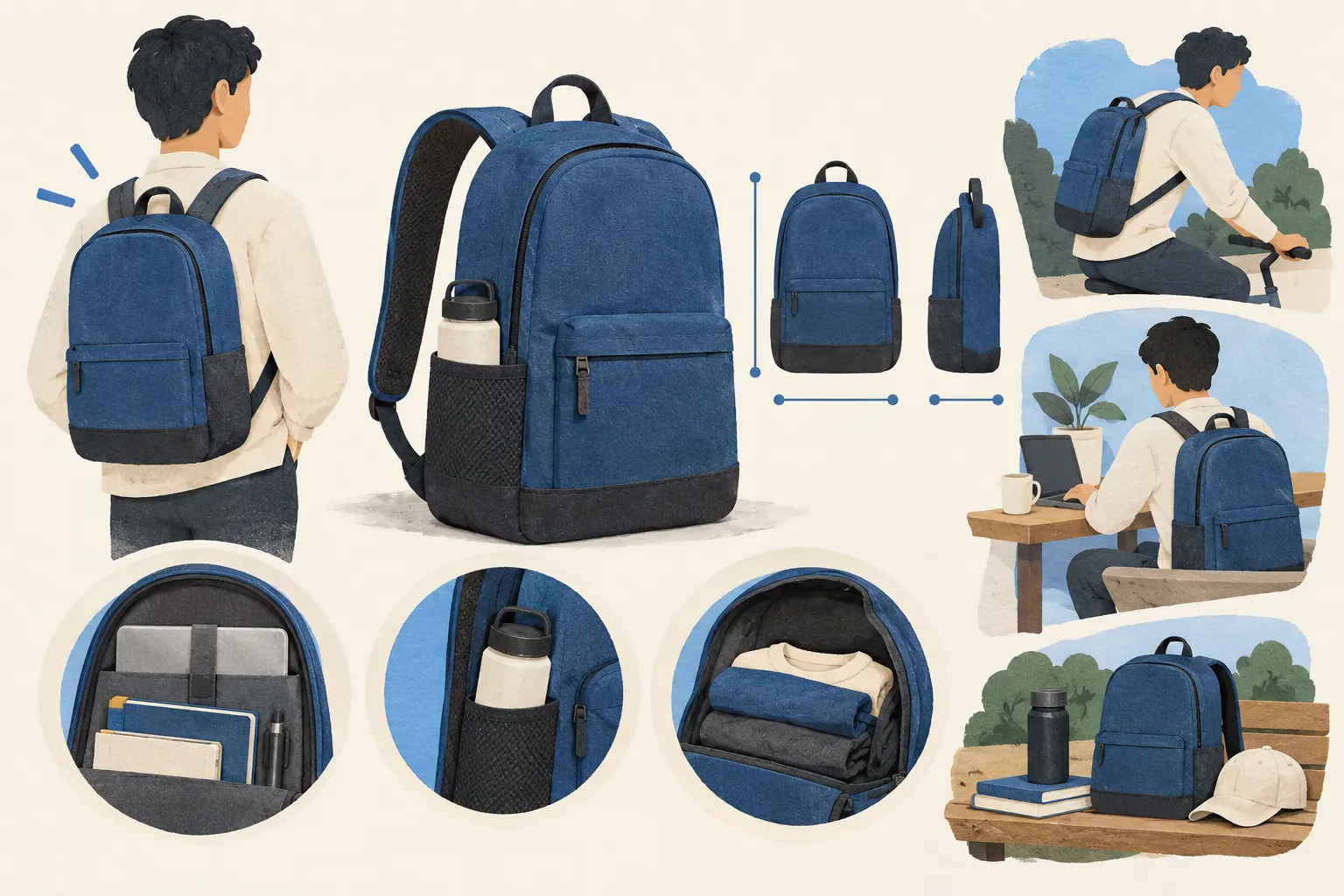
A shop describes a compact backpack for daily commuting. It states the bag’s dimensions, explains the laptop compartment size and describes how the shoulder straps adjust. A photo can show the compartment, while the text gives the measurement needed to assess fit.
The seller should not call the bag waterproof if the verified specification only supports resistance to light rain. It can explain that limitation directly. A customer carrying sensitive equipment needs that distinction more than an unsupported promise of adventure-proof protection.
Organise for the buyer’s questions
A short introduction can explain the intended use, followed by clear specifications and practical limitations. Avoid hiding a crucial compatibility restriction inside a long promotional paragraph.
Keep variant details accurate. If different sizes or materials change the specification, the selected variant’s information should be understandable. Readers should not have to infer which description applies to the item they are considering.
What a good description cannot do
Copy cannot change the product’s actual performance or make it suitable for every customer. Nor does adding many keywords guarantee search visibility.
Review the description when specifications, supplied accessories or care instructions change. Customer questions and returns can reveal missing explanations, but do not assume every return was caused by copy. Use the evidence to identify a precise information gap and correct it rather than adding a longer layer of sales language.